Kouri Richins Trial: Courtroom strategy collides with a ghostwriting paper trail

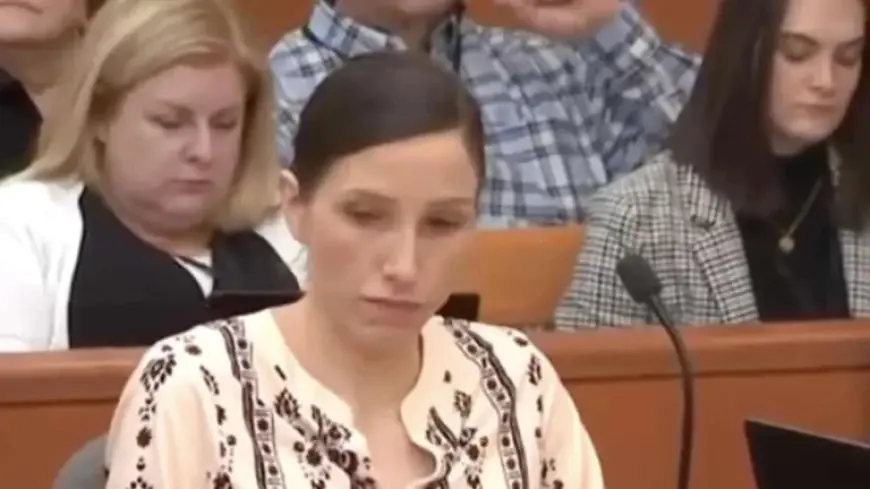
Two developments now define the kouri richins trial in Park City: prosecutors have rested and the defense has chosen to call no witnesses, while separate testimony put Kouri Richins’ authorship claims under scrutiny through texts about a ghostwritten children’s book. Placed side by side, the question is what each track shows about the prosecution’s approach and the defense’s counter-strategy as the case moves to closing arguments.
Kouri Richins’ defense rests without witnesses after Judge Richard Mrazik’s denial
In the Park City murder trial, prosecutors rested their case shortly before a lunch break on Thursday. After that, Richins’ attorneys sought a directed verdict, arguing there was insufficient evidence for a reasonable jury to convict. Third District Judge Richard Mrazik denied that motion.
After the break, defense attorneys announced they would not call any witnesses. Richins formally waived her right to testify. Jurors were instructed to return Monday morning to hear closing arguments and instructions before beginning deliberations. In a parallel procedural step noted elsewhere in the proceedings, attorneys for both sides were set to reconvene Friday afternoon to discuss formalities regarding jury instructions heading into deliberation.
The defense decision not to present witnesses came after the prosecution’s case culminated with testimony from lead investigator Detective Jeff O’Driscoll. Under questioning from defense attorney Kathy Nester, O’Driscoll confirmed investigators found a bag of loose hydrocodone pills in a mudroom cabinet that tested negative for fentanyl, and that investigators did not find fentanyl on anything tested in the house. He also confirmed the investigation has lasted four years and that detectives have issued search warrants as recently as last month.
Jeff O’Driscoll testimony ties phone activity, fentanyl dispute, and March 4, 2022
O’Driscoll’s testimony also put specific digital and forensic points in front of jurors. A witness and prosecutors told jurors that some memes were accessed on Richins’ phone on the morning that Eric Richins died. The items included a meme with Donald Trump saying, “I’m really rich, ” another that said “Idiots, Idiots everywhere, ” and an image of a woman using money to wipe her eyes.
An investigator who previously reviewed the phone testified he could not say who sent the memes or whether Richins herself viewed them that morning, but said the images had been viewed on her phone at 8: 29 a. m. that day. During questioning from Nester, O’Driscoll verified that on the morning of Eric Richins’ death, someone using Richins’ phone also viewed photos Eric Richins had sent her the day before, indicating other messages were viewed around the same time the memes were viewed.
On the contested question of fentanyl, Nester pressed O’Driscoll on the absence of fentanyl found in the home testing. O’Driscoll responded that there was “a boatload of fentanyl in his stomach that came out of the house with him. ” Prosecutors allege Richins killed Eric Richins on March 4, 2022, with fentanyl, and she is also accused of slipping drugs into his food on Valentine’s Day in 2022, making him sick.
Kouri Richins Trial: Texts on “Are You with Me?” versus the poisoning allegations
Testimony also introduced a very different kind of evidence: communications about a children’s book, “Are You with Me?, ” published months after Eric Richins’ death and marketed as help for children coping with the loss of a loved one. The jury saw emails Richins exchanged with local producers of the show “Good Things Utah, ” in which she applied to promote the book. Those emails included suggested talking points on grief and children, along with a promo code for viewers who want to buy the book.
Prosecutors also introduced text messages Richins exchanged with her family that suggested she did not write the text of the children’s book. In one text to family, she discussed costs tied to the project and referenced a ghostwriter, including: “The kids book wasn’t bad at all assuming everything turns out the way its supposed to cost $2500, ” and, “Just for the ghostwriter to write the manuscript, 130 pages is $5, 000. ” In another text, she estimated she would earn $5. 35 from each book sold on Amazon.
At the same time, O’Driscoll testified that detectives found writings Richins did author. He said an orange notebook on her nightstand in the master bedroom contained detailed notes and a timeline about the day of Eric Richins’ death, including a description of his body being “cold” and “pale/yellow. ” Portions of a jail letter known as the “Walk the Dog” letter were also shown to the jury, with the defense arguing the papers were part of a manuscript, and prosecutors arguing it was intended to encourage Richins’ family to give false testimony.
| Evidence track | What jurors heard | What remains contested inside the record |
|---|---|---|
| Case posture | Prosecutors rested Thursday; defense called no witnesses; Richins waived testimony; directed verdict denied | Whether the prosecution’s evidence meets the burden beyond a reasonable doubt |
| Phone activity | Memes were viewed on Richins’ phone at 8: 29 a. m. the morning Eric Richins died | Investigator could not say who sent the memes or whether Richins viewed them |
| Physical testing | Hydrocodone pills found in home tested negative for fentanyl; nothing tested in house showed fentanyl | How jurors weigh that against fentanyl found in Eric Richins’ stomach |
| Authorship claims | Texts discussed a ghostwriter and book economics, including $2, 500 for the kids book and $5. 35 per sale estimate | What those texts mean for credibility claims in court |
| Writings attributed to Richins | Notebook with a timeline and notes; “Walk the Dog” letter shown to jury | Defense framed papers as manuscript material; prosecutors framed them as an attempt to influence testimony |
Analysis: The comparison highlights a split-screen prosecution: one side asks jurors to infer guilt from a chain of investigative, digital, and forensic testimony; the other presses credibility and intent through documents and messages that portray calculated planning and presentation. The defense choice to rest without witnesses suggests it will focus on challenging what the state did not prove, including uncertainty around who used Richins’ phone at 8: 29 a. m. and the lack of fentanyl found on tested items in the house.
The immediate test of which track resonates comes Monday morning, when jurors return for closing arguments and instructions before deliberations. If the defense maintains a no-witness strategy through closing and emphasizes gaps like the unanswered “who viewed what” phone question, the comparison suggests the verdict will turn on whether jurors prioritize disputed inferences or the prosecution’s broader narrative across texts, notes, and investigative testimony.