Rachaad White emerges in Seahawks replacement chatter as money drives mixed signals

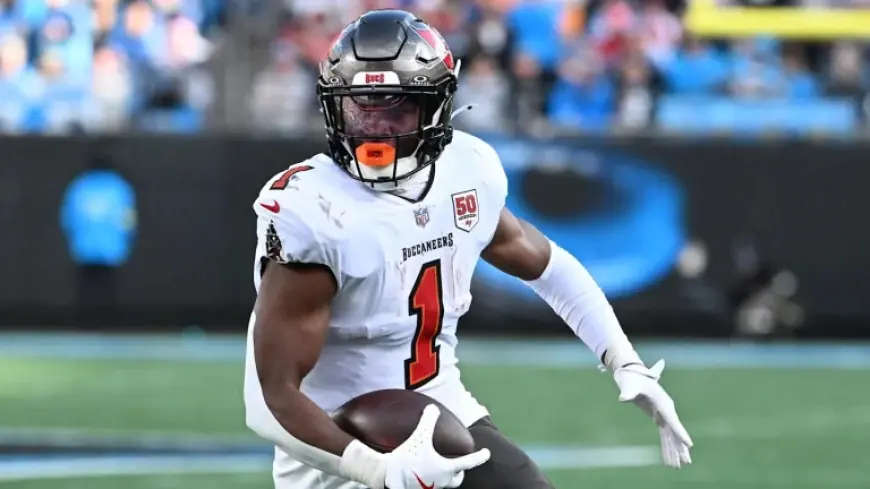
rachaad white has surfaced as a name Seattle is monitoring as the Seahawks search for a new starting running back after Kenneth Walker III secured a lucrative contract elsewhere. Yet the paper trail in the current coverage shows a tension: Seattle is described as pivoting away from premium spending, while also being linked to a player whose status is framed less as a signed solution and more as a price-dependent possibility.
Kenneth Walker III’s Chiefs deal and Seattle’s running back vacancy
Kenneth Walker III left Seattle for the Kansas City Chiefs on a three-year, $43. 1 million deal that “could be” $45 million, a departure portrayed as rooted in contract expectations. The coverage states it “seemed evident” Seattle was not willing to give Walker what he wanted, described as being among the top-paid running backs in the league. At the same time, both sides were described as saying they wanted a return, with money presented as “the only criterion for both sides. ”
That exit left Seattle without a first-string running back on the roster as framed in the context. Compounding the problem, Zach Charbonnet is described as recovering from a torn ACL, and in a separate account as recovering from a season-ending ACL injury suffered in January. The context also states Seattle has not yet agreed to a new running back in this free agency class, even as it notes that the team “lucked out” by getting Travis Etienne and Tyler Allgeier on the first day of the NFL’s legal tampering.
Those facts establish the confirmed baseline: Walker is gone on a high-dollar deal, Charbonnet’s health limits certainty, and Seattle is still in the market. What is not confirmed in the context is a completed acquisition that resolves the depth chart.
Rachaad White as a “replacement” idea, and the gap in what is confirmed
rachaad white enters the picture through two closely related threads: Seattle “monitoring the price” to obtain him from Tampa Bay, and commentary that he is among the playmakers Seattle is considering as a replacement option for Walker. The context does not confirm a trade, a contract, or even that negotiations have progressed beyond valuation. Instead, the actionable detail is that Seattle is monitoring price, a phrase that signals interest while stopping short of commitment.
The record also contains a second gap: the way White is framed oscillates between a near-term move and a fallback plan. One account describes an expectation that “something” could happen in the near future involving White, while also characterizing him as a fallback option “potentially in Seattle” if Walker did not return. Another notes a price floor concept—he “could be signed to, at least, a $3 million deal”—but that figure is presented as an external valuation rather than a Seahawks offer or agreement.
On White’s recent usage, the context provides two layers of documented detail that complicate any simplistic “plug-and-play starter” narrative. In the most recent season cited, White played 17 games and posted 132 carries for 572 rushing yards and four touchdowns. The coverage also says White began as a second-string option before taking over for the injured Bucky Irving to finish the final eight games as the starter. Another account describes White being used more sparingly to spell Irving, while still making eight starts in that season. Those descriptions are not directly irreconcilable, but together they underscore that White’s role has not been portrayed as a steady, season-long feature-back workload.
What remains unclear is whether Seattle’s interest is oriented toward acquiring a defined starter, a committee piece, or a bridge option—because the context does not confirm how Seattle would deploy him, only that he is being considered and priced.
Seattle’s affordability message versus its multiple-path plan
A documented pattern across the context is that Seattle’s running back approach is being framed through affordability and optionality rather than a single decisive move. On the affordability side, the coverage emphasizes Seattle’s unwillingness to pay Walker at the top of the market and notes that Spotrac projects White’s market value at a two-year, $5. 9 million contract—described as much more affordable than Walker’s deal with Kansas City.
On the optionality side, the context highlights dwindling veteran options after early free-agency activity, describing remaining backs as often being in their 30s, coming off serious injury, or undervalued. It also says Seattle is “looking outside the box” for its top option, while separately stating that even if Seattle signs a veteran like White in the coming weeks, the team is expected to look heavily at the position in the draft.
That creates the central investigative tension: the Seahawks are depicted as needing a starting back immediately, but the evidence presented points to a layered plan—monitoring acquisition prices, considering veterans, and preparing to draft a running back—rather than a clear, confirmed replacement.
- Confirmed: Walker joined the Chiefs on a three-year, $43. 1 million deal that could be $45 million.
- Confirmed: Charbonnet is recovering from an ACL injury, limiting certainty in the backfield.
- Documented: Seattle is monitoring the price to obtain White and is considering him among replacement options.
- Not confirmed in context: Any agreement, offer, or completed move involving White.
Meanwhile, White’s profile is used to support two different pitches at once: a versatile back who can contribute in multiple phases, and a player whose market value is lower than Walker’s. The context includes a claim that White’s best statistical season came in 2023, when he combined for more than 1, 500 yards in 17 starts, plus detailed rushing and receiving totals that season. Yet it also notes reduced usage in the more recent year cited. The context does not confirm how Seattle weights peak production versus recent workload when “monitoring the price. ”
The next concrete proof point would be a confirmed Seahawks transaction—signing or acquisition terms—that turns “monitoring” and “considering” into action. If a deal is confirmed at a figure consistent with the lower-cost valuations cited in the context, it would establish that Seattle’s post-Walker plan prioritizes price discipline even while it searches for immediate backfield stability.