Justin Thomas leans into a free-agent moment and a data-driven routine

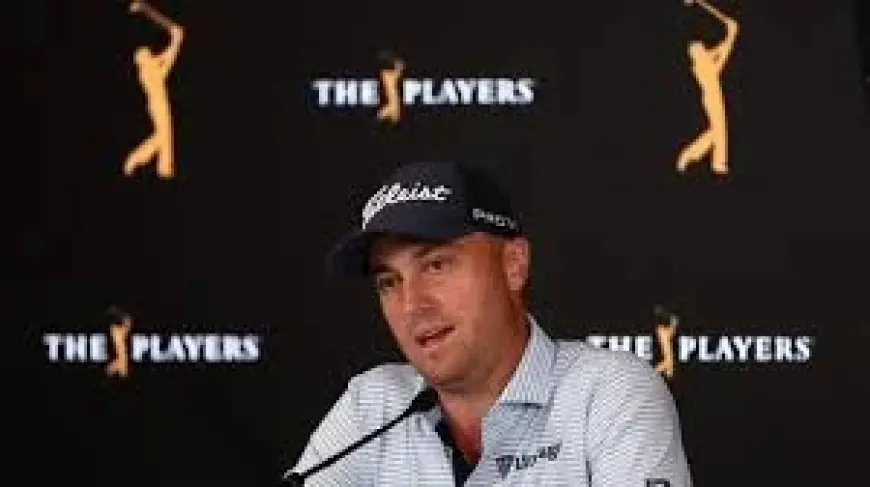
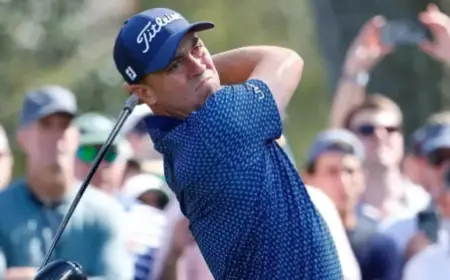
justin thomas arrived at TPC Sawgrass for his media session facing questions that blended the practical with the personal: his unusual reliance on weather apps and the reality of managing clothing choices without an apparel sponsorship. The details he shared point toward a season defined by controlled preparation after surgery, while he tries to balance patience with performance expectations following a rough return at Bay Hill.
Justin Thomas at TPC Sawgrass: six weather apps and no apparel sponsor
At the start of his media availability at TPC Sawgrass ahead of this week’s Players Championship, Justin Thomas was asked how closely he monitors the weather. His answer was specific: “I have six weather apps, ” he said, naming The Weather Channel as his standard option and Weather Bug as his “optimistic” one. He described himself as a “huge weather optimist, ” pushing back on the idea that a storm chance automatically means a washout later in the week.
That monitoring is not just a curiosity. Thomas said the habit is driven “mostly due to packing purposes” on the clothing front, a challenge he framed as more complicated because he does not have an apparel sponsorship at the moment. In the same breath, he laid out the in-round value of that information, focusing less on precipitation percentages than on wind direction and how conditions might shift between warm-up and the walk to the first tee.
Those comments, combined, sketch a current state in which the week’s logistics are tied tightly to self-management. Without a sponsor dictating a uniform approach to apparel and with tournament conditions always subject to change, his routine emphasizes preparation that can be adjusted quickly rather than planned once and left alone.
Bay Hill scores and a November microdiscectomy shape Justin Thomas’ reset
Thomas is making just his second start in 2026 after undergoing a microdiscectomy in November. Even so, he indicated he was not eager to center his public comments on “his comeback” ahead of the Players Championship, instead addressing the offbeat weather question and then circling back to his performance realities.
Last week at Bay Hill, his return went poorly on the scorecard: he shot back-to-back 79s at the Arnold Palmer Invitational and missed the cut. Thomas said he is “usually rusty after taking time off” when it comes to the mental side of the game, especially the task of plotting his way around a golf course, and he expected his scores to reflect that rust. Yet he drew a line between anticipating some struggles and accepting them emotionally in the moment.
He described being “really, really, really down and bummed Friday, ” adding that he was not OK with playing that poorly. Still, the response he outlined was not radical change. He said he needed time to decompress, regroup, and then return to work without “blow[ing] it up and restart[ing]” his process. The emphasis stayed on continuing the work already underway, while giving attention to areas that “need attention” and acknowledging specific areas for improvement after “not a great week. ”
TPC Sawgrass history and the direction Justin Thomas signals from here
TPC Sawgrass was presented as a venue that “doesn’t seem particularly conducive to success, ” but Thomas’ record there provides a counterweight to that framing. He is a previous winner at the course, winning in 2021, and he tied the course record with a 62 just last year. In other words, the immediate setting for his second start of 2026 is also one where he has already shown both ceiling and comfort.
The forces visible in his comments are clear and unusually concrete: a post-surgery schedule that is still early, a recent disappointment at Bay Hill that he described in emotional terms, and a preparation style that leans heavily on real-time information. His six-app setup is not presented as trivia; he tied it to packing when he lacks an apparel sponsorship and to decision-making about wind direction before warm-up or on the way to the first tee.
If that same approach carries forward, the direction of travel looks like process-first rebuilding rather than a reinvention. Thomas also hinted at a long-view mindset, arguing that early struggles can fade in significance if later results are strong. He said that in “the big picture, ” if he struggles early after the injury but goes on to win later in the year, “nobody’s going to remember” the Bay Hill scores.
If this trajectory continues… Thomas’ public posture is likely to keep blending accountability with restraint: acknowledging poor outcomes like the Bay Hill back-to-back 79s, then returning to the same underlying work instead of adopting a full reset. The context supports that because he explicitly rejected “blow[ing] it up, ” while describing a regroup-and-continue plan.
Should a specific factor shift… if Thomas’ situation without an apparel sponsorship changes, one practical driver behind his weather-and-packing routine could evolve. He framed his weather monitoring as “mostly due” to packing purposes on the clothing front, “particularly tricky” without a sponsor. A different apparel setup would not remove the wind-related competitive use he described, but it could reduce how much clothing logistics dominate his weather obsession.
The next confirmed signal in this context is Thomas’ play at this week’s Players Championship at TPC Sawgrass, his second start of 2026 after the November microdiscectomy and the Bay Hill missed cut. What the context does not resolve is how quickly his on-course scoring will match the optimism he expressed about his game, even as he keeps one eye on the forecast and another on the longer arc of the season.