Iowa winds vs. a looming winter storm: What the alerts reveal

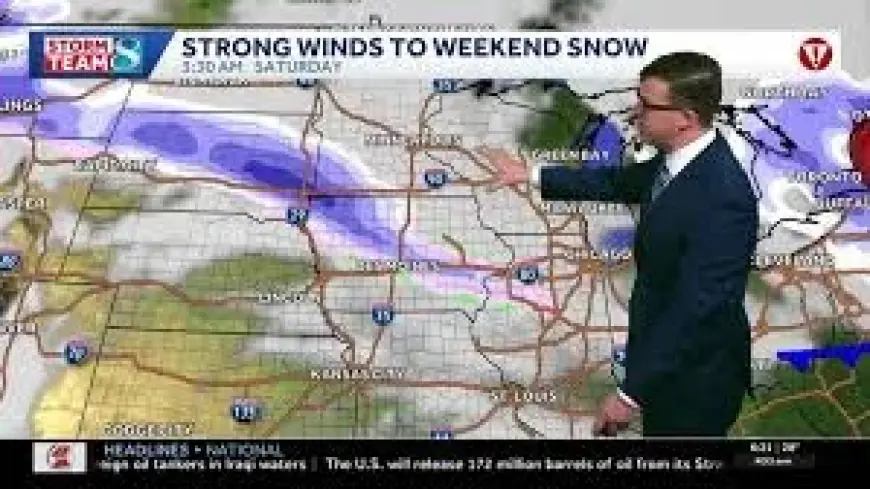
iowa is facing two distinct weather concerns framed in near-term headlines: powerful winds expected from today through Friday morning, and a winter storm described as looming this weekend. The key question for travelers is how the wind-driven, location-specific risk around the Mile Long Bridge over Saylorville Lake compares with a broader but less-defined weekend storm threat, especially in terms of timing, safety actions, and how updates will reach motorists.
Iowa DOT and the Mile Long Bridge over Saylorville Lake
The most concrete potential disruption in the current coverage centers on the Mile Long Bridge on Iowa 415 over Saylorville Lake, which may close Thursday due to high winds. The Iowa DOT said Thursday morning crews may have to close the bridge with little notice to ensure the safety of those traveling, making the immediate issue not only wind strength but also the unpredictability of access for drivers who rely on that crossing.
In response, the Iowa DOT singled out high-profile vehicles as especially vulnerable during the high wind event and recommended that those drivers find alternative routes. The department also emphasized practical, driver-controlled safety steps: keep your distance from other vehicles, keep both hands on the steering wheel, avoid distractions, slow down, and expect the unexpected. That framing treats the wind hazard as both an infrastructure management problem (possible closure) and a driver-behavior problem (staying in control when gusts rise).
Local 5 Weather Team: Weather Impact Alert Day Thursday night into Friday morning
Alongside the DOT’s operational warning, Local 5’s Weather Team called for a Weather Impact Alert Day for Thursday night into Friday morning for those winds. That alert window matters because it narrows the likely period of worst conditions, which aligns with the bridge-closing scenario described as possible on Thursday. Still, the DOT language about a closure “with little notice” underscores that decisions could hinge on conditions as they develop rather than a fixed schedule.
Communication plans are also clearer for the wind event than for the weekend system referenced in the headlines. Any updates on the bridge will be shared through the state’s 511 system and on digital message boards on both ends of the bridge. In practical terms, that creates two layers of notice: one for drivers checking conditions ahead of time, and another for drivers arriving at the crossing and needing immediate direction.
Iowa wind threat vs. the winter storm looming this weekend
Placed side by side, the wind event and the looming winter storm differ less in seriousness—because the storm details are not specified here—than in how actionable the information is right now. The wind coverage includes a named piece of infrastructure (the Mile Long Bridge), a specific roadway (Iowa 415), a defined alert window (Thursday night into Friday morning), and explicit operational steps (a closure may happen with little notice). By contrast, the winter storm headline establishes timing broadly as “this weekend” but provides no comparable details in the available text about where, when, or what specific actions officials might take.
| Comparison point | Powerful winds (today through Friday morning) | Winter storm (this weekend) |
|---|---|---|
| Time window provided | Thursday night into Friday morning (Weather Impact Alert Day) | This weekend (no further timing in the provided text) |
| Named location at risk | Mile Long Bridge on Iowa 415 over Saylorville Lake | Not specified in the provided text |
| Immediate travel action | Bridge may close Thursday; high-profile vehicles urged to use alternate routes | Not specified in the provided text |
| Update mechanism | State’s 511 system and digital message boards at both ends of the bridge | Not specified in the provided text |
| Safety guidance offered | Distance, hands on wheel, avoid distractions, slow down, expect the unexpected | Not specified in the provided text |
Analysis: This comparison shows that, at least within the currently available details, iowa’s wind risk is being treated as an imminent, decision-driven transportation issue with defined communication channels, while the weekend winter storm is framed as a developing weather concern without operational specifics yet attached. That does not make the weekend system less important; it means travelers can plan more concretely around the wind event than around the storm headline at this stage.
The next confirmed test of this finding is whether Thursday morning crews actually close the Mile Long Bridge and how quickly those updates appear on the state’s 511 system and on the digital message boards. If Iowa DOT maintains its ability to issue rapid, location-specific updates during the high wind event, the comparison suggests that near-term travel decisions will be shaped more by immediate closures and alerts than by the less-detailed weekend storm warning.