Jim Furyk vs. the Golf Channel pace: what his debut reveals

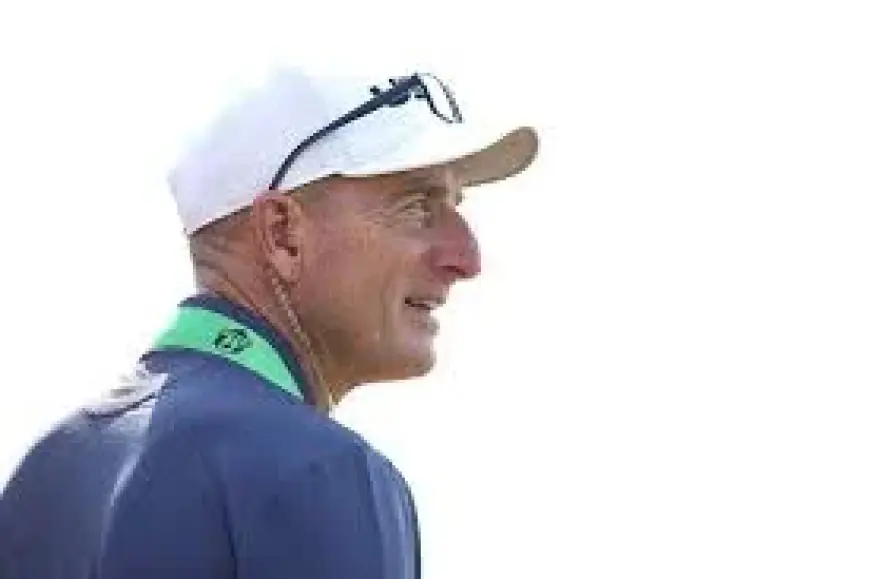
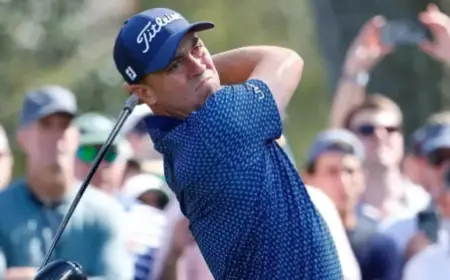
Jim Furyk is approaching television the way he once approached tournament weeks, but the shift from hitting shots to explaining them is forcing new habits on Golf Channel’s latest analyst. By comparing his Arnold Palmer Invitational debut to his second week at The Players Championship, a clearer question emerges: how much of Furyk’s player-built preparation translates to live TV, and where does the broadcast format demand something different?
Jim Furyk at The Players Championship: eight hours, more scouting, tighter execution
At The Players Championship in Ponte Vedra Beach, Fla., Furyk is in his second straight week serving as an analyst and is working with anchor Terry Gannon on early-round coverage from 1: 00 p. m. to 7: 00 p. m. ET. The workload is larger than what he described as the usual Thursday-Friday tour coverage, and Golf Channel’s eight-hour window also gives him time to make up for two hours he lost on air the previous week at Bay Hill because of a weather suspension.
On-site, Furyk has leaned into familiar routines: walking the Stadium Course, observing where pin positions will be, noting how firm or soft areas of the course are, and tracking subtle changes. He also framed his role in a specific division of labor: Dan Hicks and Gannon “set up the scene, ” and Furyk tries to “see the shots and react, ” then explain to viewers what is happening and why, with an emphasis on course knowledge and the shots players are asked to hit.
Still, the second week is not a repeat of the first. Furyk said he is stepping up his preparation because the research and time he spent at Bay Hill “wasn’t enough, ” even though he also called the debut week “really positive. ” That combination—positive first outing, but a deliberate ramp-up for the next one—sets up a practical comparison between his player-style intensity and the specific mechanics of the booth.
Golf Channel’s Arnold Palmer Invitational debut: preparation met live-TV speed
Furyk’s on-air start came at the Arnold Palmer Invitational, where he made his television debut for Golf Channel as a lead analyst on PGA Tour coverage. He characterized his approach as leaving “no stone unturned, ” but said he quickly discovered that no amount of preparation could fully match the pace of live television. In one example, he said that about 10 minutes into day one of the telecast, he stopped looking at the notes he had prepared.
That first week also established the parameters of his initial run: Golf Channel added Furyk as the lead analyst for two tournaments, the Arnold Palmer Invitational and The Players Championship. Furyk worked four hours on Thursday and Friday, followed by two hours on each weekend day. Despite never having served as a TV analyst before—without even a dry run—he debuted to mostly positive reviews, and he sought guidance from established broadcast voices including Roger Maltbie, Peter Jacobsen, Davis Love III, and Frank Nobilo. Tommy Roy also factored into his early support network, and Furyk later described a newfound appreciation for broadcasters such as Gannon and Roy, praising their ability to manage multiple moving parts smoothly.
In terms of immediate adjustments, Furyk said he discussed constructive criticism after the first round at Bay Hill with Roy and Gannon. Their emphasis centered largely on the basics of on-camera connection: more eye contact with the host or the camera. The note is small, yet it captures the type of difference that does not show up on a yardage book.
The Players vs. Bay Hill: the same competitor, two different job demands
Placed side by side, Furyk’s two-week arc shows the gap between “preparation” as a player and “preparation” as a live analyst. At Bay Hill, he arrived with extensive notes and discovered he could not rely on them once the broadcast began moving. At The Players Championship, he responded by not just preparing more, but preparing differently—walking the Stadium Course with a focus on pin positions, firmness, and subtle changes that can feed immediate, reactive explanations.
| Comparable point | Arnold Palmer Invitational (Bay Hill) | The Players Championship (Stadium Course) |
|---|---|---|
| Role on Golf Channel | Television debut as lead analyst | Second week as an analyst, early-round coverage with Terry Gannon |
| Preparation reality check | Stopped using notes about 10 minutes into day one | Stepping up preparation after saying Bay Hill research “wasn’t enough” |
| On-air time | Lost two hours because of a weather suspension | Eight-hour window, with time to make up those two hours |
| Primary coaching feedback | Constructive criticism focused on eye contact | Working again with Gannon, building comfort with camera and workflow |
| Value proposition he cites | Player perspective meets live pace | Explain what happened and why, adding course and shot knowledge |
Analysis: The comparison suggests Furyk’s edge is not simply that he prepared intensely in both weeks; it is that he is treating the broadcast as its own competitive discipline, one that rewards real-time communication and coordination as much as golf knowledge. His comments underline that the biggest adjustment is not the subject matter—shots and strategy—but the timing and delivery constraints created by live television.
That shift also helps explain why he has expressed an appetite for doing more announcing. Furyk said TV gives him “a little of that same feel” as tour life: preparation, practice, and then the camera goes on—something he compared to hitting a golf shot. The verdict from the two-tournament comparison is straightforward: Furyk’s first week proved he can translate player insight onto air, but his second week shows the job’s real test is mastering pace and presentation, not access to information. The next confirmed datapoint is his early-round block at The Players Championship from 1: 00 p. m. to 7: 00 p. m. ET; if Furyk maintains the stepped-up, course-specific preparation while also applying the on-camera feedback, the comparison suggests his “mostly positive” debut could turn into a more repeatable broadcasting template.