Royal Navy sends HMS Dragon to eastern Mediterranean, signaling defensive posture

The Royal Navy has dispatched HMS Dragon from Portsmouth to the eastern Mediterranean to join the UK’s defensive operations, with the Type 45 destroyer leaving its dock on Tuesday afternoon. This deployment, paired with the RFA Lyme Bay on heightened readiness and HMS Prince of Wales put on alert, points toward a short-term posture focused on protecting RAF Akrotiri and British nationals while exposing tensions over minehunting and prior planning.
HMS Dragon’s departure from Portsmouth and mission to protect RAF Akrotiri
HMS Dragon, a Type 45 destroyer that only recently completed maintenance, set sail from Portsmouth on Tuesday afternoon and is expected to arrive in the eastern Mediterranean in about a week as the UK’s first and only warship in the region on arrival. Its primary role will be protecting RAF Akrotiri, which was struck earlier this month by an Iranian-made drone that inflicted “minimal damage” to a hangar, and the destroyer sails armed with Sea Viper missiles and supported by Wildcat helicopters from 815 Naval Air Squadron equipped with Martlet missiles capable of taking out aerial drones.
Royal Navy readiness: RFA Lyme Bay, HMS Prince of Wales, and aviation assets
Planning shifts extend beyond HMS Dragon: the RFA Lyme Bay has been placed on “heightened readiness” and is currently in Gibraltar, prepared to deploy to the eastern Mediterranean if required to assist British nationals and maritime tasks. The auxiliary vessel carries an aviation platform and medical facilities that make it suitable for evacuations and medical treatment, and it is a Bay Class landing ship whose primary function includes delivering troops, vehicles, stores and ammunition. Separately, HMS Prince of Wales was also placed on heightened readiness with its crew told to be ready to set sail in five days, although its scheduled deployment to the north Atlantic has not changed.
Based on context data:
- HMS Dragon: Type 45 destroyer, Sea Viper missiles, Wildcat helicopters with Martlet missiles.
- RFA Lyme Bay: Bay Class landing ship, aviation platform, medical facilities, currently in Gibraltar.
- HMS Prince of Wales: carrier placed on heightened readiness; scheduled north Atlantic deployment unchanged.
- Aviation support: three Wildcat helicopters with anti-drone capability and a Merlin helicopter arrived in Cyprus this week.
HMS Middleton maintenance and John Healey’s explanations expose planning tensions
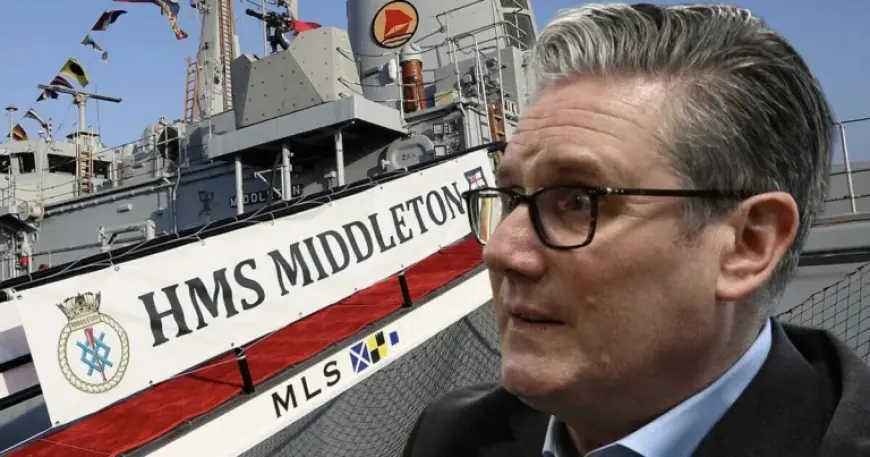
Critical coverage highlights that the Royal Navy and other military assets scrambled in response to recent events, pointing to specific planning choices: a failure to deploy a frigate in advance and the six days taken to prepare HMS Dragon for departure drew public criticism. The UK’s only minehunter in the Gulf, HMS Middleton, was brought back to Portsmouth days before military action, and Defence Secretary John Healey cited routine maintenance as the reason for its withdrawal. When asked about the plan to counter the use of mines, Healey declined to answer that question, while sources close to him suggested that minehunting is being performed by unmanned systems still “very much in its infancy. “
Should the current trajectory continue—HMS Dragon arriving in about a week and support ships held at heightened readiness—the UK will maintain a visible, if limited, naval presence aimed at defending RAF Akrotiri and supporting potential evacuations. If those assets operate as described, the Royal Navy’s short-term posture will rely on a single destroyer for warfighting presence accompanied by auxiliary and aviation capabilities for humanitarian and defensive tasks.
Should a key factor shift—if the RFA Lyme Bay is tasked or if unmanned minehunting does not scale—the operational picture would change: deploying Lyme Bay would add evacuation and medical capacity to the region, while an inability to substitute HMS Middleton’s minehunting role could leave a persistent capability gap against maritime mines.
The next confirmed milestone in the coverage is HMS Dragon’s arrival in the eastern Mediterranean in about a week. What the context does not resolve is whether the RFA Lyme Bay will be tasked for deployment or whether unmanned minehunting will be sufficient to replace HMS Middleton’s presence. Observers will watch Dragon’s arrival and any formal tasking of Lyme Bay as the immediate signals that will clarify whether current measures are short-term precautions or the start of a sustained regional posture.