Landon Dickerson contract revision vs. prior terms: what the numbers reveal

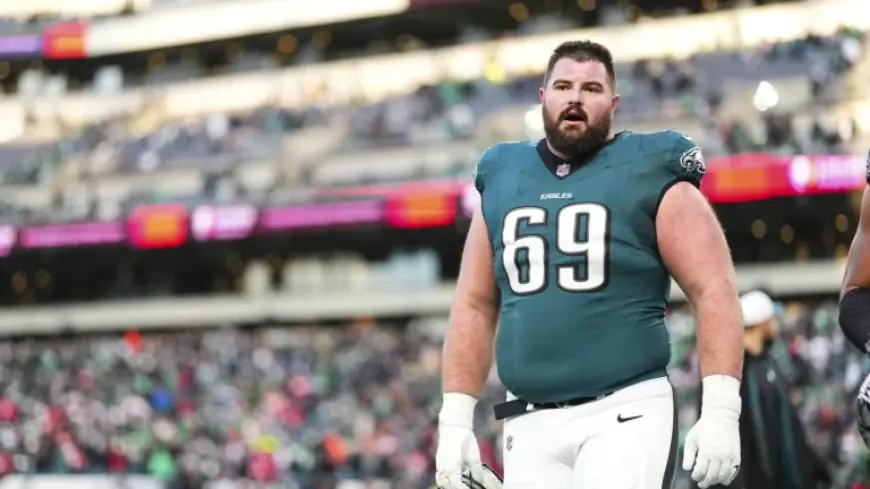
The Eagles and guard landon dickerson have agreed to a revised contract that reshapes what he can earn over the next two seasons and when he can reach free agency. The comparison is straightforward: how does the new two-year structure stack up against the money and timeline that were previously on the table for 2026 and 2027, and what does that change signal?
Landon Dickerson and the Eagles: what the revised two-year deal does
The revised agreement keeps the focus on the next two seasons, with a two-year value noted at around $36 million. The adjustment also changes the player’s calendar: Dickerson is now set to hit free agency in 2028 instead of 2029. In other words, the new terms trade some immediate certainty for a quicker route to the open market.
Still, the revised structure does not lock in a simple pay cut with no path back. The deal includes incentives that leave room for Dickerson to climb back toward the prior level of compensation. Specifically, he will be able to reach that previous number in 2027 if he realizes those incentives, making the short-term reduction conditional rather than absolute.
The earlier outlook for 2026 and 2027: more guaranteed money, later free agency
Before the adjustment, Dickerson was previously due $39 million across 2026 and 2027. That figure stands as the cleanest benchmark in the available details: a higher, more direct payout across the same years now covered by the revised two-year arrangement.
The prior setup also carried a longer runway before free agency. With free agency previously slated for 2029, the earlier terms kept Dickerson tied to the Eagles for an additional year compared with the newly stated 2028 timeline. Yet the revised contract shifts that leverage point forward, placing a more immediate deadline on the relationship between player and team.
Eagles revised deal vs. prior terms: the money-timeline tradeoff in plain view
Lining up the two versions side by side clarifies the exact nature of the change: less money on paper for the next two seasons, paired with incentives that can restore upside and a free-agency date moved up by one year. The adjustment is not just financial; it also alters when Dickerson can realistically negotiate as a free agent.
| Point of comparison | Revised terms | Previously due |
|---|---|---|
| Two-season amount cited | Around $36 million | $39 million in 2026 and 2027 |
| Years referenced | Next two seasons (includes 2027 incentives path) | 2026 and 2027 |
| Upside mechanism | Incentives could reach prior number in 2027 | No incentive pathway specified |
| Free-agency timing | 2028 | 2029 |
Analysis: Using the same criteria for both versions—cash value over the next two seasons and control over the player’s future—the revised agreement appears designed to reduce near-term cost while keeping performance-based upside available, and it accelerates Dickerson’s potential exit ramp by moving free agency to 2028. That combination implies a rebalancing rather than a one-sided concession: the Eagles lower the immediate headline number, while Dickerson gains an earlier shot at free agency and retains a path back to the prior total through incentives.
For now, the most concrete takeaway is numeric and structural. The revised deal shifts the two-season figure from $39 million due in 2026 and 2027 to around $36 million, while also moving the free-agency marker from 2029 to 2028 and tying some of the difference to incentives that could pay out in 2027. If landon dickerson realizes those incentives, the comparison suggests the contract adjustment functions less like a simple pay cut and more like a reallocation of risk and timing between the player and the Eagles.