Vfb Stuttgart Vs Porto: Hoeneß frames a Champions League-level test

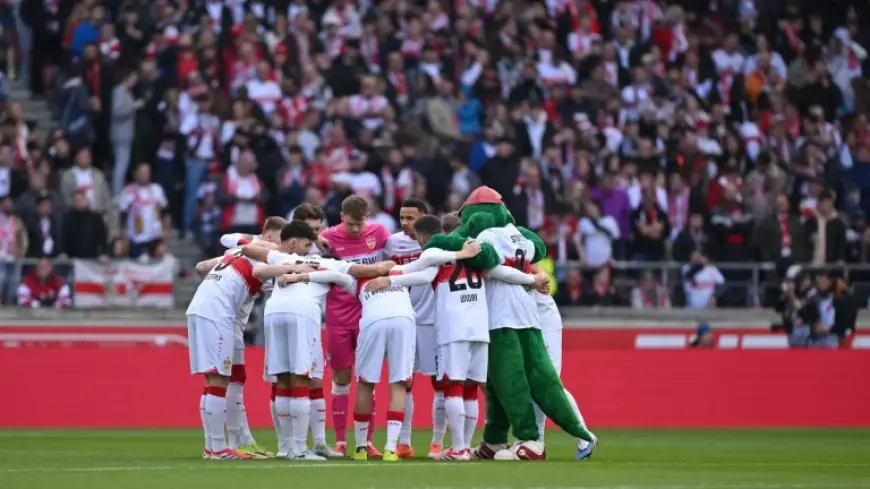
Vfb stuttgart vs porto moves from a simple round-of-16 fixture into a measuring stick, at least in Sebastian Hoeneß’s telling, when VfB Stuttgart host FC Porto in the Europa League first leg. Hoeneß is not only comparing the two teams’ routes into the tie, but also the level of challenge he expects from a Porto side he says could play in the Champions League last 16. What does that comparison reveal about how Stuttgart must approach Thursday night?
Sebastian Hoeneß and VfB Stuttgart: a return to a rare stage
Hoeneß cast the first leg as a “hard test” for his VfB Stuttgart, arguing the opponent represents “Champions League level” quality. He said he is eager to see “where we stand, ” and he tied that evaluation directly to performance: Stuttgart will need an “absolute top performance” against an “exceptionally” strong side.
Stuttgart’s place in the Europa League round of 16 also comes with a specific point of reference inside the club’s own recent history. The team are playing their first European round-of-16 tie in 13 years; last time, VfB Stuttgart were eliminated by Lazio. Hoeneß also highlighted the particular appeal of matches like these, noting it has been “a few decades” since Stuttgart were in a European quarterfinal.
Even before comparing Stuttgart to Porto, Hoeneß presented a standard that leaves little room for half measures. He said that if a team shows weaknesses “on this level” against a side like Porto, those weaknesses will be exposed—an idea he described as part of the point of the test.
FC Porto: league-leading status and defensive strength as the benchmark
Porto arrive with a profile Hoeneß treated as both a warning and a baseline for Stuttgart’s ambitions. He described Porto as the leaders of Portugal’s league and as an opponent that can be uncomfortable to face, “especially” due to defensive strength.
Hoeneß’s description of that strength focused less on an unbreakable wall than on collective work without the ball. He said Porto are not a “bulwark, ” but a team that works “extremely together” defensively, and he called that their “key. ” The practical impact, he added, is that Porto “do not allow much, ” turning efficiency into “a big topic” for the tie.
That framing sets a clear benchmark for Stuttgart. The test is not only whether Stuttgart can create moments against a team that limits opponents, but whether they can turn whatever chances emerge into something decisive in a two-legged matchup.
Vfb Stuttgart Vs Porto: contrasting paths into the last 16, same pressure now
The most concrete comparison in the build-up to Vfb stuttgart vs porto lies in how each side reached the round of 16. Hoeneß’s Stuttgart did not qualify directly as one of the best top-eight teams of the league phase for the last-16 round. Instead, Stuttgart had to go through the intermediate round, where they defeated Celtic Glasgow to get here.
Porto, by contrast, are explicitly separated from Stuttgart in the context as the team that did achieve direct qualification as one of those top-eight league-phase sides. Put side by side, the routes underscore two different starting points: Stuttgart’s was longer and required an extra hurdle; Porto’s implied a smoother passage into the knockout round.
| Comparison point | VfB Stuttgart | FC Porto |
|---|---|---|
| Route to the Europa League round of 16 | Advanced through the intermediate round | Qualified directly as a top-eight league-phase team |
| Recent reference point in Europe | First round of 16 in 13 years; last time eliminated by Lazio | Not stated in the context |
| Pre-match framing by Stuttgart coach | Needs an “absolute top performance”; weaknesses will be exposed | Described as Champions League-level and “exceptionally” strong |
| Defensive profile | Not stated in the context | “Extremely” collective defending; allows little |
| Key match theme named in advance | Efficiency will be a “big topic” | Defensive work as the “key” |
Still, the comparison also shows where the context stops short: it supplies Porto’s defensive identity and domestic position, while giving fewer equivalent specifics about Stuttgart’s current strengths. That imbalance mirrors Hoeneß’s own emphasis: he spent more time defining the level of the opponent and the consequences of mistakes than talking up any single Stuttgart advantage.
Analysis: Put together, the two paths and Hoeneß’s language suggest Stuttgart are treating the first leg less as a reward for getting through Celtic Glasgow and more as an evaluation under pressure. The direct-qualification contrast strengthens that mindset: if Porto represent the standard of the best teams from the league phase, Stuttgart’s task is to prove they can meet it now, even after taking a longer route to arrive at the same round.
The next confirmed checkpoint is the first leg on Thursday, scheduled for 1: 45 p. m. ET. If Stuttgart maintain the “efficiency” Hoeneß flagged as decisive against a side that “does not allow much, ” the comparison suggests their longer road into the last 16 will matter less than what they show against the benchmark Porto represent.