Can AI Standardize Human Expression or Can Some Defy It?

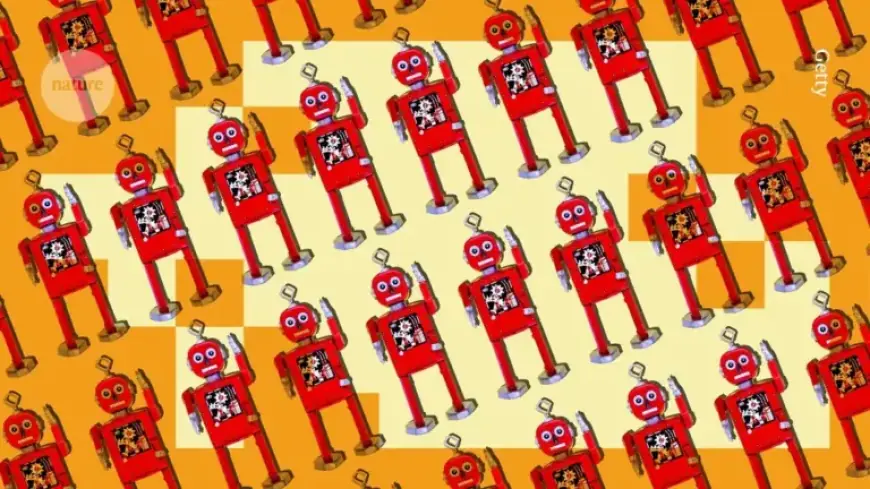
Recent discussions in the scientific community have raised concerns over artificial intelligence (AI) and its potential to standardize human expression. As AI models increasingly rely on extensive datasets containing text, images, and videos generated by real individuals, questions arise about how this relationship may impact human writing and thought processes.
AI’s Influence on Human Expression
A number of studies suggest that interactions with large language models (LLMs) might lead individuals to adopt specific writing styles and reasoning methods typical of AI-generated content. This adoption is alarming for some researchers, indicating that human discourse may risk homogenization.
Key Findings from Research
- Zhivar Sourati, a computer scientist at the University of Southern California, emphasizes how AI interaction can create a socially accepted framework for presenting information.
- Research indicates that text produced after the introduction of ChatGPT in 2022 is less stylistically diverse compared to that created prior to its launch.
- A recent study found that when participants were exposed to LLMs expressing specific sentiments about social media, their opinions shifted in alignment with those sentiments.
Resistance to AI Homogenization
Despite the risks, there is evidence suggesting that some writers maintain distinctive styles that reflect authentic human expression. A study posted on arXiv highlights groups that prioritize authenticity, possibly resisting the efficiency benefits provided by AI assistance.
AI and Sociopolitical Views
Further research has explored the implications of AI on sociopolitical opinions. In a recent study published in Science Advances, participants who used AI tools to discuss sociopolitical issues tended to express attitudes mirroring those of the AI, unlike a control group. Such effects may threaten the diversity of political discourse, according to co-author Sterling Williams-Ceci, an information scientist at Cornell University.
Conclusion: The Balance of AI in Human Creativity
While AI offers tools that can enhance clarity and coherence in writing, reliance on these technologies poses significant challenges. The collective impact of adopting AI-generated styles could ultimately lead to a loss of individuality in expression. Researchers continue to discuss whether individuals can resist this trend or if standardization will prevail.