Smiljan Radic wins 2026 Pritzker Prize, signaling a tilt toward modest design

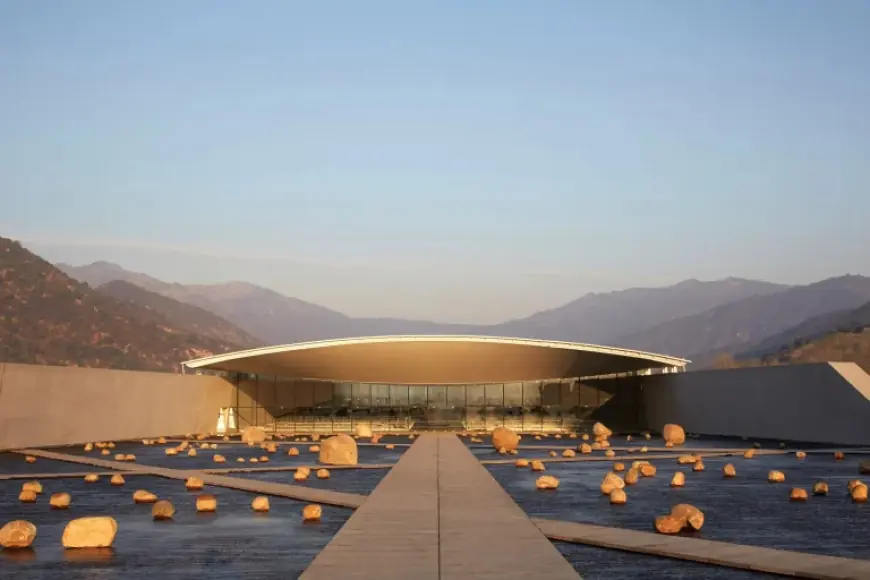
smiljan radic has been announced as the laureate of the 2026 Pritzker Architecture Prize, becoming the 55th recipient of the architecture field’s highest-profile global honor. The jury language around his work, and the specific projects cited in his career, point toward an award cycle that is spotlighting responsiveness to site and need, material experimentation, and designs that embrace fragility rather than certainty.
Smiljan Radic Clarke named 55th Pritzker laureate
Smiljan Radic Clarke’s selection places him in the Pritzker Prize lineage immediately following recent laureates listed in the announcement: Liu Jiakun (Pritzker Prize 2025), Riken Yamamoto, and David Chipperfield. The 2026 recognition frames Radic as a Chilean architect whose work has been described by the prize team in terms that prioritize the human experience, empathy, and what it called a “quiet emotional intelligence. ”
The jury citation also sets a precise tone for why this award matters as a directional signal. It described a body of work “at the crossroads of uncertainty, material experimentation, and cultural memory, ” adding that Smiljan Radic “favours fragility over any unwarranted claim to certainty. ” In that framing, buildings that can appear “temporary, unstable, or deliberately unfinished” are not treated as shortcomings, but as a deliberate architectural position that can still provide “structured, optimistic and quietly joyful shelter. ”
Restaurant Mestizo and Pequeño Edificio Burgués show the range in Chile
The context around Radic’s built work reinforces the prize’s emphasis on variety and situational response rather than a single signature form. The projects explicitly referenced span nearly two decades and multiple program types: Restaurant Mestizo (Santiago, Chile, 2006), Pite House (Papudo, Chile, 2005), and Chile Antes de Chile, an extension of the Chilean Museum of Pre-Columbian Art (Santiago, Chile, 2013). They also include a winery for VK retreats in Millahue, Chile, and his home studio, Pequeño Edificio Burgués (Santiago, Chile, 2023).
That spread of dates and typologies provides one of the clearest internal comparisons in the material: from 2005 and 2006 residential and restaurant work through a 2013 museum extension, then a 2014 winery, and finally a 2023 home studio. Taken together, they reinforce the award’s stated focus on designs “responsive to site, environment and need, ” rather than a narrow celebration of one building type or one moment.
Serpentine Pavilion 2014 and the jury citation point to experimentation
Signals about trajectory also sit in the way Smiljan Radic has spoken about his own approach and how it is echoed by the award language. In a 2014 profile tied to his Serpentine Pavilion reveal, he said he sees his work as “fluid and mindful, ” adding, “I am not a creator of new shapes. ” In the 2026 Pritzker framing, that becomes less a personal preference and more a validated architectural stance: flexibility and experimentation get elevated as the defining strengths.
His statement included in the prize materials further sharpens the trend line. Smiljan Radic positioned architecture between “large, massive, and enduring forms” that can stand for centuries and “smaller, fragile constructions” that may be fleeting and without a clear destiny. For a prize jury to then praise buildings that can look close to “disappearance” suggests a continued willingness to reward work that rejects overconfident monumentality in favor of vulnerability and presence.
If the jury’s language continues to guide future selections… the Pritzker conversation may keep clustering around concepts that appear repeatedly in this year’s citation: uncertainty, material experimentation, and cultural memory, paired with buildings described as temporary or deliberately unfinished yet still sheltering. In that scenario, the award’s public-facing narrative would keep validating architects whose work is framed around emotional presence and the experience of pausing to “reconsider” the world, as Radic described.
Should the balance shift back toward “large, massive, and enduring forms”… the next signal would be a clear change in how the prize frames excellence: less emphasis on fragility and disappearance, and more on permanence and conventional monumentality. The context does not resolve which direction the award’s messaging will take beyond this cycle; it only establishes that in 2026, Smiljan Radic Clarke’s recognition is explicitly tied to responsiveness, experimentation, and a preference for fragility over certainty.