Al Quds Day protests expose deep divides in Canada

Ghazal Shokri, an Iranian Canadian who fled Tehran in 2014 after 30 years under successive ayatollahs, says seeing chants at planned al quds day demonstrations is “traumatizing, ” and Jewish groups are calling on authorities to shut down Iran-backed events in Toronto, Montreal, Calgary and Vancouver. The clash over those gatherings and a separate Montreal rally that drew over one thousand people highlights competing demands on Canadian authorities about public safety and foreign-policy symbolism.
Al Quds Day protests in Canada
Canadian Jewish groups have urged officials to prevent Iran-backed Al-Quds Day demonstrations set for this weekend in four cities: Toronto, Montreal, Calgary and Vancouver. The context notes that while the stated purpose of Al-Quds Day is opposition to Israel’s occupation, global iterations of the event regularly include calls for Israel’s destruction, the deaths of Israelis and expressions of support for the Iranian regime and the Islamic Revolutionary Guard Corps, the IRGC, which is banned in Canada. The pattern suggests authorities are being asked to weigh public-safety risks against the right to protest when organizers and rhetoric are tied to an entity that Canada has designated as a terrorist group.
Ghazal Shokri’s account of Tehran
Shokri describes direct personal harm from steadfast supporters of the Iranian regime: she was pepper-sprayed and said supporters once tried to strike her with a car while she was riding her bike. She also said hearing the chants at planned al quds day events mirrors the abuse she experienced in Tehran and is traumatizing. That testimony indicates opposition to these demonstrations is grounded not only in geopolitical disagreement but in lived experience of intimidation by regime supporters, which complicates policing and public-order decisions in Canadian cities.
Montreal Hands off The Middle East
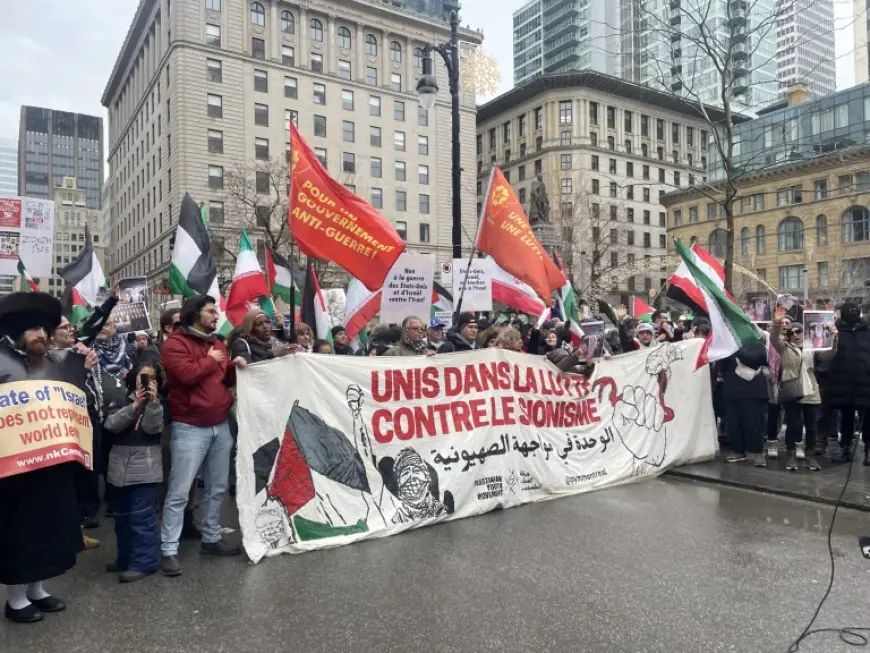
Over one thousand people gathered downtown Montreal in a Hands off The Middle East protest organized by the Palestinian Youth Movement of Montreal and the Iranian Canadian Congress, rallying against the United States and Israel’s attacks on Iran and continued military violence in Lebanon and Gaza. Montreal activists called for Canada to take a clear anti-war stance on Iran, signaling a domestic constituency that views such demonstrations as anti-war expression rather than endorsement of the Iranian regime. That distinction helps explain why some community groups push for bans while other organizers proceed with mass rallies.
Beyond Canada, a separate development shows how authorities elsewhere have responded: the U. K. government approved a London Metropolitan Police request to ban its Al-Quds Day event scheduled for Sunday because of a risk of “severe public disorder, ” and that ban, police said, began on Wednesday and will last one month. The London decision offers a concrete precedent that Canadian officials and police may reference as they assess the weekend’s planned gatherings.
For now, the immediate friction is clear: Jewish leaders and many Iranian Canadians want closures of Iran-backed demonstrations in four Canadian cities this Friday and Saturday, while other activists mobilized a large Montreal rally organized by the Palestinian Youth Movement of Montreal and the Iranian Canadian Congress. If Canadian police adopt measures similar to the London Metropolitan Police ban, the data suggests authorities will prioritize preventing severe public disorder over permitting certain protests tied to the Iranian regime; if they do not, the confrontations described by people like Ghazal Shokri are likely to remain a central public-order and political challenge.