Powerball Winners: $50 Million Solo Winner vs. Recent $80 Million Victor

Draw #1556 produced a single $50 million winner and, exactly one month earlier, a Victorian man from Altona collected an $80 million jackpot. This comparison asks what juxtaposing these two powerball winners reveals about prize scale, public reach and the immediate human response.
Draw #1556: lone $50 million Powerball winner and secondary payouts
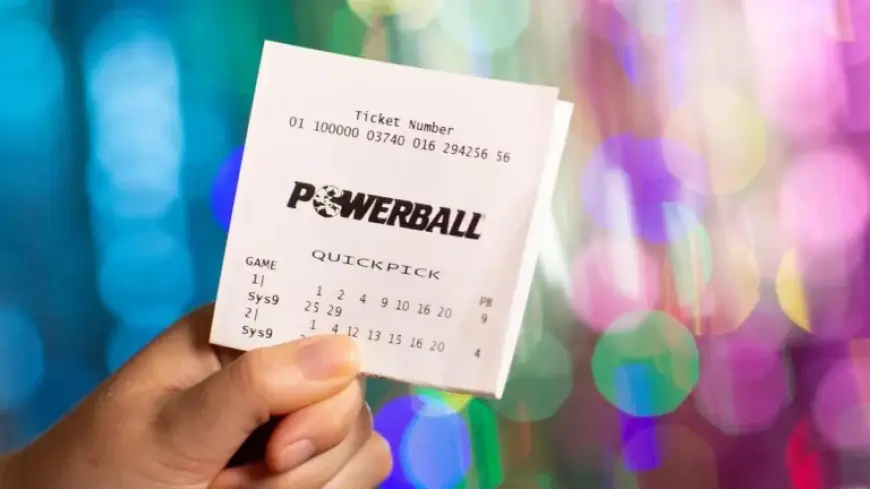
The draw labeled #1556 produced one ticketholder who matched all seven winning numbers plus the Powerball to secure a $50 million payoff. That same draw yielded three division two ticketholders, each securing more than $295, 000, and 88 division three winners; 13 of those winners were West Aussies who will receive $12, 468. 85 each. The winning sequence was 5, 6, 18, 9, 14, 4 and 13, with the Powerball numbered 14.
Altona $80 million winner and The Lott’s outreach
Exactly one month before the $50 million result, a sole winner from Altona claimed an $80 million jackpot. Officials from The Lott initially struggled to reach the Altona man after that draw; calls went straight to voicemail because his message bank was full, and it took nine attempts before he answered. He checked his ticket online himself before the reality sank in and reacted emotionally. Anna Hobdell of The Lott revealed she was reduced to tears while sharing the life-changing news and said it was a particularly special and emotional call.
Powerball Winners compared: prize scale, public reach, and immediate record
On prize scale alone, the Altona win at $80 million exceeded the $50 million draw by $30 million, making the earlier result the larger single-ticket payout. For public reach, the $50 million jackpot was described as the second biggest of the year and enticed an estimated 3. 5 million people to buy a ticket; officials noted that three weeks without a division one winner allowed the $50 million pool to accumulate. For immediate record and storytelling, the Altona $80 million win produced a documented sequence of outreach attempts, a delayed answer after nine calls, and an emotional exchange involving Anna Hobdell. By contrast, The Lott has not announced details of the $50 million winner, leaving the $50 million win recorded primarily through draw figures and secondary payout tallies rather than a publicized personal narrative.
Applying the same evaluative criteria to both powerball winners—prize amount, public participation, and visible human response—highlights a consistent pattern: larger prize sums do not always translate into immediate public narratives, but the combination of a very large prize and confirmed winner contact tends to produce an individual story. The Altona $80 million win created a direct human account; the $50 million draw so far registers as a major statistical outcome with multiple smaller winners documented across divisions.
Finding: This comparison establishes that while both are single-ticket wins, the Altona $80 million result generated a clearer public narrative through documented outreach and emotional response, whereas the $50 million draw is notable for broad ticket participation and layered secondary payouts but lacks an announced personal account. The next confirmed data point that will test this finding is The Lott announcing the details of the $50 million winner. If The Lott releases the winner’s identity and outreach record, the comparison suggests the $50 million event will mirror the Altona case in public narrative; if The Lott maintains privacy, the $50 million win will stand as a statistically significant jackpot with fewer publicly recorded human details.