Dca takeoff debris puncture forces CRJ-700 diversion

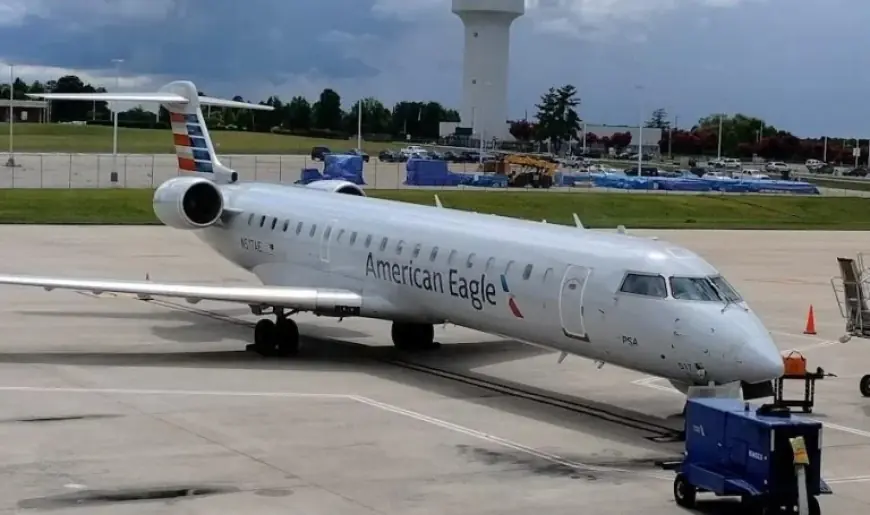
A PSA Airlines CRJ-700 operating on behalf of American Airlines diverted shortly after departure when an object struck the aircraft during a dca takeoff from Runway 15, leaving a hole in its radome. The diversion to Washington Dulles put attention on what, exactly, was on the runway and how quickly flight crews and airport systems can contain the risk once an impact is detected.
Dca Runway 15 impact sequence
US regulators disclosed the incident in a preliminary notification stating the aircraft “struck an object on take-off” from DCA and diverted to Washington Dulles International Airport (IAD), where “post-flight inspection revealed a hole in the radome. ” The airframe was identified as N517AE, and the flight was bound for Birmingham, Alabama (BHM). The takeoff occurred at about 23: 30 on March 9, with another account specifying a 23: 29 departure after an initially scheduled 19: 59 local departure time.
The crew’s immediate actions, as described, show the operational logic that follows an unexpected impact during takeoff: fly the aircraft, stabilize it, then get it on the ground quickly at a nearby airport with appropriate services. In this case, the climb was halted at 4, 000 feet before the decision was made to divert to IAD, and the aircraft landed 16 minutes after takeoff. The figures point to an event treated as urgent rather than something to “monitor” en route, consistent with the discovery that the radome had been punctured.
N517AE damage and service disruption
While the regulator did not disclose the nature of the object involved or the extent of the radome damage beyond confirming a hole, the post-landing inspection finding carries immediate implications for airworthiness and scheduling. A radome sits at the front of the aircraft and, when compromised, triggers a maintenance response that can remove a plane from service until it is inspected and fixed.
On that point, the two accounts provide different levels of specificity. One states the aircraft “appears to have returned to service the following day, ” while another describes the CRJ-700 remaining at Washington Dulles until the next evening before departing for Wichita (ICT), identified as home to a Bombardier service center, for repairs. The pattern suggests a two-step operational sequence after the diversion: first, secure the aircraft and passengers safely at IAD; second, route the aircraft into the maintenance system rather than attempt to continue its planned Birmingham service.
Even without a detailed damage assessment, the operational outcome is clear: the flight did not proceed to Birmingham, and N517AE required follow-on maintenance actions. That matters because diversions are not only an in-flight safety decision; they also create downstream strain on airline operations, from aircraft availability to the need for substitute lift on the disrupted route.
FAA preliminary notice leaves gaps
The central unresolved issue is simple but consequential: what was the “object” on takeoff. Regulators have not identified whether it was runway debris, a piece of equipment, or something else, and they have not provided any description of its size or origin. Yet, one account characterizes the strike as foreign object debris encountered during the takeoff roll on Runway 15, which aligns with the regulator’s statement that the aircraft struck an object during takeoff and then diverted.
What the preliminary disclosure does establish is a chain of confirmed facts that sets the boundaries for what can be said now: the aircraft was a CRJ-700 (N517AE), it departed DCA’s Runway 15 at about 23: 30 on March 9 bound for Birmingham, it struck an object on takeoff, and a post-flight inspection at IAD found a hole in the radome. The analysis question is what those facts imply for runway safety controls: if an object can puncture a radome during a dca takeoff, preventing similar events depends on knowing how that object reached the runway and whether existing detection and cleanup processes missed it.
The next concrete development in the record is the aircraft’s disposition. One account indicates N517AE returned to service the following day; another says it went from IAD to Wichita for repairs before repositioning again to DCA, where it was scheduled to operate a service to Grand Rapids (GRR) on March 11. If that scheduling holds, it would signal that repairs and sign-offs were completed quickly enough to restore the aircraft to normal utilization—while leaving open the still-unanswered question of what, exactly, punctured the radome during the March 9 departure from DCA.