Augusta Weather vs. South Carolina Tornado Watch: What today’s alerts reveal

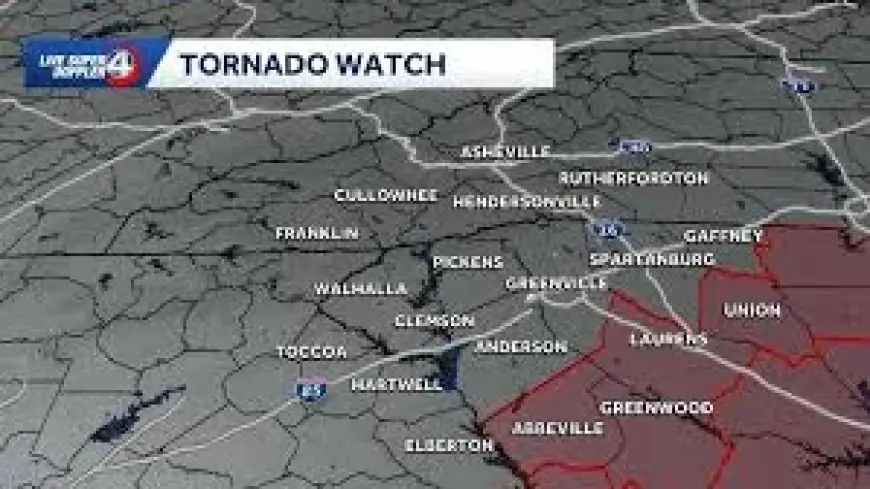
Augusta weather discussions often focus on day-to-day conditions, but Thursday morning’s Tornado Watch in South Carolina shows how quickly routine forecasts can shift into preparedness mode. The comparison that matters is practical: how a Tornado Watch differs from a Tornado Warning, and what that difference requires people to do right now in the counties listed under the watch.
National Weather Service Tornado Watch: the counties and the clock to 1: 00 p. m. ET
The National Weather Service announced a Tornado Watch on Thursday morning, with the watch set to last until 1: 00 p. m. ET for several counties in South Carolina. The alert comes as a storm heads for the coast, bringing the possibility of twisters as well as hail and high winds.
Although the watch is described as largely concentrated in the Midlands and parts of the Upstate, it also includes specific Lowcountry counties: Beaufort, Colleton, Dorchester, and Orangeburg. The geographic spread matters because it frames the watch as more than a coastal issue; it covers counties across different parts of the state under the same time window and the same level of alert.
Augusta Weather and the Tornado Watch: “conditions are right” vs. “take action now”
The most important comparison embedded in the alert is the difference between a watch and a warning. A watch means conditions are right for severe weather to begin. A warning, by contrast, indicates severe weather is expected to begin at any moment or has already begun, and it urges people to take action.
Placed side by side, the two terms create a clear decision framework. A watch is about readiness: begin preparing in case a warning follows. A warning is about immediate protective steps. That distinction is not just terminology; it changes what people should do and how fast they should do it. In other words, while augusta weather may feel like a regular check-in on the sky, a Tornado Watch is a specific signal to shift from monitoring to preparation.
| Alert type | What it means | What people are urged to do |
|---|---|---|
| Tornado Watch | Conditions are right for severe weather to begin | Begin to prepare in case of a warning |
| Tornado Warning | Severe weather is expected at any moment or has already begun | Take action immediately |
Beaufort, Colleton, Dorchester, and Orangeburg: preparation steps compared with warning actions
The guidance attached to the Tornado Watch emphasizes preparation steps that can be done before a warning is issued. During a watch, people are advised to ensure an emergency plan is in place, that supplies are readily available, and that a safe room has been picked out. The language also stresses speed: be ready to act quickly should a warning be issued.
During a Tornado Warning, the recommended actions become immediate and location-specific. People in affected areas are urged to move to an interior room on the bottom-most floor of a sturdy building and to avoid windows. The warning guidance also addresses higher-risk situations: anyone in mobile homes, vehicles, or outdoors should move to the nearest substantial shelter and protect themselves from flying debris.
Comparing these instructions reveals a consistent throughline: both the watch and the warning aim to reduce time lost once conditions worsen, but they do it differently. The watch pushes planning and positioning, while the warning pushes rapid movement and sheltering. For residents tracking augusta weather or conditions elsewhere, this is the functional difference to apply when alerts change.
Finding: The Tornado Watch in South Carolina establishes a clear dividing line between preparation and immediate action, and the listed counties—Beaufort, Colleton, Dorchester, and Orangeburg—are being urged to treat the watch as a prompt to get ready before any warning arrives. The next confirmed test of that readiness is the watch’s scheduled end time of 1: 00 p. m. ET; if the watch conditions persist through that window, the comparison suggests people should stay in preparation mode while remaining ready to switch instantly to warning actions.