Emil Michael and the Pentagon order point to tighter AI supply-chain controls

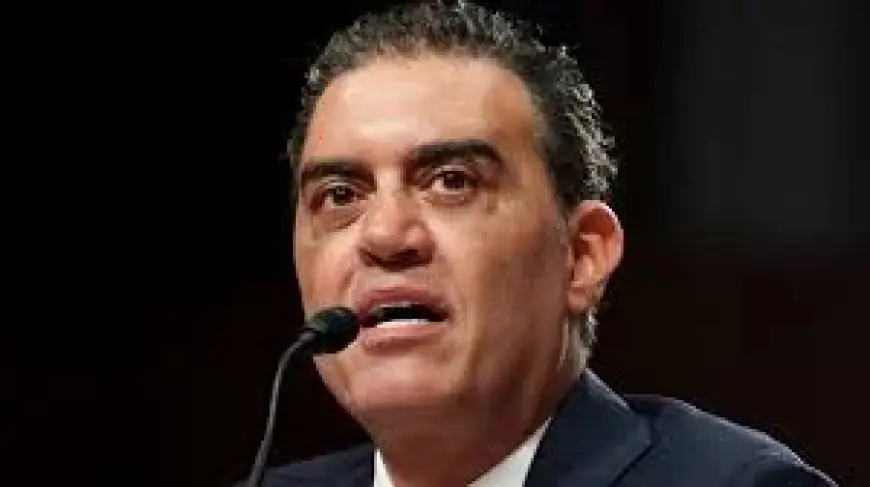
emil michael enters the picture as the U. S. Defense Department moves to force a rapid cleanup of where commercial AI sits inside military networks. In an internal memo dated March 6, Defense Department Chief Information Officer Kirsten Davies told senior leaders they must remove Anthropic’s artificial intelligence products from their systems within 180 days, a decision that signals a sharper, more formal approach to AI supply-chain enforcement across defense work.
Kirsten Davies memo sets a 180-day clock for Anthropic removal
The internal memorandum, distributed to senior leaders on Monday, alleges Anthropic’s AI “presents an unacceptable supply chain risk for use in all [Department of War] systems and networks. ” The memo was dated March 6, one day after the Pentagon formally designated Anthropic a supply chain risk, and it lays out wide-ranging steps military commanders will need to take to remove Anthropic AI from key national security systems.
Those systems include ones connected to nuclear weapons, ballistic missile defense, and cyber warfare. The memo also extends beyond uniformed commands: it demanded that any other company doing business with the Pentagon must stop using all Anthropic products on work related to Defense Department contracts within the same 180-day window.
Davies’ memo also narrows who can deviate from the directive. She wrote that exemptions will only be considered for “mission-critical activities directly supporting national security operations where no viable alternative exists, ” and any request must include a comprehensive risk mitigation plan for approval. Davies said she is the only one who can grant an exception. A senior Pentagon official confirmed the memo’s authenticity.
Anthropic, Trump Administration tensions, and the supply-chain-risk trigger
The memo is described as the latest salvo in an escalating feud between the Trump Administration and Anthropic. The designation itself is characterized as unprecedented: the first time an American company has been designated a supply chain risk. The context notes that during President Trump’s first term, similar action was used to restrict foreign-based companies like Huawei, a Chinese telecommunications firm.
The immediate conflict sits around guardrails for military use of Anthropic’s Claude model. The situation follows an impasse over Anthropic’s request for two “red lines” that would explicitly prevent the U. S. military from using Claude to conduct mass surveillance on Americans or to power fully autonomous weapons. Anthropic CEO Dario Amodei said the company believed crossing those lines would be contrary to American values.
Yet the Pentagon previously said it wanted the ability to use Claude for “all lawful purposes, ” without restrictions, and argued that the uses Anthropic is concerned about are already prohibited. Still, the new memo moves from debate to operational execution: it requires commanders and contractors to remove products, and it frames the issue as supply-chain vulnerability rather than a policy disagreement over how AI should be used.
emil michael and the direction of travel for Pentagon AI procurement
The context ties the order to a larger procurement and compliance trajectory, with a clear signal: the Pentagon is willing to designate a domestic AI vendor as a supply chain risk and then impose a time-bound removal requirement across sensitive systems and contract work. That combination suggests a compliance-first direction, where access to defense networks depends on satisfying a centralized risk standard and living within the Pentagon’s definition of acceptable use and acceptable exposure.
Several specific signals point to that direction. First, the memo’s scope is broad, covering “all” systems and networks while highlighting nuclear weapons, ballistic missile defense, and cyber warfare as key targets for removal. Second, the memo explicitly warns that adversaries “can exploit vulnerabilities” in daily Pentagon operations, and that exploitation could pose “potential catastrophic risks to the warfighter. ” Third, the exemption pathway is tight, centralized, and conditioned on a mitigation plan, which pushes commands and contractors toward alternatives rather than workarounds.
Commercial competition also shows up as an accelerant. Anthropic is described as the only AI company whose models are deployed on the Pentagon’s classified systems. After talks between the sides broke down last month, OpenAI said it had signed a deal with the Pentagon. That sequence, paired with the 180-day mandate, points toward a reallocation of defense AI usage away from Anthropic and toward other providers that can meet Pentagon requirements under the new risk framing.
- Based on context data: March 6 memo date, and a 180-day removal requirement
- Designation of Anthropic as a supply chain risk occurred one day before the memo date
- Removal applies to commanders’ systems and to contractors’ contract-related work
- Exceptions only for mission-critical activities with no viable alternative, with a mitigation plan
If the 180-day enforcement continues as written… commands and Pentagon-facing companies will have to map and purge Anthropic products across the affected systems and workflows, and the practical effect will be to shrink Anthropic’s footprint inside defense networks. The memo’s focus on key national security systems makes the direction especially clear: the default outcome is removal, with narrow, centralized exceptions.
Should Anthropic’s legal challenge change the designation… the trajectory could shift from removal toward negotiated conditions for use. Anthropic filed two lawsuits against the federal government on Monday, alleging that the decision to deem the company a supply chain risk amounted to illegal retaliation. The suit argues that the government cannot punish a company for protected speech and that no federal statute authorizes the actions taken. The context includes a response from White House spokesperson Liz Huston, but it does not provide the substance of that response, leaving the near-term policy direction unresolved.
The next concrete milestones are already set inside the context: the March 6 memo and the 180-day countdown it establishes, plus the two lawsuits filed on Monday. What the context does not resolve is whether exceptions will be granted in mission-critical cases, or how the federal government will defend the unprecedented domestic supply-chain-risk designation as the legal fight proceeds.