13WMAZ Weather in Macon, Ga., Tracks Tornado Warnings as Severe Storms Disrupt Morning

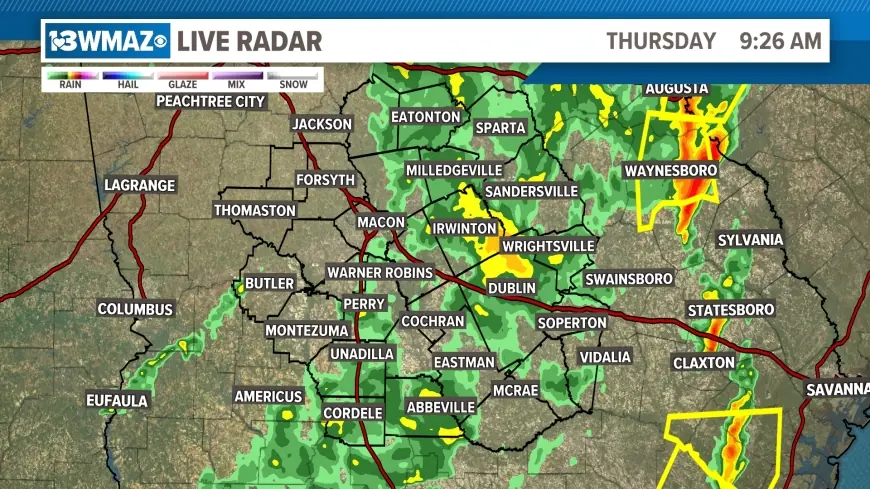
A volatile stretch of weather swept across Central Georgia early Thursday, putting Macon-area viewers on alert as 13WMAZ weather coverage followed tornado warnings, a broader tornado watch, and school delays tied to the storm line moving across the region.
The most immediate danger centered on the morning hours, when warnings were issued for multiple Central Georgia counties and the threat briefly included Macon-Bibb and nearby communities. By later in the morning, the line of storms had pushed east and the highest tornado risk had started to ease, though rain, gusty wind and scattered disruptions lingered.
Tornado Warnings Put Macon and Nearby Counties on Edge
The sharpest concern came as tornado warnings were issued in several counties across Central Georgia, including areas around Macon. Local live coverage focused on Bibb, Jones, Houston, Laurens and surrounding counties as storms moved through before and around the morning commute.
In weather terms, a warning is the most urgent alert residents receive short of a tornado emergency. It signals that rotation has been detected or that a storm capable of producing a tornado is moving through a defined area. That distinction mattered Thursday morning, when alerts shifted quickly from county to county as the storm line advanced east.
For people searching terms such as “tornado warning Macon GA,” the answer for much of the early morning was straightforward: the threat was real, active, and changing fast enough that residents needed to keep checking updated radar and local alerts.
13WMAZ Weather Became a Key Local Hub
Search interest around “13WMAZ weather,” “wmaz weather,” and “13 wmaz weather” reflected how many people in Central Georgia turned to familiar local coverage as conditions worsened before sunrise.
The station carried rolling updates as warnings were issued and expired, helping viewers follow the storm track county by county. That kind of coverage becomes especially important in fast-moving severe weather, when the practical questions are immediate: which communities are in the warning polygon, how long the threat may last, and whether the worst part of the line has already passed.
In Macon, the station’s weather reporting also served a second function beyond tornado tracking. It gave residents a clearer sense of when conditions were expected to improve after the most dangerous cells moved through, a crucial detail for schools, employers and families deciding whether to delay travel.
Why the Threat Was Higher Before Daybreak
The broader setup over Georgia supported damaging wind, heavy rain, small hail and the possibility of brief spin-up tornadoes. A tornado watch covered a wide portion of central and west-central Georgia early Thursday, then was adjusted eastward as storms progressed.
That pattern is typical of a fast-moving spring severe weather event in the Southeast. A strong line of thunderstorms along a cold front can produce short-lived but dangerous tornadoes with limited lead time, especially in the pre-dawn hours when visibility is poor and many people are still asleep.
For Macon-area residents, that combination made the storm particularly disruptive. Even where tornado warnings expired without confirmed major damage, the broader risk from intense thunderstorm winds and sudden downpours was enough to alter morning routines and keep emergency managers, school systems and broadcasters on alert.
School Delays and Morning Impacts Spread Across Central Georgia
The weather was serious enough to trigger school delays and schedule changes across parts of Central Georgia. That gave the storm a broader public impact beyond the warning text itself.
In practical terms, Thursday morning became less about whether every neighborhood would see tornado damage and more about how institutions responded to a live severe weather threat moving across a wide area. Delayed openings, sheltered students, and cautious commuting decisions are often the first visible signs of how disruptive a tornado warning morning can be, even when the storm moves out relatively quickly.
That also helps explain why search traffic often clusters around local TV weather brands during events like this. Residents are not just looking for a forecast; they are trying to answer immediate questions about roads, schools, timing and safety.
What Macon Weather Looks Like After the Storm Line
As the line pushed east later Thursday morning, conditions in Macon began trending away from the peak tornado threat. The day was still expected to hold unsettled periods, but the most dangerous window appeared tied to the earlier passage of severe storms.
That shift matters for readers searching “Macon GA weather” after the warnings. The headline danger was concentrated in the morning, not as an all-day tornado emergency. Even so, any leftover showers, gusty wind and isolated thunder remained worth watching until the system fully cleared the region.
For Central Georgia, Thursday’s weather served as a reminder of how quickly March storms can change from routine rain to warning-level danger. In Macon, the storm threat may have eased as the morning wore on, but the burst of tornado alerts and live wall-to-wall tracking had already made it one of the region’s most closely watched weather events of the day.