Unraveling G-Protein Activation by GPCR: A Dynamic Insight

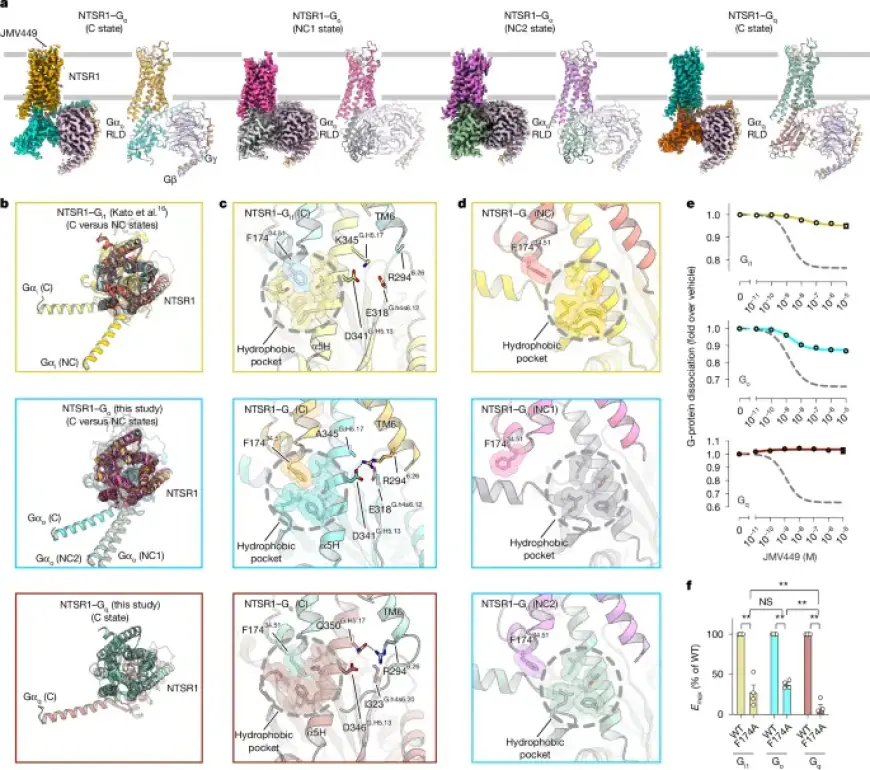
G-protein-coupled receptors (GPCRs) play a crucial role in various physiological processes. They act as biological sensors, translating extracellular signals into cellular responses. Recent advancements in cryo-electron microscopy (cryo-EM) have provided significant insights into the structure and dynamics of GPCR-G protein complexes.
Understanding G-Protein Activation by GPCRs
Recent studies have explored the intricate mechanisms of G-protein activation by GPCRs. A notable contribution is from Duan et al. in 2023, who examined GPCR activation using a biased intracellular agonist. Their findings enhance our understanding of how specific agonists can lead to varied signaling outcomes.
Key Studies and Findings
- Hilger et al. (2018): Analyzed the structure and dynamics of GPCR signaling complexes.
- Duan et al. (2020): Revealed the cryo-EM structure of an activated VIP1 receptor-G protein complex using a NanoBiT tethering strategy.
- Garcia-Nafria et al. (2018): Provided insights into the serotonin 5-HT1B receptor coupled with heterotrimeric Go through cryo-EM studies.
- Olsen & English (2023): Discussed advancements in GPCR biosensors, enhancing the study of GPCR-G protein coupling.
- Kato et al. (2019): Investigated the conformational transitions of the neurotensin receptor 1-Gi1 complex.
- Papasergi-Scott et al. (2024): Offered time-resolved cryo-EM insights into G-protein activation by GPCRs.
Molecular Insights and Mechanisms
The activation of G proteins involves conformational changes in the GPCRs. Studies have shown how receptor dynamics influence G-protein activation. For instance, Flock et al. (2015) proposed a universal allosteric mechanism guiding the activation process.
Understanding these mechanisms is essential for developing drugs targeting GPCRs. It allows for more precise modulation of pathways influenced by these receptors, including those involved in neurological disorders.
Future Directions
As research progresses, the focus will likely expand on GPCR selectivity and biased signaling. The goal is to unravel the complexities of GPCR-G protein interactions fully. This knowledge could pave the way for novel therapeutic strategies that leverage specific signaling pathways.
In conclusion, the dynamic insights into G-protein activation by GPCRs underscore their significance in cellular communication. Continued research in this field holds the potential to transform our understanding of GPCR function and its implications in health and disease.