Bunker Boom: Iran War Sends Americans Underground as U.S. Bunker Sales Explode Tenfold

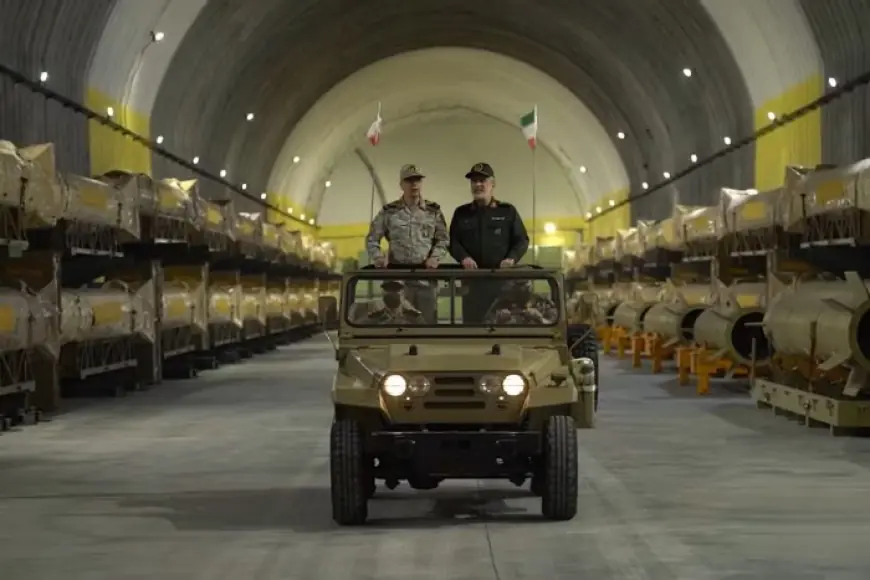
America is digging in. Since the United States and Israel launched Operation Epic Fury against Iran on February 28, the country's bunker industry has been overwhelmed — phone lines jammed, wait lists stretched months out, and prices climbing fast. Two senior members of President Trump's Cabinet have reportedly commissioned nuclear shelters. A Derbyshire man buried a Boeing 737 fuselage in his garden. And Maersk just announced a global emergency bunker fuel surcharge that kicks in March 25.
The word "bunker" means something different depending on who you ask right now. All of them are trending.
Trump Cabinet Members Said to Be Among Atlas Survival Shelter Clients
On March 8, Ron Hubbard, owner of Atlas Survival Shelters, told The Telegraph that inquiries about his shelters have gone up tenfold since the war against Iran began, and that two senior Cabinet members in the Trump administration are among his clients.
Snopes investigated and could not confirm or deny the Cabinet claim beyond Hubbard's statement. Hubbard said most of his clients are "Christian, conservative CEOs," but in recent years several tech moguls have come knocking — including Meta CEO Mark Zuckerberg, for whom Hubbard said he helped design a bunker under his ranch in Hawaii.
The claim has not been independently verified. What is not in dispute: business is booming.
The Derbyshire Man Burying a 737 in His Garden
Across the Atlantic, one Englishman is taking no chances. Dave Billings, 44, of Hilton, Derbyshire, bought a Boeing 737 fuselage off Facebook Marketplace in December 2025 for £20,000 and is now burying it in his garden as a second bunker — an extension of the £50,000 underground shelter he built 11 years ago on a former army camp.
His original bunker has a flat roof, which he considers too basement-like for wartime use. The 737 solves that. "I don't understand why this thing with Iran has just happened, but war seems to be very fashionable at the moment," Billings said. "If you're 10 miles away from a blast, you'll probably be alright in it."
He has already restored the airplane's kitchen. The toilet is next.
China Goes Deeper After U.S. Bunker-Buster Strikes on Iran
The geopolitical ripple from the Iran war is reshaping military doctrine in Beijing. After U.S. GBU-57 bunker-buster strikes destroyed Iran's underground nuclear facilities, Chinese state media and analysts expressed unease at the operation's demonstration of undetected long-range precision strikes against hardened underground targets.
Zhang Shishu, chief technical expert at state-owned Power Construction Corporation of China, said critical facilities — including hydropower hubs in the southwest and oil and gas fields in the northwest — should be embedded deep underground to protect strategic resources from military strikes or surveillance. China is also accelerating what analysts call its "strategic hinterland" concept, relocating sensitive assets inland to geographically protected regions like Sichuan and Xinjiang.
Maersk's Emergency Bunker Fuel Surcharge: The Shipping Economy Buckles
The word "bunker" carries a separate, specific meaning in global shipping — it refers to the fuel that powers cargo vessels. And that market is in crisis. Maersk announced a temporary Emergency Bunker Surcharge applying globally from March 25, citing fuel availability disruptions directly linked to the Strait of Hormuz conflict, noting that many regional refineries are either offline or operating at significantly reduced capacity.
The surcharge will be reviewed every 14 days. Bunker availability has become severely restricted in Japan, with major suppliers refraining from issuing new offers for ocean-going vessels and new inquiries largely not being entertained. Singapore traders describe a market "fraught with tension" over an imminent supply shortage.
A third container ship has come under attack in the Strait of Hormuz since the Middle East conflict began — a figure that explains precisely why carriers are no longer willing to absorb fuel cost uncertainty without passing it directly to shippers.
The bunkers being built in American backyards and the bunker fuel choking global trade lanes share one root cause. Fourteen days into the Iran war, both markets show no sign of cooling.