Jack Conklin vs. Cleveland Browns: reliability fades as roster reshaping accelerates

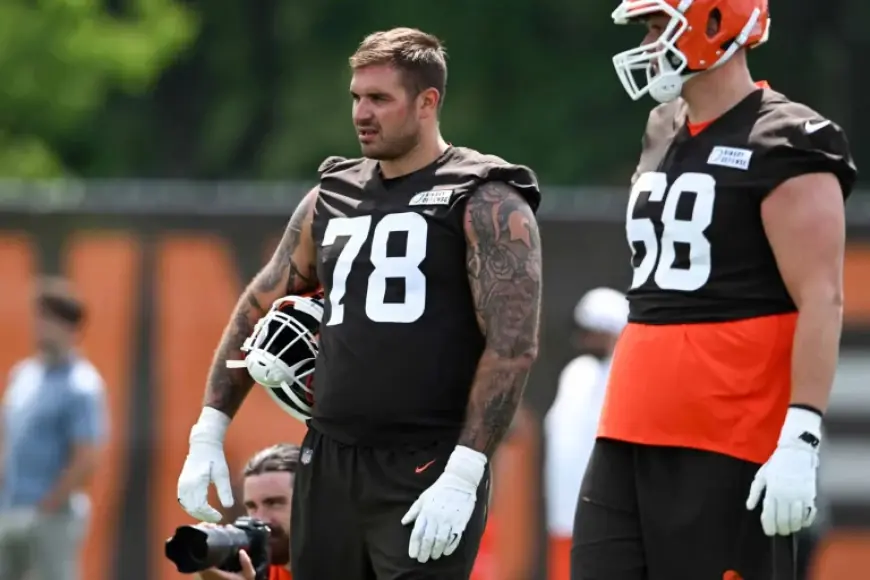
The Cleveland Browns have released veteran offensive tackle jack conklin, ending his six-year tenure in Cleveland as free agency begins. The move invites a direct comparison between two versions of Conklin described in the record: a durable starter early in his career with the Tennessee Titans, and a high-impact but increasingly unavailable right tackle with the Browns. What does that side-by-side reveal about why Cleveland moved on now?
Jack Conklin’s Cleveland stretch: top-end play, uneven availability
The Browns’ decision closes a chapter that included both peak performance and persistent interruptions. Conklin joined Cleveland in the 2020 offseason after four seasons with the Titans, quickly becoming a cornerstone of the offensive line. In 2020, he was named First-Team All-Pro and played a major role in helping the Browns reach the playoffs for the first time in nearly two decades. At his best, the description is clear: physical run blocking and reliable pass protection that helped anchor an offensive line often considered among the best in the NFL.
Yet the same Cleveland run also contains the statistical story that pushed the roster decision toward a break. Conklin’s availability fluctuated sharply year to year: 15 games in 2020, 7 in 2021, 14 in 2022, 1 in 2023, 12 in 2024, and 8 in 2025. Injuries became a recurring issue in recent seasons, including a torn ACL during the 2023 season that forced him to miss significant time. Even after returning to the field, the account notes he struggled to regain the same level of durability he had earlier in his career.
The Browns, meanwhile, have already made multiple moves along the offensive line this offseason and are moving forward with what they view as a new unit that can stay intact more often. That framing makes availability—not just performance—the deciding standard.
Jack Conklin’s Titans baseline: four years, 57 games, steadier durability
The contrast point sits in the first four years of Conklin’s career. He entered the league as a first-round pick, No. 8 overall, in the 2016 NFL Draft out of Michigan State, and played for the Tennessee Titans before Cleveland acquired him ahead of the 2020 season. Over those four seasons, he played 57 games.
That Titans total becomes more revealing when lined up against his Browns tenure: Conklin matched those same 57 games, but needed six seasons in Cleveland to do it. Both stints include high-level results—Conklin has twice been named an All-Pro across his career—but the durability curve changed. In Cleveland, he remained a solid player when able to suit up, but the year-by-year availability created a different kind of risk for a team trying to build continuity up front.
Cleveland Browns vs. Jack Conklin: the same output, different cost in seasons
Placed side by side, the comparison produces a single, concrete takeaway: Conklin’s game participation rate declined during his Browns years, even while his reputation for performance remained strong when healthy. Cleveland is not separating from an unknown quantity; it is separating from a player described as reliable when on the field, but increasingly hard to rely on consistently.
| Measure in the record | Titans (first 4 years) | Browns (next 6 years) |
|---|---|---|
| Seasons covered | 4 | 6 |
| Total games played | 57 | 57 |
| Games played in final season of stint | Not specified in the record | 8 (in 2025) |
| Extreme low availability mentioned | Not specified in the record | 1 game (in 2023) |
| Major injury explicitly named | Not specified in the record | Torn ACL (in 2023) |
Analysis: The Browns’ choice reads less like a judgment on peak ability and more like a bet on lineup stability. Cleveland’s offseason work along the offensive line and its stated desire for a unit that “can stay intact more often” aligns directly with Conklin’s Cleveland pattern: multiple seasons interrupted by health issues, culminating in eight appearances in 2025 after the torn-ACL year in 2023.
That also helps reconcile two sentiments present at the same time: the move was described as expected yet still jarring, and fans’ feelings were framed as losing someone “so reliable for so long. ” Reliability here appears to mean performance when active, while the team’s decision standard appears to have shifted to reliability of availability across an entire season.
The comparison establishes a clear finding: the Browns moved on from jack conklin because his Browns-era availability no longer matched either his Titans baseline or Cleveland’s push to keep an offensive line intact more often. The next confirmed data point that will test that finding is the Browns’ continued run of offensive-line moves this offseason, since that reshaping will show how strongly the team prioritizes durability and continuity over a proven veteran’s on-field ceiling. If Cleveland’s new unit stays intact more often, the comparison suggests the organization will view the release as a necessary trade-off for stability.