Sports And a Mayor’s Welcome as Iran’s World Cup Place Wobbles

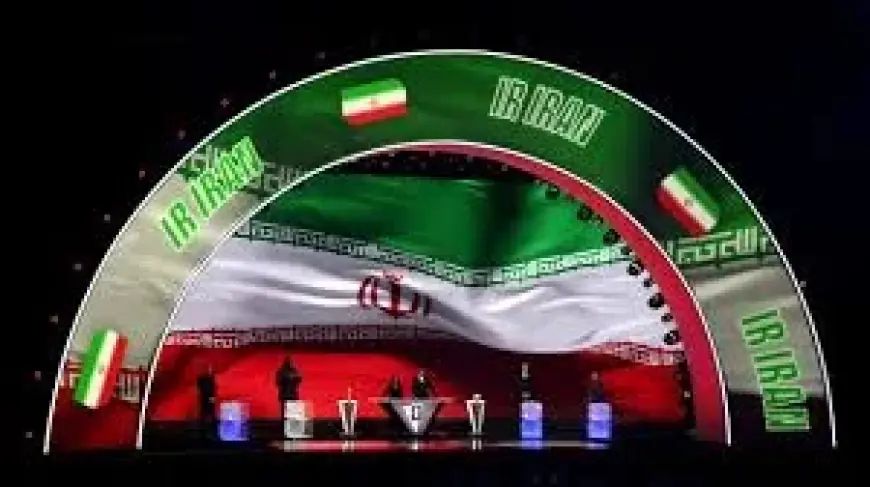
Kansas City is set to host six World Cup matches, and Mayor Quinton Lucas is already thinking about who should feel welcome when the tournament arrives. In a moment when sports and geopolitics are colliding in plain view, Lucas said he wants Iran to appear in this summer’s World Cup and would welcome the team to Kansas City if it were due to play there.
Quinton Lucas and Kansas City’s message for the World Cup
Lucas, a Democrat serving his second term as Kansas City mayor, framed his view as a basic principle of the competition: participation should not depend on political alignment. He said he has “concerns about their non-participation, ” referring to Iran, and added that he would want them “to be part of it. ”
His argument drew a line between the World Cup and events he sees as narrower in scope. “I think the World Cup is not supposed to just be the aligned countries cup, ” he said, contrasting it with competitions he described as more limited. For Lucas, the tournament’s purpose is to “bring everyone in the world together, ” and he pointed to past World Cups staged in places where political disagreements existed, including Russia and Qatar.
Even though Kansas City is not listed among Iran’s scheduled group-stage locations, Lucas made his point concrete. If Kansas City were hosting Iran in matches, he said, “we would absolutely make them welcome here, ” and he added that he intends to keep delivering that message.
Ahmad Donyamali says Iran cannot compete after the air strikes
Lucas’s welcome comes as Iran’s own sports leadership has cast doubt on whether the team can take part at all. Iranian sports minister Ahmad Donyamali said Iran could not participate in this summer’s competition, despite qualifying for it.
The statement sits inside a fast-moving and violent political backdrop. The context described air strikes launched by the United States, a co-host of the tournament, and Israel, in which Ayatollah Ali Khamenei was killed. The conflict has continued over the last two weeks, and more than 1, 000 Iranians are believed to have died during that period.
In that environment, the question of Iran’s place at a global sports event is no longer theoretical. It is tied to national capacity, diplomatic posture, and the practical realities of travel and participation, as suggested by Donyamali’s remarks that the country could not compete.
Gianni Infantino, Donald Trump, and Iran’s scheduled games in Los Angeles and Seattle
While Iran’s minister said the team could not participate, the public messages around whether Iran would be welcomed have moved in different directions. Donald Trump said he “didn’t care” if Iran’s national team played in the World Cup. FIFA president Gianni Infantino, however, said the United States president told him Iran were welcome.
On paper, the tournament path for Iran was already laid out. Iran were due to play two group games in Los Angeles and one in Seattle, facing New Zealand, Belgium, and Egypt. The schedule also included a potential last-32 tie in Seattle, Dallas, New York, or Vancouver.
Yet the minister’s declaration that Iran cannot compete puts those fixtures into uncertainty and leaves FIFA facing choices about how to handle a qualified team that may not appear. Lucas’s intervention, from a city preparing to host six matches, lands as a reminder that the logistics and the symbolism are intertwined: stadium plans, travel, and matchdays can be set long in advance, but the human and political realities that shape sports can change quickly.
For now, Kansas City’s mayor is keeping his message simple and consistent—“all should be welcome”—even as Iran’s participation remains in question and the tournament schedule lists games in Los Angeles and Seattle that may not unfold as originally planned.