Tornado Tracker: Why Wednesday’s storm threat spans Midwest to DC

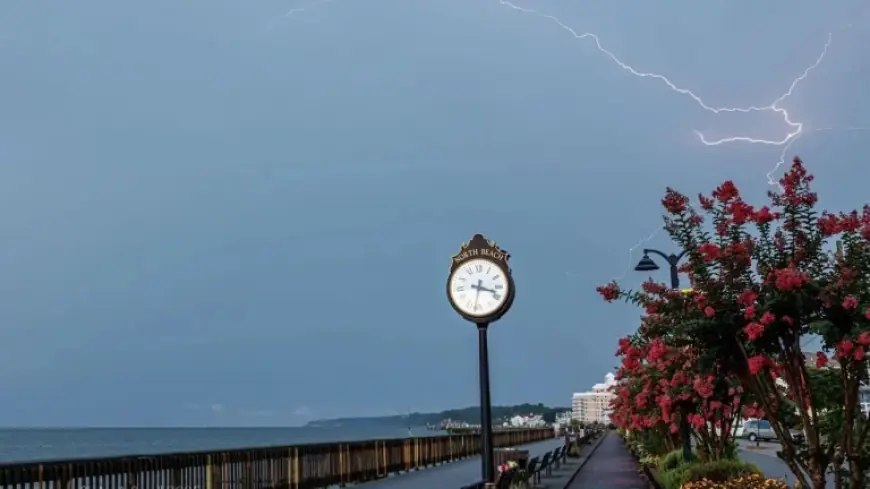
A tornado tracker view of Wednesday’s forecast shows a severe-weather corridor stretching well beyond one city, even as local impacts will vary sharply. Tornado watches extend from east Texas through parts of the Ohio Valley into the mid-Atlantic through Wednesday evening, while much of the Washington region sits in a Slight Risk (Level 2 of 5) for scattered severe storms with damaging winds and a low chance of an isolated tornado.
Tornado Tracker: Watches and risk zone
Tornado watches were in effect in east Texas, Louisiana, northern Kentucky, southeast Indiana, Ohio, West Virginia, western Maryland and Pennsylvania through Wednesday evening. Across that broader footprint, 62 million people remained at risk for severe weather from east Texas to southern New Jersey, with the risk including “a few tornadoes, ” damaging wind gusts, and the chance of large hail within northern storms.
The numbers underscore how the same storm threat can present differently by location. Cities listed in the risk zone include Houston; Cincinnati; Cleveland; Pittsburgh; Nashville, Tennessee; Charleston, West Virginia; and Baltimore. The forecast expectation for Wednesday also introduced a crucial distinction: tornadoes were still possible, but they were forecast to be less intense than Tuesday’s. The pattern suggests a transition from the most destructive part of the outbreak toward a still-dangerous, more widespread severe-weather day where wind and hail could become the dominant hazards in many places.
Washington, D. C. and Storm Prediction Center
For the Washington region, the Storm Prediction Center placed most of the area in a Slight Risk (Level 2 of 5) for Wednesday. That designation signals scattered severe storms are possible, with the main threats described as damaging wind gusts of 60 to 70 mph and isolated, quick spin-up tornadoes. Severe weather is not expected everywhere across the DMV, but locations that do see storms could also see large hail, heavy rain, and lightning.
Forecasters described spring-like warmth and humidity building across the region Wednesday, helping fuel strong to severe thunderstorms by the afternoon and evening. Southerly winds were expected to pull warmer, more humid air into the Mid-Atlantic as temperatures climb into the upper 70s and lower 80s. The figures point to a setup where storm coverage may be uneven, but any storm that develops could intensify quickly because warmth and moisture can increase atmospheric instability.
Still, the tornado risk remains framed as low, even with a notable qualifier: the Storm Prediction Center mentioned the area has the chance to see a tornado that could reach maximum strength of EF-2, which would contain winds of 111 to 135 mph. The outlook also included a 2–5% tornado probability across parts of the region, along with a CIG1 hatch area—described as a designation indicating that if a tornado occurs, the environment may support stronger tornado intensity, potentially up to EF-2 strength. It does not mean tornadoes are guaranteed, but it highlights higher-end potential embedded in a broader wind-and-hail threat.
Illinois, Indiana and Tuesday’s damage
Wednesday’s lingering risk follows deadly storms that ripped through the Midwest on Tuesday, causing extensive damage in Illinois and Indiana. an elderly couple from Lake Village, Indiana—Ed and Arleen Kozlowski, married more than 60 years and in their 80s—were killed in the storms Tuesday night, and several other people were hospitalized. Their family said almost nothing in the couple’s home was salvageable and that relatives found just three photos.
The scale of Tuesday’s storm dynamics also helps explain why forecasters focused on severe potential again on Wednesday. The parent thunderstorm that produced tornadoes in northern Illinois and northern Indiana persisted for more than seven hours along a 200-mile path. At least 16 tornado reports were made across Texas, Illinois and Indiana. A tornado emergency was declared in Knox, Indiana, on Tuesday, with a warning describing a “life-threatening situation” and urging residents to seek shelter.
Damage details were still coming into focus in the Chicago region, where strong winds and heavy rain hit many areas and hail the size of golf balls was reported. There was significant but unquantified damage across northern Illinois and northwest Indiana, including damage to homes, other buildings and roads. A Kankakee, Illinois, resident, Bob Wehrle, 60, described getting an alert on his phone Tuesday night and then taking shelter in a basement after seeing debris flying—before his kitchen and house began falling in. That account illustrates how quickly warnings can shift from precaution to immediate life safety, especially when storms produce tornadoes or extreme winds in populated areas.
For now, the next concrete markers are Wednesday’s timing windows and the watches already in effect through Wednesday evening. In the Washington region, the storm timeline described storms developing over the mountains through 4 p. m., then a “WEATHER ALERT” window from 4 p. m. to 8 p. m. with isolated strong to severe storms mainly northwest of D. C., overlapping the evening commute and after-school activities; after 8 p. m., the severe threat was expected to end as leftover showers linger and cold air begins to enter the region. If storms develop quickly as described, the data suggests having multiple ways to receive warnings becomes a practical difference-maker, since official warnings are issued by the National Weather Service.