Paris meeting between Macron and Naftogaz signals deeper energy-security coordination

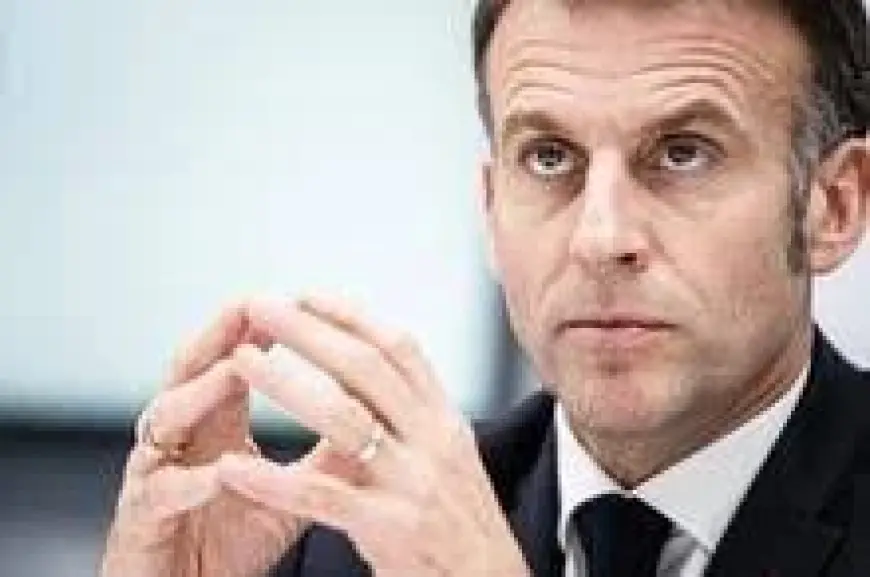
In paris, Naftogaz president Oleksii Koretsky informed Emmanuel Macron about the consequences of Russian attacks on Ukrainian oil and gas infrastructure, with a detailed briefing focused on the Druzhba pipeline. The exchange points toward a near-term trajectory of more structured coordination around technical recovery, energy-sector transformation plans, and potential roles for French companies in strengthening Ukraine’s energy system.
Oleksii Koretsky and Emmanuel Macron focus on Druzhba pipeline consequences
Koretsky said he provided “detailed information” to Macron on the Russian attack on the Druzhba pipeline, describing the scale of damage, the course of depollution operations, and the current technical condition of the facilities after the attack. That level of specificity sets the current baseline: this was not a general discussion of energy risks, but a targeted update on a named piece of infrastructure and the immediate operational response around it.
The context also frames the Druzhba issue as part of a broader pattern of attacks on Ukrainian oil and gas infrastructure. Still, the material here is narrow in what it confirms: the confirmed content is the briefing itself and the subjects covered in it, rather than any quantified impact or timeline for restoration.
Naftogaz and Ukraine’s government link infrastructure recovery to strategic transformation
Beyond the post-attack status of Druzhba, the two sides discussed efforts by Ukraine toward a “strategic transformation” of the energy sector and the implementation of regional energy sustainability plans. Those plans were described as being carried out by the government in collaboration with regions and local communities. As a signal, that pairing matters: it ties emergency response topics (damage, depollution, technical condition) to a longer-horizon policy and planning track that involves multiple levels of administration.
Another visible driver in the context is the explicit mention of French business participation. The discussion included “active participation” by French companies in the development of decentralized energy production and in strengthening Ukraine’s energy system. That is a concrete directional marker: the conversation was not limited to state-to-state diplomacy, but also opened the lane for corporate involvement connected to decentralization and system reinforcement.
In trend terms, the context points to parallel workstreams that can proceed at different speeds: technical assessment and cleanup after a specific attack, and a broader transformation agenda organized through regional plans. For now, the context does not confirm any signed agreements, specific projects, or commitments, but it does show the topics being formally put on the agenda between Koretsky and Macron.
Kyiv talks on March 11 add a regional negotiation signal around Druzhba
The Druzhba pipeline also appears in a separate confirmed diplomatic and negotiation signal: a Hungarian delegation led by Gabor Czepek, a state secretary at the Ministry of Energy, traveled to Kyiv to hold negotiations on restarting Druzhba on March 11. Compared with the Macron-Koretsky exchange, the Kyiv meeting highlights a different axis of the same infrastructure question: negotiations on resuming operation, rather than a briefing on attack consequences and cleanup status.
Taken together, these two context points outline a direction of travel centered on Druzhba as a focal infrastructure issue with both technical and political tracks. The Macron-Koretsky discussion emphasizes consequences and recovery operations, while the Kyiv talks involving Czepek emphasize negotiations tied to restarting the pipeline. The combination is a visible signal that Druzhba-related decisions and updates are being pursued in multiple venues.
If the Macron-Koretsky track continues… the most clearly supported trajectory is deeper working-level coordination around three items explicitly discussed: the technical condition of facilities after an attack, depollution operations, and the implementation of regional energy sustainability plans that the government is carrying out with regions and local communities. In that scenario, French company involvement in decentralized production and system strengthening would remain a standing agenda item, because it was already raised as part of the same exchange.
Should the March 11 Kyiv negotiations on restarting Druzhba progress… the context suggests Druzhba could become an even more central reference point for subsequent briefings and coordination, simply because it would carry both an operational-restart track and an ongoing post-attack technical track. That would not resolve the damage-and-cleanup questions described by Koretsky, but it would tighten the link between infrastructure status reporting and broader negotiations about how the pipeline operates.
The next confirmed milestone in the context is the March 11 negotiations in Kyiv led by Gabor Czepek on restarting Druzhba. What the context does not resolve is whether any concrete commitments emerged from the Koretsky-Macron discussion, including any defined role for French companies, nor does it provide a timeline for depollution or changes in the technical condition of the Druzhba facilities. Even so, paris has been positioned in the context as a venue where detailed infrastructure consequences and longer-term energy transformation are discussed in the same conversation.