London bans Al-Quds Day march after Met request

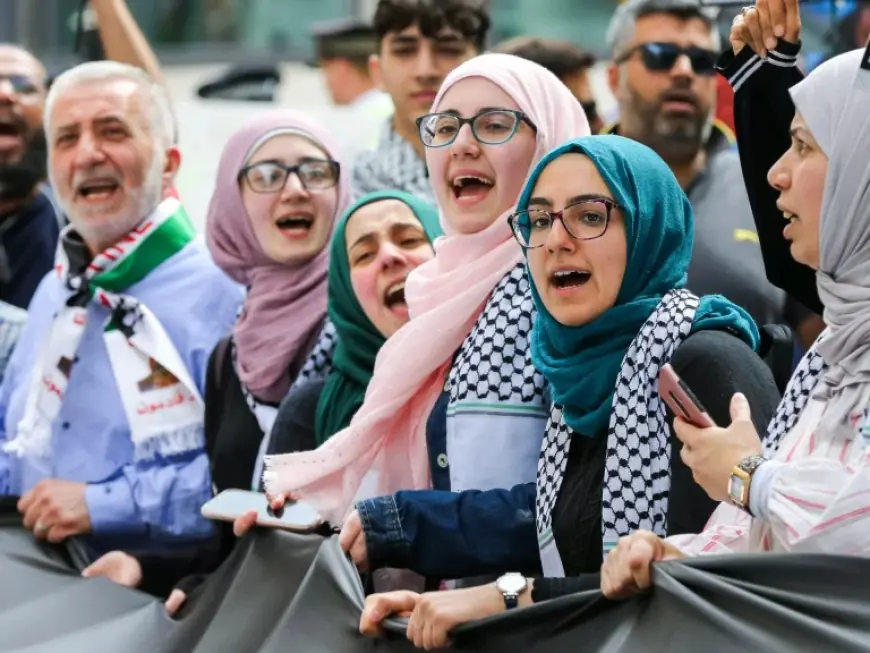
The United Kingdom has banned this year’s Al-Quds Day march in london after the Metropolitan Police requested the step and Home Secretary Shabana Mahmood approved it, citing risks of serious public disorder. The decision, the first such ban on a protest march since 2012, shifts the immediate focus from a moving procession to a planned static protest on Sunday and sets a tighter test for how police manage rival demonstrations in a charged political moment.
London ban starts 11: 00 am ET
The ban begins at 16: 00 GMT on Wednesday, which is 11: 00 am ET, and will last for one month. It applies not only to Sunday’s planned Al-Quds march but also to associated counterprotest marches. The figures underscore that this is not a single-day intervention, but a time-limited public order measure designed to cover a period when authorities expect tensions to remain elevated.
Metropolitan Police leadership framed the request as a high-bar decision. Assistant Commissioner Ade Adelekan, the Met’s public order lead, said the threshold to ban a protest is high and that police do not take the decision lightly, calling it the first time the power has been used since 2012. The pattern suggests the police wanted to show the ban was not a routine response, but one they argue was driven by a specific risk calculation.
Shabana Mahmood approves Met request
Mahmood said she approved the Metropolitan Police request after determining it was necessary to prevent serious disorder, pointing to the scale of the protest and multiple counterprotests in the context of the ongoing conflict in the Middle East. She also said that if a stationary demonstration proceeds, police will be able to apply strict conditions, and she expects the full force of the law against anyone spreading hatred and division rather than exercising the right to peaceful protest.
The Met’s rationale went beyond crowd size alone. Adelekan cited the expected number of demonstrators and counter-demonstrators and what he described as “extreme tensions between different factions. ” He also referenced the “volatile situation in the Middle East” and concerns raised by security services about Iranian state activity in the UK. The figures point to an official view that the risk was not simply logistical, but rooted in the prospect of opposing groups converging under heightened international pressures.
Met Police Commissioner Sir Mark Rowley said intelligence assessments and professional judgement indicated the protests and counterprotests were creating a risk of violence such that the marches needed to be banned. The Met also described the Al-Quds march as “uniquely contentious, ” saying it originated in Iran and that it is organised by a group the force described as supportive of the Iranian regime. Separately, the force said previous Al-Quds marches had resulted in arrests for supporting terrorist organisations and antisemitic hate crimes. The pattern suggests the police position is that conditions on a moving march would not sufficiently contain the risks they anticipate.
IHRC shifts to static protest
The Islamic Human Rights Commission (IHRC), which organises the demonstration, condemned the decision and said it would challenge it legally. It also said a static protest would still go ahead on Sunday. Faisal Bodi of the IHRC said a ban would mean a “sad day for freedom of expression. ”
IHRC rejected accusations that it supports the Iranian government, describing itself as an independent nongovernmental organisation. It also claimed police had “capitulated to the pressure of the Zionist lobby. ” Those competing claims show the central fault line created by the ban: authorities justified the step as a targeted response to prevent disorder, while organisers present it as an unjustified constraint on a pro-Palestinian demonstration.
Political reaction also highlighted the narrowness authorities say they are trying to maintain. Mahmood told the House of Commons she “reveres” the “precious” right to protest and stressed the ban is “narrowly focused on specific circumstances in a unique moment. ” London Mayor Sir Sadiq Khan said the right to protest is “one of the joys of living in a democracy, ” while also saying the move “isn’t diluting or diminishing the rights we have, ” and that it is this particular march the police have concerns with. Shadow Home Secretary Chris Philp said he supports the ban, while also raising concerns about other events “lamenting the death of Ayatollah Khamenei, ” described as the Iranian leader killed in US-Israeli strikes on Iran.
Next, the immediate confirmed milestone is Sunday’s static protest, while the one-month ban window that starts at 11: 00 am ET on Wednesday defines the period in which police will apply the prohibition on the march and associated counterprotest marches. If a stationary demonstration proceeds as IHRC says it will, the data suggests the key test will be whether strict conditions succeed in preventing the serious disorder that authorities say a moving procession could not avoid in london.