Two Cabo San Lucas Doomsday Fish Strandings Signal Unusual Deep-Sea Attention

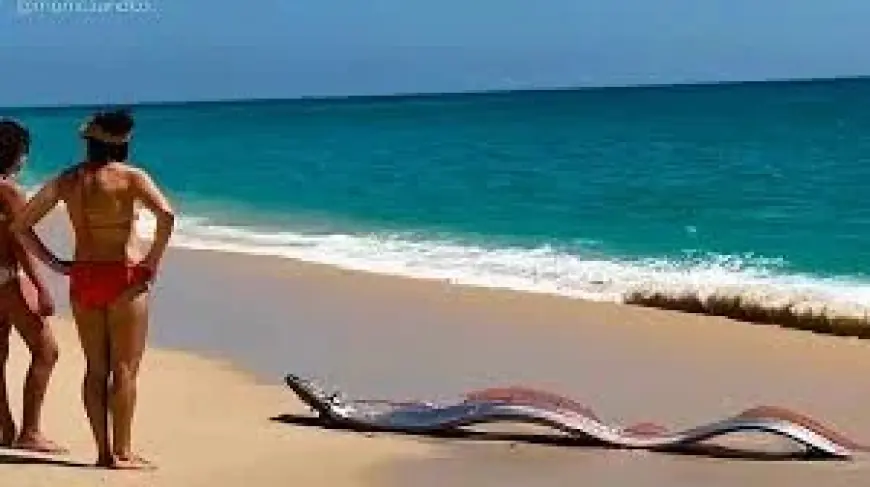
Two deep-sea oarfish washed up near the shoreline in Cabo San Lucas, Mexico, and a video of the encounter posted on March 4 by Monica Pittenger shows crowds gathering as people pushed the animals back toward deeper water. The rare strandings, often called doomsday fish in folklore, signal growing public fascination and folklore-driven speculation even though scientists in the context say there is no cause for alarm.
Cabo San Lucas: Two oarfish found with one farther up the beach
Footage captured on March 4 shows one oarfish farther up on the beach while the other remained partially in shallow water nearby, and several bystanders began pushing the fish back toward the ocean. Pittenger described on-camera hesitation among onlookers because many did not recognize the species; she recalled that her sister stepped in twice to push each oarfish back into deeper water while others watched from a distance.
Monica Pittenger video and Florida Museum of Natural History depth detail
Pittenger’s March 4 video drew attention for its vivid description of the encounter and for noting that seeing two oarfish in the same place is highly unusual. The Florida Museum of Natural History detail in the context places oarfish in the mesopelagic zone at depths of around 1, 000 meters (about 3, 280 feet) and describes their long, ribbon-like bodies, which helps explain why sightings near shore attract strong reactions from beachgoers.
Doomsday Fish folklore, Ocean Conservancy record, and two scenarios
Oarfish carry a dramatic nickname—Doomsday Fish—because folklore links their appearance to earthquakes and tsunamis. The Ocean Conservancy note in the context spells out that legend and cites an example: before Japan’s 2011 earthquake a total of 20 oarfish washed ashore. At the same time, the scientific community in the context has not found a connection between oarfish strandings and natural disasters, and the immediate response in Cabo San Lucas was focused on returning the animals to deeper water rather than treating the event as a harbinger.
If X continues… If more beach strandings like the March 4 pair occur in the same area, the pattern described in the video and the Ocean Conservancy reference suggests public speculation and folklore-driven concern will intensify, because the context notes that spotting even one oarfish near shore is rare and that spotting two in the same place is highly unusual.
Should Y occur… Should future strandings cluster around a documented seismic event as in the Ocean Conservancy example referencing 2011, folklore and media attention in the context would likely amplify public worry even though the scientific community cited in the context has not established a causal link.
What the context does not resolve is whether additional scientific analysis or follow-up field studies will link these specific Cabo San Lucas strandings to environmental causes beyond the documented rarity of two animals appearing together. The next confirmed signal in the context is the March 4 video posted by Monica Pittenger, which will remain the primary piece of evidence to evaluate any follow-up observations or official statements tied to these strandings.