Crimson Desert Release Date Nears as Pearl Abyss Publishes Detailed Specs

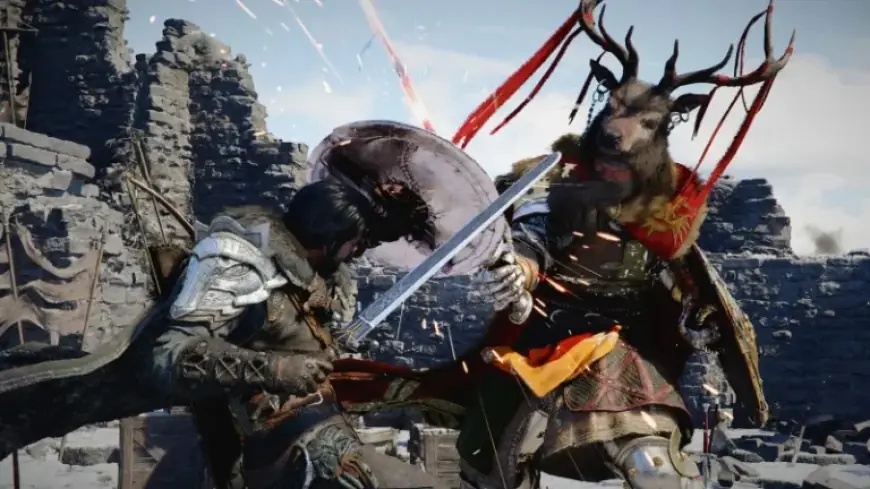
Pearl Abyss has set the crimson desert release date for March 19 and published a wide set of technical targets for PC, consoles, Mac, and a handheld device. Yet, the same disclosures that aim to clarify how the game will run also expose a key gap: the record shows extensive frame-rate and upscaling targets, but far less about the exact testing conditions behind them.
Pearl Abyss and March 19 specs: PC tiers and multiple platform targets
Pearl Abyss laid out performance tiers for PC that pair resolution goals with frame-rate targets, ranging from upscaled 1080p at 30 FPS at the low end to 4K at 60 FPS at the top end. The published tiers include Minimum, Low, Recommended, High, and Ultra, with each tier tied to explicit output targets such as 1080p/60 FPS or 4K/30 FPS. Alongside those targets, Pearl Abyss also listed matching GPU and CPU requirements for each tier, including both AMD and Nvidia graphics cards and AMD and Intel processors.
That disclosure extends beyond PC. The same release describes preset-style modes that map resolution targets, upscaling methods, frame-rate caps, and ray-tracing settings for consoles and other platforms. The document includes upscaling references that name FSR 3 in several modes and also references an upgraded PSSR for another set of modes, paired with distinctions such as Performance, Balanced, and Quality. In addition, the spec sheet includes targets that mention Vsync and, in some cases, VRR thresholds, suggesting that variable refresh rate displays may influence peak frame-rate behavior in certain modes.
One reason the full list matters is simple: by attaching concrete performance labels to many device categories at once, Pearl Abyss is asking players to trust that the launch build will behave predictably across very different hardware, from traditional PCs to a handheld device profile that includes 720p and upscaled 1080p options.
Crimson Desert Release Date disclosures: clarity on targets, less clarity on conditions
The technical disclosures deliver a level of specificity that is unusual in its breadth: named upscalers, explicit internal-to-output resolution statements, frame-rate targets, Vsync mentions, and ray-tracing quality labels. Still, what remains unclear is how those results were produced and how tightly they map to real play scenarios, because the context does not confirm the methodology behind the numbers.
For PC, the published tiers state what each setting level aims to achieve, but the context does not confirm the underlying graphics settings used to hit those targets beyond the tier names themselves. For consoles and other platforms, the modes list several resolution and ray-tracing combinations, but the context does not confirm which specific console models correspond to each block of settings in the spec text as presented. The record also includes VRR-related lines like “60+ FPS” or “48+ FPS, ” which implies the possibility of performance above a baseline cap under certain display conditions, yet the context does not confirm the gameplay circumstances or performance range distribution within those ceilings.
This gap sits at the heart of the tension around the March 19 launch. The specs provide an “exactly how powerful your machine needs to be” framing, but they also function as projections. Without accompanying test parameters in the provided material, the disclosures describe goals more clearly than they describe repeatable proof.
BlackSpace Engine, Pywel lighting, and the pattern behind “full disclosure”
A second strand of documentation comes from a technical interview that frames the disclosures as intentional and confidence-driven. The interview describes Crimson Desert as using a core technology called the BlackSpace Engine, with the “black” reference tied to the developer’s prior game, Black Desert Online. In that same exchange, Pearl Abyss gives a detailed description of how it approaches lighting simulation in the game’s world, including atmospheric scattering for sun and moon lighting in Pywel and a system that generates and updates Surfels around the camera.
That lighting description directly emphasizes ray tracing as part of the process: it describes tracing hit information when calculating irradiance and using ray tracing to test visibility for sampled local lights. Pearl Abyss also describes a “Many Lights Sampling” approach and states there is no theoretical limit to the number of lights, while also describing a practical cap, limiting the number of lights in the tree to 32, 767 to manage sampling cost and memory usage. It further notes that limited sampling and ray-tracing budgets can lead to noisy results, and it outlines noise-reduction steps such as reusing sampling results from spatial neighbors and applying simple denoising for diffuse lighting.
Taken together, the pattern is consistent: Pearl Abyss is willing to disclose both high-level targets (frame rates, resolutions, ray-tracing quality labels) and deep implementation detail (Surfels, radiance caches, light hierarchy limits). Yet, the context does not confirm a connective layer that would let readers directly reconcile the two, such as a mapping between the engine-level techniques described and the specific platform-mode outcomes listed in the spec sheet.
The context also notes planned “first hands-on coverage” work that starts with a preliminary look at the PlayStation 5 Pro version before moving on to the highest-end PC experience, optimized PC settings with console equivalents, and a complete platform comparison once access to all versions is available. That roadmap underscores why the missing bridge matters: independent platform comparisons can test whether the spec targets translate into consistent real-world outcomes.
For now, the crimson desert release date is anchored to March 19, and the published record shows an unusually expansive set of targets across devices. The context does not confirm the exact test conditions behind those targets or how each platform block maps to specific hardware variants. If a full platform comparison is completed with access to all versions, it would establish whether the disclosed modes and tiers behave as predictable promises at launch, or as best-case targets that vary more widely in practice.