Elon Musk Amazon warning spotlights conflicting accounts of AI outage guardrails

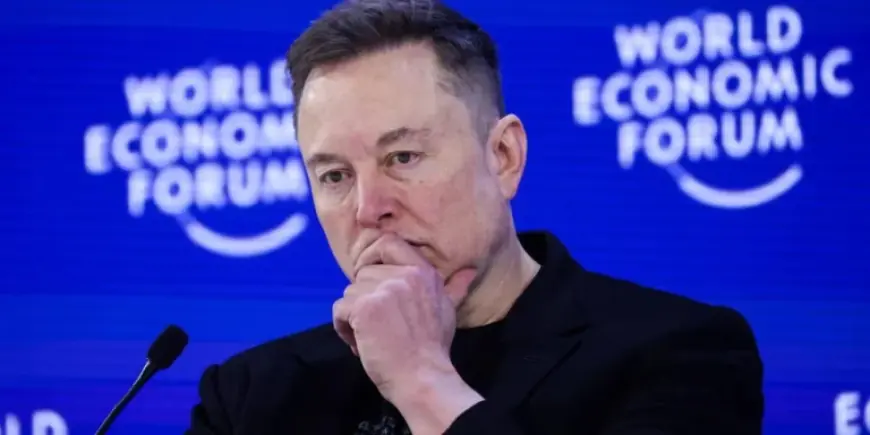
Elon Musk Amazon entered the conversation after reports that Amazon convened a mandatory engineering meeting to examine multiple outages, including incidents linked to AI-assisted coding. Yet the public record in the provided context contains a tension: internal descriptions point to AI-assisted changes and tightened approval processes, while Amazon publicly narrowed how much AI contributed and whether new sign-offs are required.
Dave Treadwell and the Tuesday meeting on outages and “high blast radius” changes
Confirmed details in the context begin with a meeting held on Tuesday, described as mandatory and framed as a “deep dive” into multiple outages affecting Amazon’s e-commerce operation. In one account, the company discussed a “trend of incidents” over the past few months with a “high blast radius” and relating to “Gen-AI assisted changes, ” along with other variables. A separate internal account described a “trend of incidents” emerging since the third quarter of 2025 and referenced “several major” incidents in the last few weeks.
Dave Treadwell, identified as Amazon’s senior vice president of e-commerce services, appears centrally in both accounts. One description ties the weekly “This Week in Stores Tech” meeting partly to implementing additional guardrails on how AI is used by engineers, including requiring more senior engineers to sign off on AI-assisted changes made by junior and mid-level engineers. Another internal description goes further into the mechanics of failures: software updates that propagated broadly because control planes lacked suitable safeguards, data corruption that took hours to unwind, and basic mechanisms such as a requirement for two people to authorize code changes that were either missing or bypassed.
One confirmed outage is described as occurring earlier this month, when Amazon’s website and shopping app were down for some users. More than 22, 000 users reported an issue to an outage tracker, and customers were unable to check out, view prices for goods, or access account information. At the time, Amazon said the outage resulted from “a software code deployment. ”
Elon Musk Amazon comments meet Amazon statements narrowing AI’s role
The gap emerges most clearly when the internal descriptions of AI-linked risk are placed beside Amazon’s public response in the context. After the meeting drew attention from technology and cybersecurity observers, Musk responded publicly to a post by Lukasz Olejnik, a cybersecurity consultant and visiting senior research fellow at the Department of War Studies at King’s College London. The context does not include Musk’s full remarks, but it confirms he issued a warning framed as “Proceed with caution. ”
On Amazon’s side, a spokesperson described the TWiST gathering as a regular weekly operations meeting for retail technology teams and leaders that reviews operational performance. The spokesperson said the meeting would include a review of the availability of Amazon’s website and app as the company focuses on continual improvement.
Still, the context includes multiple, specific points where Amazon’s public framing diverges from the internal descriptions: the company confirmed Amazon Web Services was not involved, said only one incident discussed was related to AI, and said none involved AI-written code. Amazon also disputed that junior and mid-level engineers must have senior engineers sign off on AI-assisted changes. In contrast, internal descriptions referenced AI coding features and, separately, at least one disruption tied to Amazon’s AI coding assistant Q.
This creates a documented tension rather than a settled conclusion: internal language highlighted AI-assisted changes and tightened controls, while public statements narrowed the set of AI-related incidents and rejected that AI-written code played a role. The context does not confirm which characterization is more complete; it only confirms that both have been asserted in the aftermath of the outages and the Tuesday meeting.
Amazon’s AI assistant Q and the “controlled friction” guardrails under discussion
What can be confirmed is that Amazon is discussing guardrails, and that AI assistant tools sit close to the operational story. One account states Amazon is “beefing up internal guardrails” after outages, including one disruption tied to its AI coding assistant Q. That same internal description says the company plans tighter controls requiring engineers to document code changes more thoroughly and secure additional approvals, while developing safeguards intended to introduce “controlled friction” into the code-change review process.
Treadwell’s internal message also described two types of safeguards under consideration: “deterministic” systems and “agentic” safeguards. The internal description links this approach to a core limitation of AI models: they are “not deterministic, ” meaning repeated prompts can yield different outputs, which can be a poor fit for workflows that must be 100% accurate. The context uses that point to illustrate why AI’s speed in generating code still requires disciplined checking before deployment.
Yet the open question is how those internal guardrails map to the public statements that narrowed AI’s role. The context does not confirm whether the Tuesday meeting instituted new approval requirements, merely that internal documents discussed added controls and that Amazon disputed a specific sign-off requirement for junior and mid-level engineers. The context also does not confirm whether the earlier outage “resulting from a software code deployment” overlaps with the AI-assistant-linked disruption mentioned in internal documents, or whether those were separate incidents.
For now, the strongest documented pattern is not the cause of any single outage, but the mismatch in emphasis: internal accounts describe a trend of incidents, high-blast-radius changes, and bypassed safeguards alongside AI-assistant involvement, while Amazon’s public line constrains the AI connection and rejects the claim that AI-written code was involved.
The clearest evidence threshold in the context for resolving this tension would be documentation that reconciles three points: which specific incidents were deemed AI-related, whether they involved AI-assisted changes versus AI-written code, and what approval or sign-off steps are actually required for AI-assisted changes. If those internal definitions and requirements are confirmed in a consistent account, it would establish whether the guardrails described internally reflect a broad shift in engineering controls or a narrower response to a limited set of incidents.