Ralf Little vs. Will Mellor: How parenting fears reveal contrasting responses

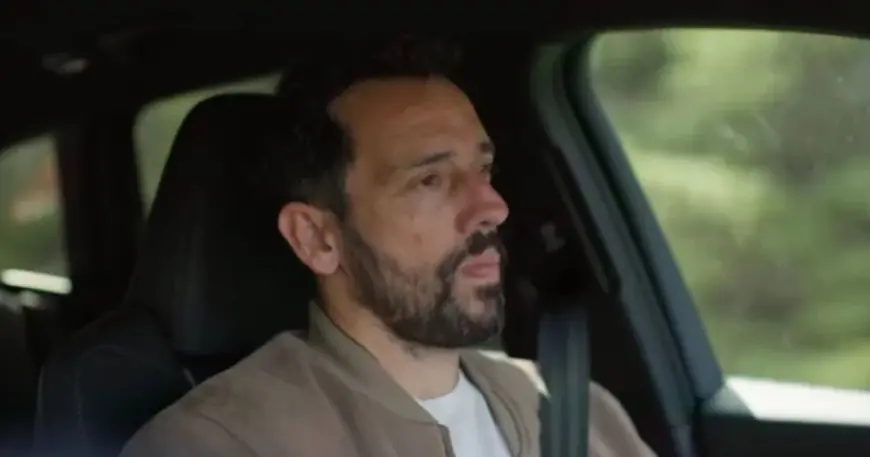
In the most recent instalment of Will and Ralf Should Know Better, ralf little and Will Mellor laid out opposing responses to parenthood: Mellor, a father of two, framed parenting as a committed challenge, while Little spoke emotionally about a childhood trauma that underpins his reluctance. The comparison answers why one man’s experience produces a confident push into parenting and the other’s produces deep hesitation.
Ralf Little: a public struggle with irreversibility and loss
Ralf Little, 46, admitted on the programme that the idea of “loving something so completely and irreversibly” terrifies him. During a charity set-up exercise where he cared for a baby doll, he reflected that he has long lived with a mentality of being able to “walk away” from situations, and that permanent attachment feels “actually terrifying. ” He described how his parents’ relationship later broke down after a family tragedy: when he was nine years old his sister, Ceri, then 14, fell 150ft and died, an event he said left his parents’ lives “crumbled right in front of their eyes. ” That personal history, he said, made him realise the scale of responsibility and vulnerability involved in raising children.
Will Mellor: lived fatherhood and the charity intervention
Will Mellor, 49, entered the same segment from the opposite side: he has had two children and brought them up, and he characterised parenting as a commitment that can be taught and learned. Mellor took Little to a place described on the show as a charity set-up where dads can learn “what to expect from a baby, how to be a parent. ” Mellor framed parenthood as something concrete and practical, and his presence on the visit served to prompt Little’s deeper reflections. Mellor’s line that having a child is more frightening than a trapeze or stand-up underscored that he sees fear as part of a process that he has already navigated through lived experience.
Ralf Little and Will Mellor: where fear and experience diverge
Applying the same criteria—emotional response, roots of the stance, and the effect of a hands-on exercise—highlights a clear split. On emotional response, Little became visibly upset and struggled to hold back tears when discussing his sister’s death and his mother’s protectiveness; Mellor stayed pragmatic, framing parenthood as a committed task. On roots, Little traced his view to family trauma and a long-held mentality of non-permanence, while Mellor’s viewpoint rests on having raised two children and seeking out practical support. On effect, the charity exercise pushed both men into reflection: Little acknowledged deeper questions about why he hasn’t had children, and Mellor used the setting to show that training and experience can demystify the role.
Both men encountered the same staged scenarios on the episode—swinging on a trapeze, a parenting workshop, and a stand-up task before a Glasgow audience—and those shared challenges made the contrast sharper. Little referenced everyday analogies, saying he once loved using a bread maker until he unplugged it and put it away, to explain why he fears the relentless nature of childcare. Mellor’s intervention was built around normalising commitment through practice and support at the charity facility.
Still, the divergence is not merely emotional; it is structural. Little’s stance is defensive and shaped by a family rupture triggered by a sudden death during his childhood, which he connects to an inability to believe in full protection. Mellor’s stance is proactive and based on accumulated responsibility: he frames parenting as a series of learnable tasks, as evidenced by his role in taking Little to a dads’ training environment.
That structural split matters because it predicts different futures for how each man will respond when pushed beyond conversation. The immediate test already set out on the show is their scheduled stand-up performance before a Glasgow audience, one of the programme’s core challenges. If Mellor’s practical framing helps steady performance and Little’s emotional reckoning undermines it, the episode’s live set will confirm which approach more readily converts fear into action.
Finding: comparing Ralf Little and Will Mellor establishes that past trauma produces a precautionary withdrawal from parenthood while lived parenting experience produces practical engagement. The next confirmed test is the duo’s stand-up performance before the Glasgow audience; if Mellor’s experiential approach steadies him and Little’s vulnerability disrupts him, this comparison will be validated. If Ralf Little maintains his willingness to confront the charity exercise and perform despite emotion, the comparison suggests personal reflection can coexist with later commitment.