Blizzard Warning in the Cascades as Wind Advisory targets Western Washington lowlands

Western Washington is bracing for a blizzard warning in the mountains alongside a wind advisory in the lowlands, as a strengthening storm system pushes in tonight through Thursday. The forecast points to a sharp contrast: heavy mountain snow and near-pass snow levels at the same time the region prepares for widespread southerly wind gusts strong enough to threaten trees and power.
Western Washington storm setup: Stevens Pass snow and an incoming atmospheric river
Confirmed conditions already set the stage for hazardous travel in the Cascades. The region has seen a return to wintry weather over the past few days, including brief lowland snow in the North Sound on Tuesday morning. In the mountains, the Cascades have fresh snow, with nearly 3 feet reported at Stevens Pass over the past 48 hours.
A plume of moisture described as an atmospheric river is expected to move into the Northwest tonight through Thursday. The context specifies this is not a Pineapple Express style system, because it is oriented straight across the Pacific rather than drawing in warmer air near Hawaii. That detail matters to the forecast outcome documented here: steady precipitation, with snow levels expected to remain near pass level rather than rising significantly. Later Wednesday, snow falling in the mountains is expected to intensify. A winter storm warning is in effect for the Cascades, where an additional 1 to 2 feet of snow is expected in the next 24 hours.
Lowland impacts are documented differently. Periods of cool March rain are expected Wednesday, leaving damp conditions for the morning and evening commutes. High temperatures are expected to reach about 50 degrees in the metro area, close to normal for this time of year.
Blizzard Warning timing and the wind peak between Kitsap and King counties
The headline risk hinges on two overlapping hazards that the context places on the same night. By Wednesday evening, a rapidly strengthening area of low pressure is expected to move through Western Washington. Southerly winds of 30 to 50 mph, with gusts up to 55 mph, are expected across the region, including along the coast and through Puget Sound. The strongest winds between Kitsap and King counties are expected between 10: 00 p. m. and 2: 00 a. m. ET.
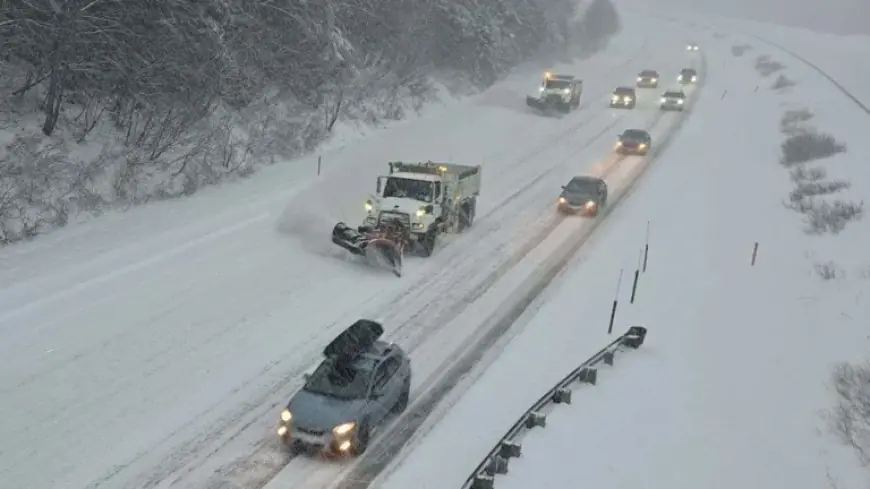
At the same time, strong winds combined with heavy mountain snow have prompted a blizzard warning for parts of the Cascades and Olympics from 9: 00 p. m. Wednesday to 8: 00 a. m. Thursday ET. Winds could exceed 60 mph near mountain peaks and remain strong near the passes. Travel across the Cascades is expected to be hazardous on Wednesday night.
The documented tension is not whether impacts will occur, but how the hazards stack up across geography and elevation. The lowlands face a wind advisory with gusts strong enough to cause tree damage and power outages, while the mountains contend with blizzard conditions tied to both snow intensity and stronger winds near peaks. The context confirms both are expected within the same window, yet it does not quantify how closely the worst lowland winds and the most dangerous mountain travel conditions will overlap hour-by-hour.
Puget Sound to the Strait of Juan de Fuca: shifting winds and what remains unclear
As the storm moves east, winds are expected to shift to the west in the Strait of Juan de Fuca and the San Juan Islands. Gusts of 40 to 55 mph are possible in places including Oak Harbor, Port Angeles, and Anacortes. That shift broadens the footprint of wind impacts beyond the initial southerly push.
Still, what remains unclear is how localized disruptions may become, because the context does not confirm which neighborhoods, corridors, or utilities would be most exposed to outages if tree damage occurs. The forecast describes the risk in general terms, not in verified incident reports or specific infrastructure vulnerabilities.
Beyond Wednesday night, the context points to persistence rather than a quick exit. By Thursday, winds will ease, but lowland rain and mountain snow will continue. Snow levels are expected to remain near 2, 000 feet through Thursday and Friday, adding to late-season snowfall at the passes and ski areas. Another push of colder air is expected Friday night into Saturday, lowering snow levels to about 500 feet by Saturday morning, with some brief, light accumulations of lowland snow possible. Conditions are expected to improve Sunday and Monday, with drier weather and increasing sunshine, and highs could approach 60 degrees by Monday afternoon.
The immediate evidence threshold for whether the region’s warnings translate into the most disruptive outcomes is straightforward within the context: if winds reach the forecast gust range in the lowlands while the blizzard warning period brings peak-and-pass wind strong enough to reduce visibility in heavy snow, it would establish that both the wind advisory and the mountain warning aligned during the same overnight stretch, reinforcing the expectation of hazardous Cascade travel on Wednesday night.