Money Williams and the 2026 NBA mock draft debate over risk and No. 1

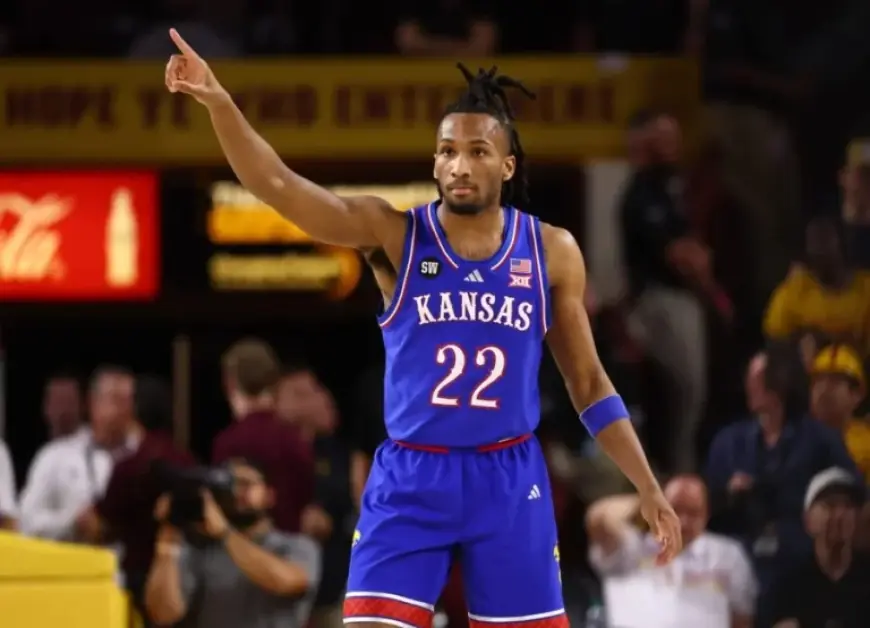
money williams enters the conversation as a new 2026 NBA mock draft frames a familiar tension: the player ranked No. 1 is also described as carrying the most perceived risk. The mock lists Kansas guard Darryn Peterson first overall, ahead of BYU forward AJ Dybantsa and Duke big man Cameron Boozer. Yet the same write-up ties Peterson’s profile to injuries and inconsistency, raising questions about how firm that top slot really is.
Jeremy Woo’s 2026 mock draft order: Darryn Peterson, AJ Dybantsa, Cameron Boozer
The latest 2026 mock draft from Jeremy Woo places four prospects at the top in a clear sequence: Kansas guard Darryn Peterson at No. 1, BYU forward AJ Dybantsa at No. 2, Duke big man Cameron Boozer at No. 3, and UNC forward Caleb Wilson at No. 4. Within that same framing, Peterson is described as the most talented offensive player in the 2026 class.
Those two points sit together in the record: Peterson is both the top-ranked player in this mock and the one singled out for elite offensive talent. Still, the context also builds in conditions around the top pick, noting that which team wins the draft lottery might ultimately determine who goes No. 1, with Peterson and Dybantsa viewed as the two frontrunners.
That setup matters for understanding the mock’s authority. It presents a ranking, but it also emphasizes contingency: the top outcome is portrayed as dependent on lottery results and team preference, not simply a settled consensus.
Money Williams angle: injuries, inconsistency, and the “No. 1 carries risk” gap
The main contradiction embedded in the mock is explicit: Peterson is ranked first, but injuries and inconsistency have led to a perception that selecting him first overall might carry more risk than adding Dybantsa or Boozer. This is not a minor caveat; it is the core qualifier attached to the No. 1 slot.
At the same time, the context states that Dybantsa and Boozer are “both still in the mix for the top spot. ” Put together, the documented picture is not a stable hierarchy so much as a three-player debate where the top-ranked prospect is also the one whose résumé is framed as volatile.
What remains unclear is how that “perception” is being weighed inside the ranking itself. The context does not confirm what specific injuries occurred, how recent they were, or how directly they affected Peterson’s season. It also does not confirm what “inconsistency” refers to in measurable terms. Still, the presence of those labels alongside a No. 1 placement exposes a definitional split: the mock distinguishes “most talented offensive player” from “least risky choice, ” without resolving the tension.
money williams fits here as a useful shorthand for the way fans, executives, and analysts can pull the same set of names into different arguments: ceiling versus certainty, and projection versus current reliability. The context, however, only documents that this split exists; it does not document any single agreed-upon method for reconciling it.
Keaton Wagler, Dailyn Swain, Koa Peat, and Tounde Yessoufou show a moving board
The mock also flags movement beyond the top four, reinforcing that the board is not static. Illinois guard Keaton Wagler is listed at No. 6 and Texas wing Dailyn Swain at No. 29 among prospects who have boosted their stocks this season. Arizona forward Koa Peat at No. 19 and Baylor wing Tounde Yessoufou at No. 30 are described as trending in the opposite direction.
This matters because it shows the document is not merely a snapshot; it is framed as a “latest” version that reacts to recent performance. That creates an additional layer to the Peterson-Dybantsa-Boozer question: if the board is already moving for players in the middle and back end of the first round, the top could also be more fluid than a simple 1-through-4 ordering suggests.
Still, the context does not confirm what games, events, or benchmarks drove those rises and falls, or whether “this season” refers to a specific league schedule. The only confirmed point is directional: Wagler and Swain up, Peat and Yessoufou down, and the top debate unsettled enough that lottery fit is presented as a possible deciding factor.
The next evidence threshold is straightforward: if a future mock or draft-lottery framing removes the “risk” qualifier from Peterson while keeping him at No. 1, it would establish that the perception described here has eased without dislodging his rank. If the No. 1 slot flips to AJ Dybantsa or Cameron Boozer while the risk language remains tied to Peterson, it would establish that the mock’s own caveat became decisive in the ordering.