Target Boycotts persist as Minnesota activists reject a declared victory

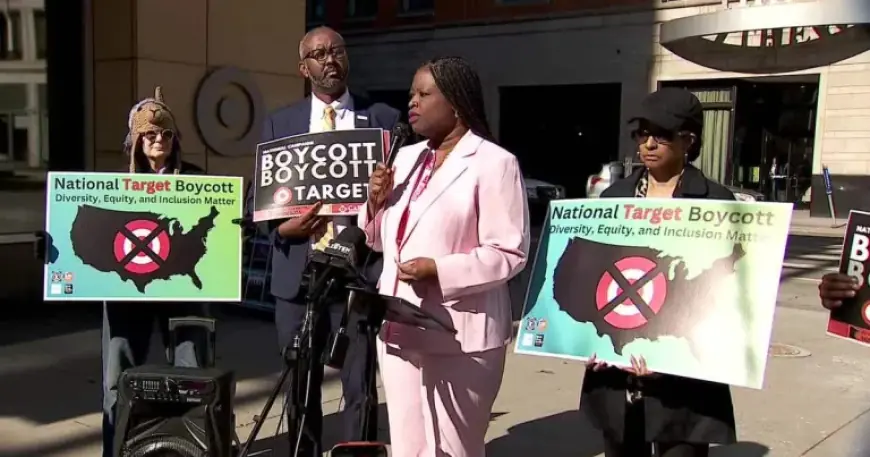
Outside Target’s Minneapolis headquarters, Minnesota activists used a news conference to deliver a message they said had been muddied elsewhere: target boycotts are still on. Their insistence came as the company signaled it is “moving forward, ” and after a separate news conference in Washington, D. C., where an Atlanta-based pastor praised Target and described the pressure campaign as a win.
Nekima Armstrong and the Minneapolis headquarters message
The day’s most direct line came from Nekima Armstrong, a Minnesota activist, civil rights attorney, and minister, who rejected statements made Wednesday morning that claimed the boycott was over. She said the campaign was never designed to end on a timeline. From the start, she said, activists called it indefinite, to last “unless and until” Target addressed the decision to roll back Diversity, Equity and Inclusion measures.
Armstrong also anchored the conflict in the relationship many residents believed they had with the retailer. She said many people felt “betrayed” after viewing Target as a “hometown company that invested in our community. ” That sense of disappointment, she suggested, now sits alongside a more concrete dispute: who gets to speak for the boycott itself, and what would count as meaningful change.
At the headquarters gathering, demonstrators also aimed their pressure at a new corporate moment. The rally sought to push Target to oppose ICE as incoming CEO Mike Fiddelke begins his role on Monday. The boycott and the leadership transition, activists argued, now intersect at the company’s front door in Minneapolis.
Rev. Jamal Bryant, Washington, D. C., and competing claims of progress
The activists’ response was sharpened by a parallel event far from Minnesota. Rev. Jamal Bryant, an Atlanta-based pastor, held a news conference in Washington, D. C., praising Target and declaring “victory. ” He said Target had reinvested in Black communities, and he pointed to what he described as “robust” contributions to Black-owned companies and scholarships.
Armstrong countered that Bryant does not lead the boycott and does not speak for the movement. She said Target “went around” the true leaders of the boycott, framing the Washington, D. C., appearance as an attempt to close a public chapter without resolving the demands that opened it.
Target, for its part, cast its posture in broad terms, emphasizing continuity and a return to normal operations. it is “more committed than ever to creating growth and opportunity for all, ” adding that it is “pleased to be moving forward, ” and that it will keep “showing up as trusted neighbors” for team members, guests, and “the more than 2, 000 communities in which we serve. ” The statement tied the company’s self-image to community outcomes: “Because when those communities thrive, so do we. ”
For the activists outside the headquarters, the dispute was not only about whether Target had made commitments, but also about whether those commitments addressed the specific reasons the boycott began and expanded.
DEI rollbacks, Operation Metro Surge, and why organizers say the boycott continues
The boycott began in January 2025, after Target announced a rollback of DEI measures. That decision remains the organizing trigger activists cite. Armstrong described the rollback as a capitulation “to the Trump administration, ” and she framed the boycott’s duration around reversing or addressing that move.
Criticism of Target also intensified during Operation Metro Surge. Activists said federal immigration agents used Target parking lots as staging areas and detained people inside the company’s stores. In Minneapolis, that allegation has become part of the boycott’s story, linking corporate policies and local community concerns to how the retailer’s spaces are used.
In the background, the company’s business picture has also been shifting. Target’s quarterly reports show sliding sales over the past year and a half. Still, the most recent report cited a “solid annual profit outlook, ” and the company announced that many items will see reduced prices in time for spring.
Those details do not settle the argument on the sidewalk outside headquarters, but they frame it: a company that says it is moving forward, and a group of activists who say they will not. For now, target boycotts remain a tool they say they are keeping in place, even as others try to declare the campaign finished.
Back at Target’s Minneapolis headquarters, the message from Armstrong and the activists who gathered with her was that the boycott’s definition has not changed, and neither has the bar for ending it. With Mike Fiddelke beginning his role on Monday, organizers are pressing for a response that matches their demands, not someone else’s announcement of victory.