Cedric Ricks execution in Texas exposes gaps in public record detail

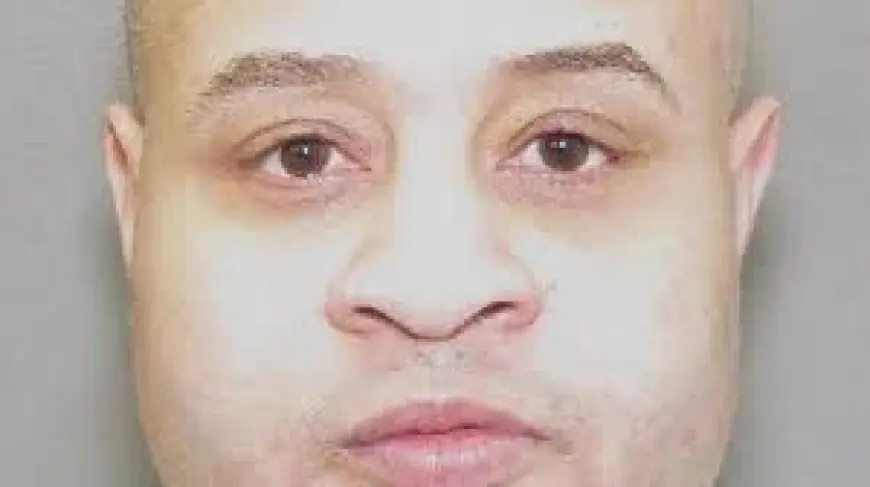
cedric ricks was put to death Wednesday evening in Huntsville, Texas, for the 2013 fatal stabbings of Roxann Sanchez and her 8-year-old son, Anthony Figueroa. The official account includes a precise pronouncement time and a detailed description of his final statement and physical reactions. Yet the context also shows clear limits: it does not fully document the trial testimony excerpt, the precise execution start time, or a complete procedural chronology.
Cedric Ricks pronounced dead in Huntsville after pentobarbital injection
Confirmed details place the execution at the state penitentiary in Huntsville, where Cedric Ricks, 51, received a lethal dose of the sedative pentobarbital. He was pronounced dead at 6: 55 p. m. CDT, which is 7: 55 p. m. ET. The context also states he was pronounced dead 30 minutes after the injection had begun, but it does not confirm the exact start time of the injection in either local time or ET.
Witness accounts in the record describe what happened as the drug took effect: he took 19 quick breaths, then made 10 snoring sounds, followed seconds later by intermittent gurgles, after which movement and sound stopped. Those details are specific and measurable, but they also highlight an asymmetry in what is documented: the pronouncement time is exact, while the injection start time is only inferable from the “30 minutes after” reference, not stated outright.
Roxann Sanchez and Anthony Figueroa case facts are detailed, while some elements are only partial
The context gives a clear account of the underlying crime. Cedric Ricks was condemned for the May 2013 killings of 30-year-old Roxann Sanchez and her son Anthony Figueroa at their apartment in Bedford, described as a greater Dallas-Fort Worth suburb. Sanchez’s older son, Marcus Figueroa, survived with multiple stab wounds. The context states he was stabbed 25 times and that he feigned death to survive.
The record also describes how the killings unfolded that night in prosecutors’ framing and in court records: an argument between Ricks and Sanchez escalated when her two sons tried to break up the fight, after which Ricks grabbed a knife from the kitchen and stabbed Sanchez multiple times. After Anthony Figueroa was killed, Marcus Figueroa was attacked and later survived by playing dead until the attacker left the apartment.
Still, the context includes an explicit gap: the excerpt about Ricks’s testimony at his capital murder trial cuts off mid-sentence, ending after noting he testified he had anger issues and claimed he had been defending himself. What remains unclear is the full content of that testimony, how it was weighed against other evidence, and what additional trial facts the record may contain beyond the partial excerpt provided here.
Marcus Figueroa witness presence and Cedric Ricks apology create a documented tension
The execution narrative centers on the presence of Marcus Figueroa, described as the survivor of the 2013 attack who also witnessed the execution. Confirmed details describe his demeanor: he showed no emotion while watching through a glass window a short distance from where Ricks was strapped to a gurney. The context also notes scars visible on the back of Marcus Figueroa’s neck, described as apparently from the attack.
Against that silent witness account sits an unusually detailed final statement. When asked by the warden if he had a final statement, Ricks apologized to seven relatives of his victims who were present, and he directed much of his statement to Marcus Figueroa. He said he was sorry for taking Roxann and Anthony from them, said he was glad he could speak to them face to face, and expressed hope that the relatives could forgive him. The context also documents his emotion: his voice cracked and a tear formed in his eye.
The tension is not speculative; it is documented in two parallel facts. First, the statement records repeated expressions of remorse, including a direct address to the surviving son. Second, the witnesses in the chamber, including Sanchez’s stepfather and brother, and Anthony Figueroa’s father, brother and grandmother, are described as showing no emotion and declining to speak afterward. The context does not confirm what any of them believed about the apology, what they wanted from the execution, or whether any communication occurred outside the chamber.
Another record boundary appears alongside the detailed narrative: the context states that Ricks did not harm his own then-9-month-old son Isaiah and that he fled and was later arrested in Oklahoma. Yet it does not confirm additional investigative steps, plea discussions, or appellate milestones that typically shape capital cases. Those absences do not contradict the confirmed facts; they define what the current record, as provided here, does not contain.
The next piece of evidence that would resolve the central uncertainty in this account is straightforward: a complete, uninterrupted record of the capital murder trial testimony excerpted here, and an official execution timeline that states when the injection began. If the injection start time is confirmed, it would establish a fully anchored chronology matching the stated “30 minutes after the injection had begun” to the 7: 55 p. m. ET pronouncement time.