NASA Satellite Crashes Into Earth After 14 Years in Orbit — Van Allen Probe A Reentry Confirmed

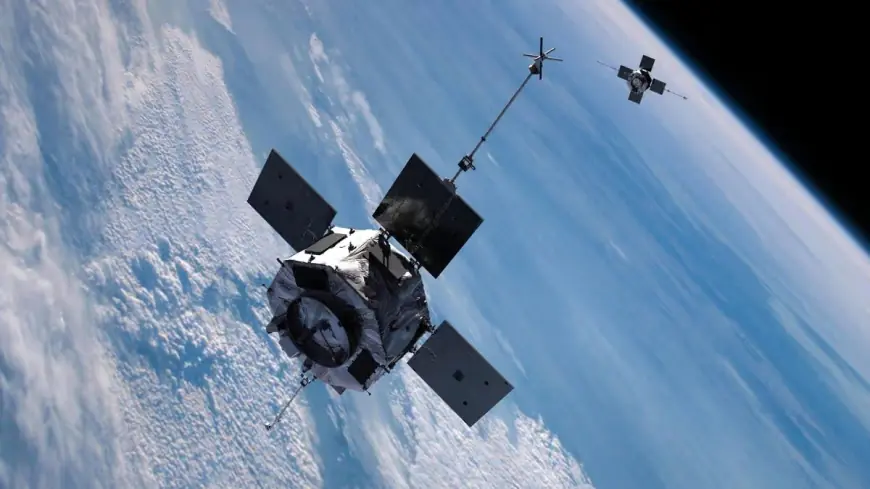
The NASA Van Allen Probe A reentry is now complete. The 1,300-pound spacecraft officially crashed back into Earth's atmosphere on Wednesday, March 11, at 6:37 a.m. ET, plunging over the eastern Pacific Ocean after nearly 14 years circling the planet. The nasa satellite crash marked an uncontrolled end to a mission that reshaped humanity's understanding of deep space radiation.
NASA Van Allen Probe Reentry: What Happened Wednesday Morning
The U.S. Space Force confirmed the Van Allen Probe A, launched in August 2012, re-entered the atmosphere at 6:37 a.m. ET on Wednesday over the eastern Pacific Ocean region.
NASA had previously projected the probe to re-enter around 7:45 p.m. ET on Tuesday, but noted there was a 24-hour margin of uncertainty. The actual reentry arrived hours later than the initial estimate, catching up with the spacecraft sooner than anyone had anticipated when its mission first ended.
The nasa satellite crashing into earth scenario played out largely as scientists predicted. Most of the probe disintegrated in the extreme heat of atmospheric reentry, though some hardware fragments were expected to survive the fiery descent.
NASA Satellite Crash Risk: How Dangerous Was It?
There was a 1 in 4,200 chance of anyone on Earth being harmed, NASA said, noting that the risk is low. That is a roughly 0.02 percent probability — well within the threshold scientists consider acceptable for uncontrolled satellite reentries.
This low risk stems largely from the fact that oceans cover some 70 percent of the planet's surface, meaning any surviving pieces would most probably splash down harmlessly in open water.
The nasa satellite crash over the Pacific minimized any ground-level danger. Engineers at NASA had no ability to steer the probe or control where surviving fragments might fall, making ocean impact the most statistically likely outcome.
Why the NASA Satellite Was Crashing Earlier Than Expected
Originally, NASA thought the two probes would re-enter Earth's atmosphere in 2034, but higher-than-normal solar activity in recent years has increased atmospheric drag on the probes.
In 2024, scientists confirmed the Sun had reached its solar maximum, triggering intense space weather events. These conditions increased atmospheric drag on the spacecraft beyond initial estimates, resulting in an earlier-than-expected re-entry.
The nasa satellite crashing eight years ahead of schedule is a direct consequence of the Sun's intensified activity cycle. When solar energy increases, the upper atmosphere expands and creates far more resistance against orbiting objects — pulling them earthward faster than any pre-launch model could have accurately predicted.
Van Allen Probe Mission: A Legacy of Space Science
The mission ended in 2019, when the probes ran out of fuel and could no longer orient themselves toward the sun. What began as a two-year assignment stretched to nearly seven years of continuous scientific output.
The mission made several significant discoveries, including the first evidence of a transient third radiation belt that forms during intense solar activity. That discovery alone rewrote textbooks on Earth's magnetosphere.
The insights gathered by this mission help improve forecasts of space weather, which can disrupt satellites, navigation systems, communication networks, and even power grids on Earth.
What Comes Next: Van Allen Probe B Still in Orbit
Probe B is not expected to re-enter Earth's atmosphere until the 2030s. Scientists will continue monitoring its orbital decay as the current solar cycle progresses.
Satellite re-entries like this highlight the broader problem of space debris, especially as launches become more frequent. With tens of thousands of tracked objects currently circling Earth, the Van Allen Probe A nasa satellite crash serves as a reminder that every object placed into orbit will eventually return home.