Clemson Basketball faces familiar ACC Tournament hurdles as bracket repeats past losses

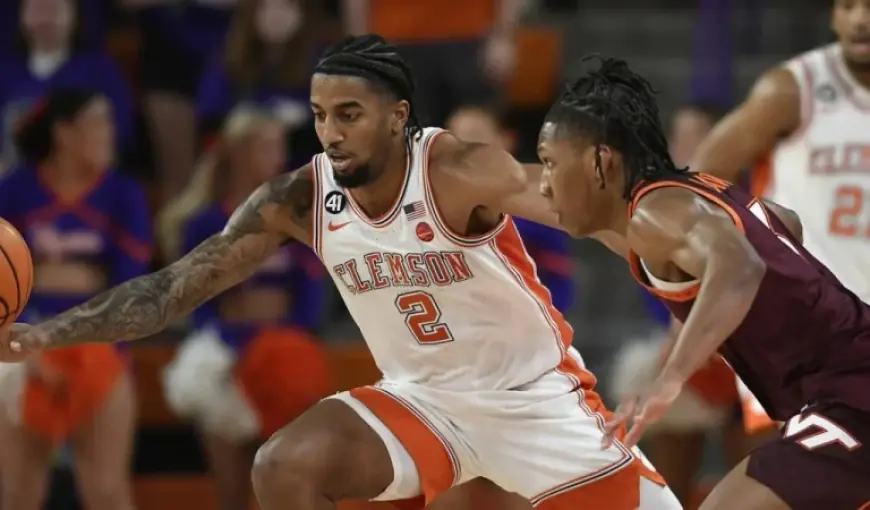
clemson basketball enters the ACC Tournament again without a men’s championship in the event, and the 2025 path offers little relief. Clemson opens against Wake Forest on Wednesday at 9: 30 p. m. ET at Spectrum Center in Charlotte, N. C., yet the bracket places the Tigers alongside nearly every team that has already beaten them this season. That tension between seeding strength and matchup history now frames their postseason prospects.
Clemson Basketball’s Wednesday 9: 30 p. m. ET game sets the immediate test
Clemson, the No. 5 seed, faces No. 13 seed Wake Forest in a second-round game scheduled for 9: 30 p. m. ET at Spectrum Center. Wake Forest reached this matchup after a 95-89 overtime win against Virginia Tech on Tuesday, a result that creates a quick turnaround for the Demon Deacons while Clemson enters on more rest.
Season results described in the record underline why the matchup is not simply a seeding exercise. Clemson has lost to both Virginia Tech and Wake Forest in recent weeks, falling 76-66 at home to the Hokies on Feb. 11 and 85-77 at Wake Forest a week later. Another account of the Wake Forest meeting describes a 79-76 Wake Forest win at home, and the context does not confirm why the two point totals differ. What is confirmed across the context is that Wake Forest beat Clemson at home and now meets them again in Charlotte.
For Clemson, the basic stakes are clear: win Wednesday and the bracket brings a higher-seeded, familiar opponent next. If the Tigers advance, they are set to play No. 4 seed North Carolina at the same 9: 30 p. m. ET start time on Friday.
Brad Brownell’s defense focus collides with a bracket full of known problems
The central gap in Clemson’s tournament outlook sits in two documented facts that pull in opposite directions. On one hand, Clemson’s seeding and overall record suggest quality: the Tigers are 22-9 overall and 12-6 in ACC play, positioned as the No. 5 seed. On the other hand, their placement “with every team, but one, that beat them this season” compresses the margin for error, turning the tournament into a replay of matchups that already produced losses.
Five of Clemson’s six losses in league play came against Duke, North Carolina, Florida State, Virginia Tech, and Wake Forest. The one conference win cited in the context came at California on Feb. 7. The bracket dynamics tie directly to those results: after Wake Forest, Clemson would face North Carolina, and then, if they continue, a likely semifinal against top-seeded Duke or Florida State or California. The pattern is not subtle; the context documents that Clemson’s potential opponents include multiple teams responsible for its ACC defeats.
Clemson head coach Brad Brownell pointed to league quality while also returning repeatedly to defending as the controllable variable. He cited the strength of lower seeds, noting Virginia Tech and Wake Forest finishing 12th and 13th while still being “pretty good teams, ” and he described both as talented and well coached. Still, when discussing Clemson’s losses to Virginia Tech and Wake Forest, Brownell said Clemson did not guard well enough and credited both opponents for pace and fast starts. “Defending is important, ” he said, adding that it will matter for Clemson regardless of opponent.
That defensive emphasis also appears in a separate breakdown that characterizes Clemson as elite defensively, placing the Tigers No. 20 overall in a defensive efficiency rating and describing their controlled pace and half-court approach. Yet the earlier February losses outlined in the context attach specific consequences to defensive slippage: Virginia Tech and Wake Forest “shot lights out, ” especially in the first half, and Clemson’s coach framed it as a guarding issue as much as an opponent hot streak.
Wake Forest, Virginia Tech, and the unresolved record of Clemson’s tournament reality
Clemson’s broader ACC Tournament track record provides the backdrop to the present bracket challenge, and it is stark in the context. Clemson has never won an ACC Tournament championship in men’s basketball. From 1954 through 2025, the Tigers have lost in every tournament but one, the COVID-canceled tournament in 2020. The context also states that the tournament has been held 71 times and Clemson has returned home without a championship trophy 70 times, describing Clemson as the lone charter member of the league to never win the tournament. The Tigers’ all-time ACC Tournament record is listed at 24-70.
Those historical facts sharpen the investigative tension of the week: Clemson’s seed and regular-season record are not paired with a bracket that avoids past problems. Instead, the context presents a tournament structure that reintroduces the opponents tied to Clemson’s ACC losses. The result is a postseason path where the Tigers’ stated defensive priority will be tested against teams that already benefitted from Clemson not “guard[ing] as well as we need to. ”
One view of the Wake Forest rematch leans on rest and style, arguing the scoring environment from the prior meeting was driven by unusual shooting and free-throw factors and is unlikely to repeat. Still, the context does not confirm whether those conditions will change in Charlotte, only that Wake Forest arrives on short rest after overtime and Clemson arrives after finishing its regular season on Saturday with a 79-76 win over Georgia Tech.
The immediate facts that would clarify Clemson’s direction are already scheduled on the court. If Clemson’s defense holds against Wake Forest at 9: 30 p. m. ET and the Tigers advance, it would establish that their first test against a recent conqueror did not repeat the pattern described in their February losses, setting up a Friday night meeting with North Carolina at the same start time.