Metropolitan Opera’s 2025-26: Review of Tristan und Isolde

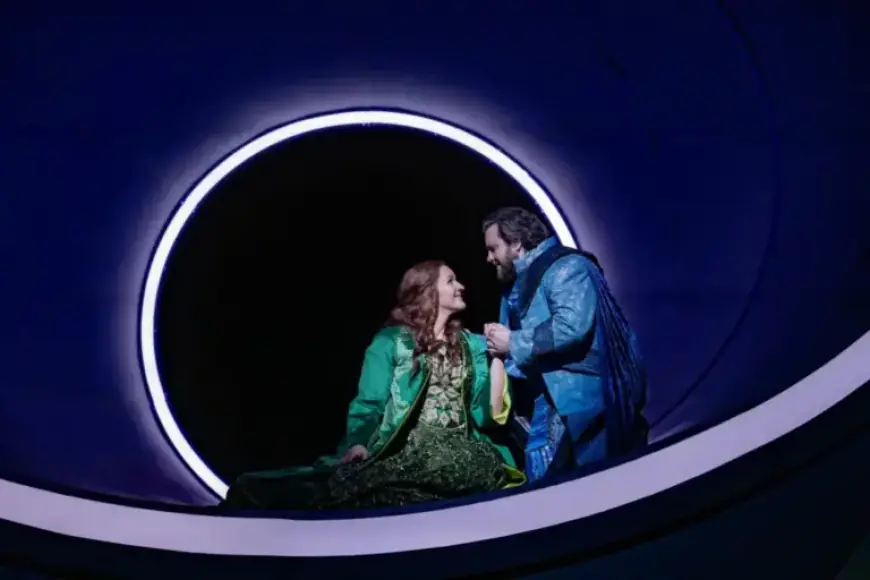
Director Yuval Sharon’s staging of “Tristan und Isolde” at the Metropolitan Opera marks a significant addition to the 2025-26 season. Noted for its complexity and depth, this production has generated a buzz, leading the Met to add an additional performance due to overwhelming demand.
Production Overview
The production features a striking design, with a large white, ovular structure representing both an eye and a womb, setting a contemplative atmosphere. This is accentuated by background sounds of the ocean, allowing Wagner’s prelude to resonate powerfully with the audience.
Staging and Themes
Sharon’s interpretation integrates contemporary elements with traditional operatic motifs. Throughout the performance, the titular characters, Isolde and Tristan, are visually represented by live video feeds and doppelgängers, symbiotically blending the physical and metaphysical worlds.
- Character Dynamics: Isolde and Tristan are positioned at opposite ends of a table, symbolizing their emotional distance.
- Philosophical Influences: Inspired by Schopenhauer’s “The World as Will and Representation,” the production explores themes of desire, illusion, and human suffering.
- Motifs Used: The recurring knife imagery represents tension and impending fate, creating a sense of urgency throughout the narrative.
Act Structure
Act One
The first act sets the stage for conflict and longing. The use of projections feels heavy-handed at times, overshadowing subtle emotional shifts. However, it successfully introduces the themes of retribution and desire through powerfully charged interactions.
Act Two
The second act deepens the emotional connection between the characters. Isolde’s poignant moment of lighting a candle symbolizes her burning passion and foreshadows impending tragedy, showcasing Sharon’s strength in musical pacing and dramatic tension.
Act Three
In the final act, the production reaches a peak of emotional intensity, encapsulating the themes of rebirth through Isolde’s pregnancy, symbolizing hope amid despair. Tristan’s impending fate culminates in a dramatic tableau that intertwines life and death.
Vocal Performances
The performances by Lise Davidsen as Isolde and Michael Spyres as Tristan stand out for their vocal chemistry and intensity. Davidsen’s portrayal transitions from raw power to fragility, while Spyres delivers a nuanced performance that balances emotional weight with vocal agility.
- Lise Davidsen: Her portrayal captures a range of emotions from bitterness to longing, culminating in a breathtaking “Liebestod”.
- Michael Spyres: He navigates the challenging role with grace, particularly in emotionally charged scenes, demonstrating remarkable vocal control.
Musical Direction
Conductor Yannick Nézet-Séguin’s direction displays moments of brilliance. While pacing issues emerge in Act Two, his handling of the score in Acts One and Three ensures clarity and emotional thrust, enhancing the overall impact of the performance.
Conclusion
The production of “Tristan und Isolde” at the Metropolitan Opera exemplifies a modern interpretation of classical opera, inviting audiences to explore profound philosophical themes. With its rich visual and musical tapestry, Sharon’s work encourages viewers to reflect on the intersection of life, love, and mortality.
Those fortunate enough to secure a ticket are in for a memorable experience, as this production embodies the essence of Wagner’s magnum opus, masterfully blending innovative staging with vocal excellence.