Sandy Alcantara trade talk grows as Miami’s roster moves point both ways

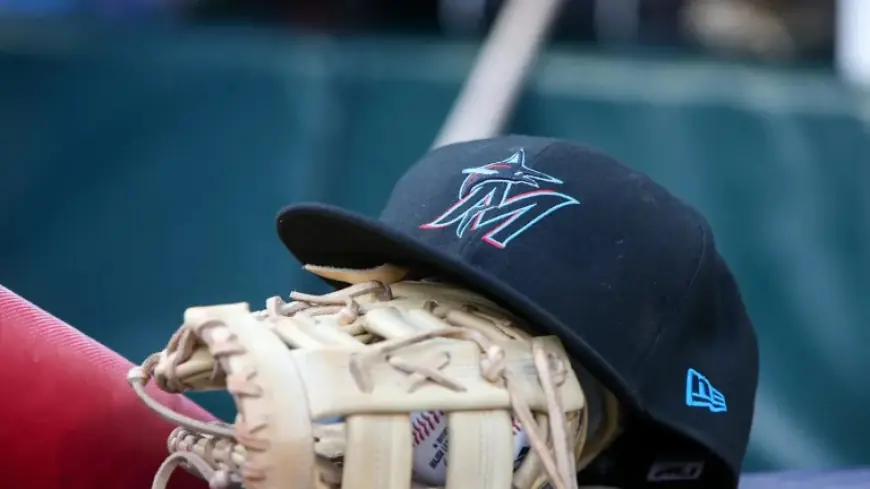
sandy alcantara remains with the Miami Marlins after the club traded two other starting pitchers this offseason, yet he is already being described as a likely trade-deadline candidate with specific destinations attached. That mismatch between Miami’s winter decisions and the early certainty of summer trade talk is the central tension: the context contains both reasons to keep him and reasons to move him, without confirming which path the organization has chosen.
Peter Bendix, Edward Cabrera, and Ryan Weathers: the offseason moves on record
Confirmed fact: Miami’s president of baseball operations Peter Bendix traded two starting pitchers this offseason. Edward Cabrera went from the Marlins to the Chicago Cubs in a deal that returned prospects, including Owen Caissie. Ryan Weathers went from Miami to the New York Yankees for more prospects.
Those trades, in the context provided, establish a clear pattern of Miami converting major-league starting pitching into prospect packages during the winter. The context also makes plain what those transactions did not do: they did not include sandy alcantara, who was left to lead the rotation after the Cabrera and Weathers deals.
Still, the same context that frames Alcantara as the rotation leader also flags instability around the staff. It explicitly states that “how things fall after that on Opening Day remains to be seen, ” a reminder that the club’s post-trade pitching plan is not fully spelled out in the record provided.
Sandy Alcantara’s contract details and the logic pushing toward a deadline deal
Confirmed fact: sandy alcantara is listed as one of 10 “too-early” trade candidates for the deadline this summer, and three specific potential landing spots are named: the Chicago Cubs, the Atlanta Braves, and the San Francisco Giants. In both Cubs- and Marlins-focused contexts, that same trio appears, suggesting the rumor structure is already unusually concrete for a “too-early” list.
Confirmed fact: a salary and option structure is also part of the context’s trade reasoning. Alcantara is described as having a $17 million salary this year and a $21 million club option next year. The context ties those terms to a specific incentive: “Interested teams will give up more to get two postseasons of Alcantara rather than one, making a trade this summer more likely. ” That is not confirmation a trade will happen, but it is documented logic used to argue why the summer timeline could matter.
Yet, another confirmed fact pulls in the opposite direction: “it is not a given that Miami trades Alcantara. ” The context describes a scenario where Miami’s competitive position at the deadline would make a trade harder to justify, especially if the club is “in the race or a postseason spot. ” The record, as provided, contains the push and pull in the same breath: contract structure used to justify movement, and competitive positioning used to justify retention.
Chicago Cubs, Atlanta Braves, and San Francisco Giants: a pattern of fit without a confirmed decision
Documented pattern: the Cubs appear in the context not only as a named landing spot but as a team already linked operationally to Miami through the Cabrera trade. A Cubs deal for sandy alcantara is presented as a potential reunion with Cabrera, now in Chicago. The context also lists Chicago’s projected Opening Day rotation as Cade Horton, Matthew Boyd, Cabrera, Shota Imanaga, and Jameson Taillon, while noting the organization has depth and may look to add a starter at the trade deadline “as is the case… every year. ”
Meanwhile, the Braves element is framed less as roster mechanics and more as a potential complication. The context explicitly calls Atlanta “interesting” because it is a National League East division rival, and it says it would be “hard to envision” Miami moving Alcantara to a division rival. That phrase is important: it signals skepticism inside the same record that still lists Atlanta as a destination, highlighting the internal contradiction between “hard to envision” and “anything is possible when it comes to trade packages. ”
The Giants, for their part, appear twice in the provided context but through two different lenses. One is the Alcantara destination list. The other is a separate offseason pitching market discussion in which the Giants are predicted to sign Lucas Giolito to strengthen a rotation that already includes Logan Webb and Robbie Ray. That parallel matters because it shows San Francisco being mentioned both as a potential Alcantara landing spot and as a club expected to pursue another starter elsewhere, without the context confirming how those two ideas connect or compete.
What remains unclear is how Miami weighs these competing incentives right now. The context does not confirm any negotiation, any offer, or any organizational statement from the Marlins about Alcantara’s availability. It also does not confirm whether the listed teams have made contact or whether the destinations are speculative fits.
One evidence threshold would resolve much of the tension contained in the record: a confirmed in-season decision by Miami tied to its position at the trade deadline. If Miami is confirmed to be outside a postseason spot at the deadline and still keeps sandy alcantara, it would establish that the organization prioritized retention over the contract-driven trade logic described in the context. If Miami is confirmed to be in the mix and trades him anyway, it would establish that the prospect-return strategy seen in the Cabrera and Weathers deals extended to its top remaining starter.