Louis Theroux vs. Manosphere Influencers: Freedom Claims Clash With Algorithm Dependence

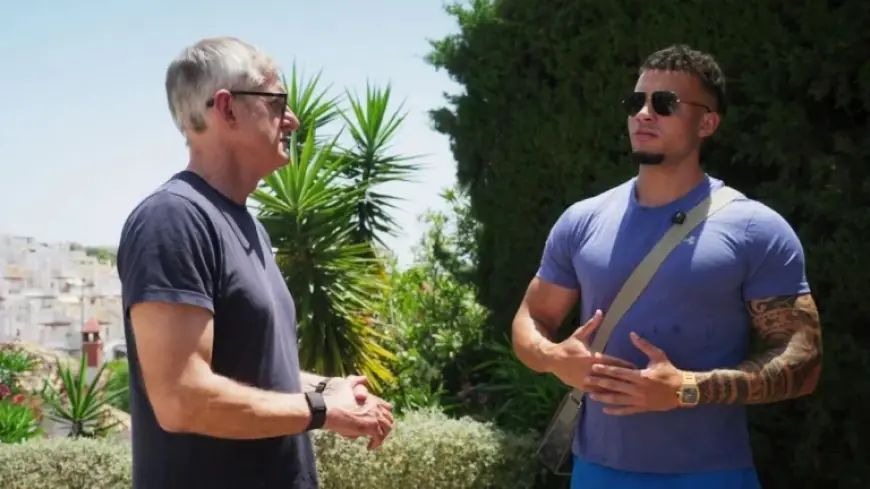
louis theroux’s Netflix documentary places a spotlight on male online influencers in the manosphere who sell a vision of escaping bosses and building wealth on their own terms. Side by side with their own statements and business practices, the film also shows a different reality: dependence on audiences, platform systems, and monetisation strategies. The comparison answers a basic question: how much of their “own boss” narrative survives close observation?
Louis Theroux frames the manosphere as culture, taboo, and red flags
In the 90-minute film, Louis Theroux presents the manosphere as more than fringe internet behavior, describing figures who are “making inroads into the culture, ” with influence felt “in schools, in the workplace and all across the internet. ” He links his interest to a longer-running focus on taboo beliefs that “run against the grain” of the values he grew up with, while also describing the movement’s “swaggering machismo” as containing “a whole bunch of red flags, ” including misogynistic, homophobic, antisemitic, and racist elements.
Theroux also puts his own parenting perspective into the story. As a father-of-three, he says he does not know what his own kids are looking at online “half the time, ” and describes a familiar imbalance: children likely spend more hours on phones than talking to parents, while parents do not always know what their children are seeing. That personal angle reinforces the film’s insistence that the subject is not confined to niche corners of the internet.
Harrison Sullivan, Myron Gaines, and Justin Waller sell “no boss” while building business models
The influencers featured in the documentary repeatedly pitch a version of independence: make money, stay “outside the system, ” and avoid having a boss. Harrison Sullivan, known online as HS Tikky Tokky or HSTikkyTokky, delivers that message directly, saying he “coach[es] boys” on how to make money and how to avoid a boss telling them what to do. The film follows him through livestreamed nights out in Spain and showcases the aspirational aesthetics around him, while also showing how he monetises his audience.
Across the film’s cast, the business mechanics vary but orbit the same goal: converting attention into revenue. Sullivan drives fans toward the profiles of OnlyFans creators and financial apps that provide him a revenue source, while also expressing disdain for OnlyFans creators and showing little concern about the contradiction. Myron Gaines, host of Fresh and Fit, is shown using a similar dynamic with OnlyFans creators: bringing them on as guests while also publicly humiliating them. Justin Waller, described as a friend of the Tate brothers, promotes subscriptions to a self-described “online university” created by the Tate brothers called The Real World, priced at $49 a month, with Waller receiving a cut.
The documentary also includes Nicolas Kenn De Balinthazy, known as Sneako, described as a formerly banned YouTuber who has morphed from the manosphere into far-right politics and pushing conspiracy theories. Alongside Ed Matthews, these names are presented as part of a set of “key figures” reshaping young men’s ideas about masculinity and fueling a resurgent global men’s rights movement.
HSTikkyTokky’s lifestyle pitch vs. Louis Theroux’s “serfs to algorithms” critique
The sharpest comparison in the film is between what influencers claim they represent and what their routines and incentives imply. On one side sits the promised escape: the influencer as a self-directed entrepreneur, free from office drudgery. Sullivan is shown selling that dream to typically young followers, presenting leisure, a “built body, ” bikini-clad models, and a life in Spain. He encourages followers to sign up to an investing platform described as dubious, taking a cut even if they lose money. In the film, he also describes using provocation for profit, explaining that offensive speech can be a button to press for attention and monetisation.
On the other side sits Theroux’s depiction of influencer work as a new kind of constraint. The documentary is described as revealing these creators as “mere serfs to algorithms and audiences, ” and as a grim view of influencer production that can be “shabby” or “soul-destroying. ” Even when creators have trappings of wealth—pools, luxury cars and watches, and trips to Dubai—the behind-the-scenes material is depicted as banal and difficult to exit, “just as much of a trap as the standard nine-to-five, ” and “much harder to get out of. ”
| Claimed independence | What the documentary shows alongside it |
|---|---|
| “No boss” life and being “outside the system” | Reliance on audiences and platform algorithms for attention and income |
| Helping followers “make money” | Monetisation routes including financial apps, subscriptions, and OnlyFans-related traffic |
| Rigid “traditional” gender roles | “One-way monogamy” promoted by Myron Gaines and Justin Waller |
| Moral certainty and dominance messaging | Open statements that money motivates actions, even when contradictory |
| Aspirational lifestyle (Spain, Miami, luxury aesthetics) | A work pattern depicted as banal, difficult to escape, and driven by engagement incentives |
Analysis: Placing these two pictures together suggests the film’s most damaging challenge to influencer mythology is not only the content of their views, but the economic logic behind them. Theroux’s reporting positions misogyny and other offensive ideas as not merely ideology, but as engagement fuel that can be pressed for attention and profit. That frames the manosphere less as a coherent “life philosophy” and more as a marketplace where outrage converts into revenue.
Still, the documentary does not depict a single uniform model. Waller’s $49-a-month subscription pitch differs from Sullivan’s OnlyFans and financial-app funnels, and Sneako’s shift into far-right politics and conspiracy theories signals another pathway for holding audience attention. Yet across these variations, the common feature is monetisation tied to maintaining an online persona that keeps people watching.
Finding: The comparison establishes that the documentary’s central tension is not “influencer freedom versus a desk job, ” but “influencer freedom versus platform dependence. ” If louis theroux continues to track how these figures influence boys “in schools, in the workplace and all across the internet, ” the next test of the film’s warning will be whether parents can meaningfully outweigh what children are “being fed online” when the influencers’ business incentives reward ever more attention-grabbing content.