Kateřina Siniaková’s Indian Wells comeback points to longer, tougher matches

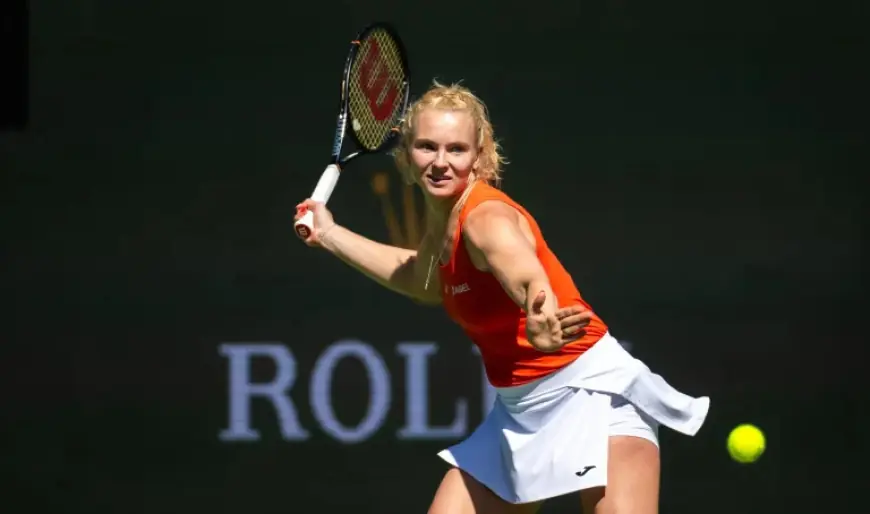
kateřina siniaková is through to the BNP Paribas Open fourth round after a three-set comeback win over defending champion Mirra Andreeva at Indian Wells. The match’s defining features—42 break-point opportunities, heavy return pressure, and visible on-court tension—signal a direction of travel where emotional management and serve resilience may matter as much as shotmaking in the rounds ahead.
Mirra Andreeva and Kateřina Siniaková turn a Round of 32 into a 2: 48 grind
In Coachella Valley on Monday, Kateřina Siniaková rallied past Mirra Andreeva 4-6, 7-6, 6-3 to reach the Round of 16 at Indian Wells for the first time, advancing to her first BNP Paribas Open fourth round appearance. The contest stretched to 2 hours, 48 minutes and ended in a fittingly abrupt way: a net cord fell on Siniaková’s side on match point, and she acknowledged afterward it was a “tricky finish. ”
The baseline for how physically demanding Siniaková’s week had already been was clear before a ball was struck. She had spent 319 minutes on court by the time she arrived for the third-round match. Andreeva, by contrast, needed 50 minutes to defeat Solana Sierra after receiving a first-round bye. Yet the difference in court time did not translate into a straightforward result, as the match repeatedly reset through breaks of serve and momentum swings.
Tension also surfaced in ways that may shape how both players are viewed as the tournament continues. Both directed comments to the chair umpire about their opponent and exchanged glares across the net. After the match ended, Andreeva briefly shook hands with Siniaková, then erupted toward the crowd, shouting an explicit phrase multiple times. She later said the outburst was intended “to myself, to everyone, basically, ” framing it as anger after a loss rather than something aimed at specific individuals.
Indian Wells numbers: 42 break points, 19 saves, and wind-driven instability
The clearest statistical signal from the match was not a runaway advantage for either player, but systemic instability on serve. There were 42 break-point opportunities overall, with 31 of them arriving in the first two sets. Both players were broken seven times. Siniaková saved 19 of the 26 break points she faced, a figure that became decisive in the closing moments when Andreeva earned three chances in the final game to push the match back onto her serve and Siniaková held firm to finish.
Wind was a named factor in how games swung. Siniaková said both players struggled against it, describing a pattern of “losing the games on that side and winning on the other side. ” That environment helped produce repeated stretches where the returner surged: seven different games saw the receiver sprint to a 0-40 lead to create triple break-point chances. For comparison within the same week, Siniaková’s earlier 3-hour and 28-minute win over Leylah Fernandez featured 37 break-point opportunities, suggesting she has already navigated multiple matches where serve protection is constantly under threat.
- Based on context data: Break-point opportunities (Andreeva vs. Siniaková): 42 total
- Based on context data: Break points saved (Siniaková): 19 of 26
- Based on context data: Service breaks (each player): 7 times
- Based on context data: Match duration: 2 hours, 48 minutes
Siniaková’s returning also left a tactical imprint. She often used her backhand crosscourt and down the line, and 21 of her 27 winners came in the first two sets. She said she expected Andreeva to go to her forehand, calling that a usual approach from opponents, and emphasized her ability to “return it well and get into the rallies” as the route to positions where she felt she was better.
Elina Svitolina awaits as Siniaková’s Indian Wells path turns more demanding
The next confirmed step is clear: Siniaková will face Elina Svitolina, who defeated Ashlyn Krueger in straight sets. The head-to-head set-up is also defined in the current record: Svitolina holds a 4-0 edge over Siniaková, including a meeting at Indian Wells in 2024. As a trajectory, that frames Siniaková’s comeback over Andreeva as a gateway win rather than an endpoint, because the next match brings an opponent who has consistently had the upper hand.
If the same serving volatility continues for Siniaková—mirroring a match with 42 break-point opportunities and a week that already included a 3: 28 contest with 37 break-point chances—her route may keep tilting toward longer, high-pressure games decided by break-point defense and returning. That would reward the specific pattern she showed against Andreeva: slowing the pace, taking time, and repeatedly forcing rallies. Yet it also raises the physical demand she already referenced, saying her body was “feeling it” even as she celebrated the win.
Should Mirra Andreeva’s emotional flashpoints persist—racket smashing that earned a code violation, asking her team to leave during the tiebreak, and the post-match profanity toward fans—the immediate risk is less about a single incident and more about compounding disruption inside matches where momentum is already fragile. Andreeva is currently the No. 8 player in the world and entered Indian Wells as the defending champion, and she later said she was “not really proud” of how she handled the end, calling it something she needs to work on “soon. ”
The next hard milestone is Siniaková’s fourth-round match against Svitolina, with a head-to-head deficit that sets a demanding benchmark. What the context does not resolve is whether the wind-driven patterns and break-heavy scoreboard at Indian Wells will repeat in that next round, or whether either player’s on-court behavior settles as the pressure rises. Still, the confirmed signals from Monday point to a tournament where the ability to absorb chaos—on serve, in conditions, and emotionally—can decide who advances.