Andy Reid vs. Washington Commanders spending: what these deals reveal

Two developments highlight different roster-building pressures around the league: andy reid’s Kansas City Chiefs are watching their 2022 draft class splinter across new teams, while the Washington Commanders continue adding veterans in free agency. What does putting these moves side by side reveal about how each team is paying for talent now, and how much flexibility it keeps for later?
Kansas City Chiefs moves under Brett Veach, from Leo Chenal to Creed Humphrey
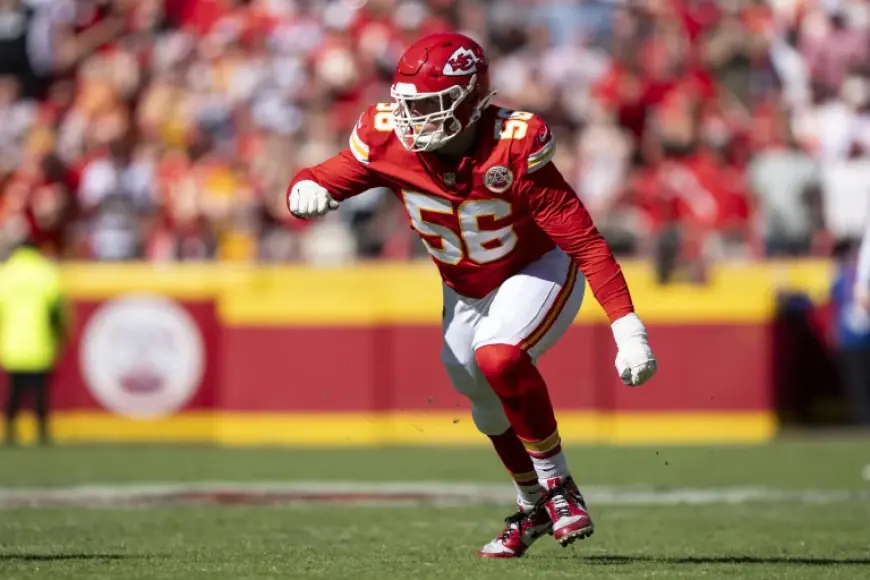
Kansas City’s current snapshot is defined by churn and market forces rather than a single headline signing. Linebacker Leo Chenal is set to leave, with reports saying he will sign a three-year, $24. 75 million contract with the Washington Commanders. His exit carries a simple roster consequence: eight of 10 players from the Chiefs’ 2022 NFL Draft class have now joined new teams, leaving only one player under contract with Kansas City.
That remaining player is George Karlaftis, identified as the lone holdover from the 2022 draft class and the only one extended by the team on a four-year, $88 million deal. Taken together, the broader draft class has earned 338 million in new money during this free agency period, a figure that underscores how quickly rookie-contract value can turn into an expensive retention problem once players reach the market.
Another pressure point comes at center. Creed Humphrey had been the league’s highest-paid center at $18 million per season until the Las Vegas Raiders signed Tyler Linderbaum to a three-year, $81 million deal with $60 million guaranteed. Linderbaum’s $27 million annual average exceeded Humphrey’s by $9 million per season and reset the center market, positioning Humphrey as a bargain by comparison and potentially pushing future center contracts higher across the league.
Washington Commanders deals under Adam Peters, including K’Lavon Chaisson
Washington’s side of the comparison centers on targeted additions and total spending. Edge rusher K’Lavon Chaisson agreed to terms with the Commanders on a one-year deal for $12 million, a contract described as relatively cheap for a premium position. Chaisson arrives after a breakout season with the New England Patriots that included a career-high 7. 5 sacks and 59 pressures, plus 20 pressures in four playoff games during a Super Bowl run.
Chaisson’s path also shows why Washington chose a shorter commitment. His first four NFL seasons with the Jacksonville Jaguars were described as disappointing, and he never totaled more than two sacks in any of those years. He then joined the Las Vegas Raiders for the 2024 season and posted five sacks while starting only four games, with an 11. 6 percent pressure rate that ranked second-highest among Raiders players with at least 100 pass rushes that season. The one-year structure gives Washington a chance to benefit from his recent production without tying up long-term cap space if his role settles into passing situations, as the assessment notes he is a better pass rusher than run defender.
Chaisson also becomes part of a larger set of transactions. The Commanders’ six acquisitions have totaled about $184 million in total contract value, though the true cap impact is not yet known without contract structures. In the same period, Washington is also the reported landing spot for Leo Chenal on a three-year, $24. 75 million contract, a move that intersects directly with Kansas City’s draft-class story.
Andy Reid’s Chiefs vs. Commanders: churn versus short-term bets
Placed side by side, the Chiefs and Commanders are responding to the same marketplace with different constraints. Kansas City is seeing the downstream cost of a successful draft pipeline: as 2022 draftees reach new contracts, the class has produced 338 million in new money league-wide, and Kansas City is down to one remaining player from that group under contract. Washington, meanwhile, is using free agency to pursue specific priorities, including pass rush help through Chaisson’s one-year, $12 million deal and broader roster additions that add up to about $184 million in total contract value across six acquisitions.
| Comparable point | Kansas City Chiefs | Washington Commanders |
|---|---|---|
| Signature contract figure in context | George Karlaftis: four years, $88 million | K’Lavon Chaisson: one year, $12 million |
| Draft/roster churn metric | Eight of 10 from 2022 class now on new teams; one remains under contract | Six acquisitions totaling about $184 million in contract value |
| Key player movement between the two | Leo Chenal leaving on a reported three-year, $24. 75 million deal | Leo Chenal arriving on that reported three-year, $24. 75 million deal |
| Market reset affecting team economics | Creed Humphrey no longer top-paid center after Tyler Linderbaum’s $27 million per year | Edge deal framed as relatively cheap for a premium position |
| Performance note tied to a new addition | — | Chaisson: 7. 5 sacks, 59 pressures last season; 20 pressures in four playoff games |
Analysis: The comparison points to a clear difference in what each team is buying. Kansas City is paying for retention and living with the consequences when it cannot keep pace for every player, as shown by the 2022 class dispersing and by a center market that jumped from $18 million to $27 million per year at the top. Washington is paying for optionality, using shorter deals like Chaisson’s while still committing meaningful total contract value across multiple additions, and it is also directly benefiting from Kansas City’s squeeze through the reported Chenal agreement.
The next test of this contrast will come when contract structures clarify the true cap impact of Washington’s acquisitions. If andy reid’s roster continues to face market resets like the one at center while Washington maintains a preference for shorter, position-targeted bets, the comparison suggests the Commanders will preserve more flexibility even as they spend heavily in total contract value.