Amg GT 4-Door’s screen-filled interior conflicts with analogue ergonomics claim

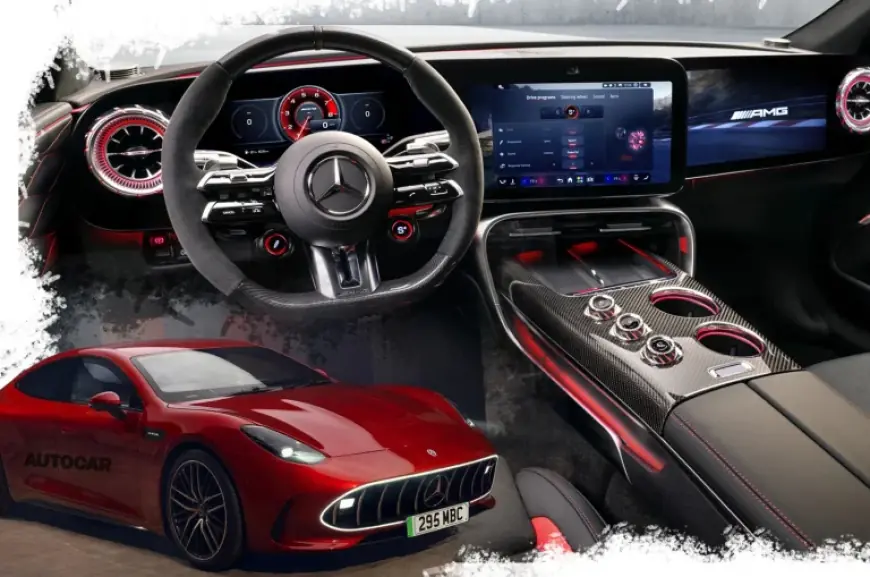
Mercedes-AMG has unveiled the interior of the new GT 4-Door Coupé and the cockpit is dominated by multiple screens while the maker frames the cabin as a performance-focused, analogue-friendly environment. This piece examines the tension between Mercedes-AMG’s stated goal of blending analogue ergonomics with next-generation digital functionality and the documented prominence of screens in the car’s design; amg appears on both sides of that claim.
Mercedes-AMG GT 4-Door’s screen layout and control hardware
Confirmed: The cabin features a full-width digital display that hosts three dedicated screens — a 10. 2in instrument cluster, a 14. 0in infotainment panel angled toward the driver, and a second 14. 0in touchscreen for the front passenger that is optional. Confirmed: a twin-pane panoramic roof also functions as a display, able to project AMG emblems above the front occupants and show illuminated racing-stripe graphics matched to the ambient lighting.
Confirmed: physical controls remain prominent alongside the screens. The centre console is angled toward the driver and provides access to three new drive mode controllers: Response Control for throttle sharpness, Agility Control for rotation through bends, and a third controller for traction control with nine settings. Confirmed: the flat-bottomed steering wheel hosts haptic controls, two control dials with integrated LCD displays for drive mode and suspension, and column-mounted paddles that operate regenerative braking.
Amg GT 4-Door’s analogue ergonomics claim versus screen dominance
Documented: Mercedes-AMG presents the cockpit as a bespoke, performance-oriented environment that aims to “blend next-gen digital functionality with analogue ergonomics, ” and says the layout is designed for “intuitive control of all relevant driving controls. ” Documented: at the same time the interior is visibly screen-heavy — the trio of instruments across a full-width display plus an additional roof display highlight digital surfaces as central elements of the cabin.
Documented: physical hardware is positioned to emphasise driver focus — the console angle, driver-oriented infotainment, and three dedicated physical controllers are explicit design choices. Open question: The context does not confirm how drivers will actually interact with the instruments in regular use, or whether the onscreen elements will supplant physical controls in practice when both are present.
Documented: the front passenger-facing 14. 0in touchscreen is optional, which suggests a degree of configurability in how much screen presence is fitted. For now, amg’s public description leaves unresolved whether analogue elements are primary inputs or complementary to a screen-forward interface.
GT XX concept, Markus Schäfer comments and AMG’s electric strategy
Documented: the new GT 4-Door evolves from the record-setting, 1341bhp AMG GT XX concept car and is described as AMG’s first bespoke electric model, with closely related performance SUV planned to follow. Documented: the company intends to extend AMG’s performance and engagement heritage into electric cars by using a synthesised engine note and gearbox to differentiate the driving experience from other electric AMG-badged saloons.
Documented: Markus Schäfer’s remarks for the GT XX concept stressed sensory elements — noise, sound level, vibration and gearshift — and pushed that an AMG must “touch the emotional side. ” That pattern links the manufacturer’s stated emotional aims to technical steps such as synthesised sound and bespoke controls. Open question: The context does not confirm whether the combination of synthesised sound and mixed physical/digital controls will replicate the full character of prior V8 and V12 AMGs as claimed.
Confirmed: the new GT 4-Door Coupé is due to be revealed in full later this spring. If that full reveal confirms whether primary driver inputs remain dominated by physical controls rather than on-screen controls, it would establish whether Mercedes-AMG’s claimed analogue ergonomics are practical design priorities or largely stylistic elements within a screen-centric cockpit.