Casper Ruud vs Indian Wells Round of 16: Parental focus vs top-seed persistence

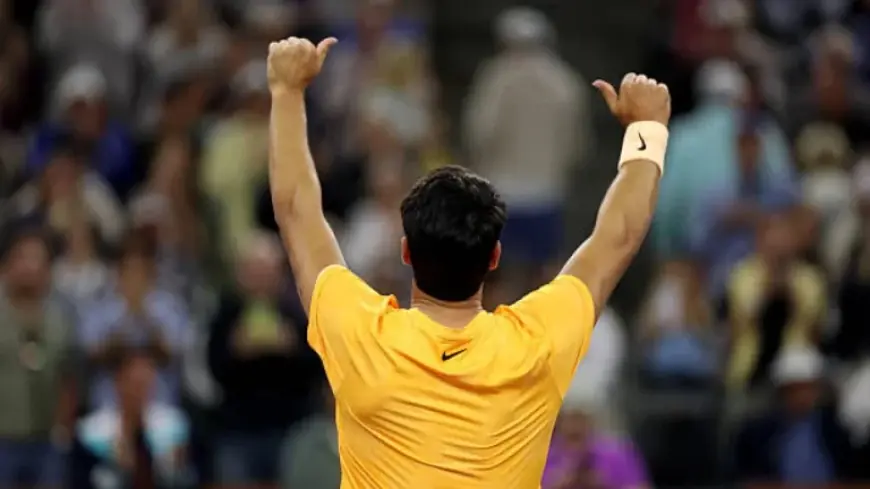
casper ruud figures in a human-angle headline — described as being in a parental mood with references to diapers and FaceTime ahead of an Alcaraz showdown — while the Indian Wells field has reached a decisive stage where the Round of 16 is set. This comparison asks: what does a player’s off-court, parental focus reveal when placed against the tournament’s continuing dominance by top seeds?
Casper Ruud: parental mood and the Alcaraz showdown
The headline framing places Casper Ruud in a parental role, noting diapers and FaceTime as part of his off-court routine ahead of an Alcaraz showdown. That description presents two confirmed facts from the provided context: Ruud’s parental mood and the looming encounter described as a showdown with Carlos Alcaraz. Analysis: this framing emphasizes personal life immediately before a high-profile match, signaling an active attention outside of match preparation rather than silence or seclusion.
Indian Wells Round of 16: Alcaraz, Djokovic, Sinner and Zverev remain
Indian Wells 2026 has reached a crucial stage: the first three rounds are behind us and the sixteen remaining players are known. Confirmed names still in contention include Carlos Alcaraz, Jannik Sinner, Novak Djokovic and Alexander Zverev; the only noted upset among those opening rounds was the defeat of world number six Alex de Miñaur. Also mentioned in the event context is Novak Djokovic’s match-up against Jack Draper in the streaming lineup. Analysis: the tournament narrative is one of top-seed persistence, with elite players continuing to advance despite the attrition that opened the event.
Casper Ruud vs the Indian Wells lineup: where personal focus and tournament momentum align and diverge
Apply the same criteria to both subjects: immediate context, potential impact on match readiness, and public narrative. For immediate context, Casper Ruud’s parental mood is explicitly tied to diapers and FaceTime and placed before an Alcaraz showdown; for the Indian Wells field, the immediate context is that the Round of 16 is set and top seeds such as Alcaraz and Novak Djokovic remain. For match-readiness impact, the context does not state physical condition or training details for Ruud, nor does it give injury or fitness specifics for the Round of 16 competitors; both sides therefore present public-facing signals rather than medical or performance data. For public narrative, Ruud’s parental angle humanizes one competitor, while Indian Wells’ narrative stresses continuity among elites, with the exception of Alex de Miñaur’s loss. Analysis: juxtaposing Ruud’s off-court emphasis with a tournament that highlights top-seed continuity reveals a tension between personal priorities and the event’s momentum as separate but coexisting storylines.
Still, the two strands overlap concretely around Carlos Alcaraz: Ruud’s parental mood is explicitly framed as occurring ahead of an Alcaraz showdown, and Alcaraz is confirmed among the Round of 16 contenders. That shared reference point — Alcaraz — anchors the comparison and makes the contrast actionable rather than merely anecdotal.
What the divergence reveals about priorities and narrative testing on March 11, 2026
When a player’s personal life is foregrounded in headlines, it shifts the narrative from pure tournament form to a broader human story. The Indian Wells Round of 16 narrative, by contrast, emphasizes competitive persistence among top seeds and a single noted early upset: Alex de Miñaur’s defeat. Analysis: the divergence reveals that headlines can carry competing judgments — one that spotlights human context for a single player, and another that treats the event as a continuity of elite performance. Both are factual from the provided material, but they answer different audience expectations: empathy versus competitive tracking.
That finding will be tested at the next confirmed milestone tied to the provided material: the March 11, 2026 match previews and betting-odds coverage for the BNP Paribas Open men’s singles. If Casper Ruud maintains the parental routine described in the headline while competing in the Alcaraz-linked match referenced, the comparison suggests his off-court focus need not displace the tournament’s top-seed narrative; the Indian Wells draw has already shown elite players continuing to advance. If Ruud’s personal circumstances coincide with an unexpected result on March 11, 2026, the comparison would instead highlight how personal factors can intersect with, and occasionally alter, tournament momentum.
That conclusion frames a clear test: if Casper Ruud keeps the parental elements noted in the lead-up and still performs at the level implied by the tournament’s persistence, the dominant story remains the Round of 16’s top seeds. If a different result occurs on March 11, 2026, the human-interest framing will warrant reevaluation against competitive outcomes.