Excursion in Rhetoric: Trump’s “First Hour” Victory vs. New Iran Missile Counts

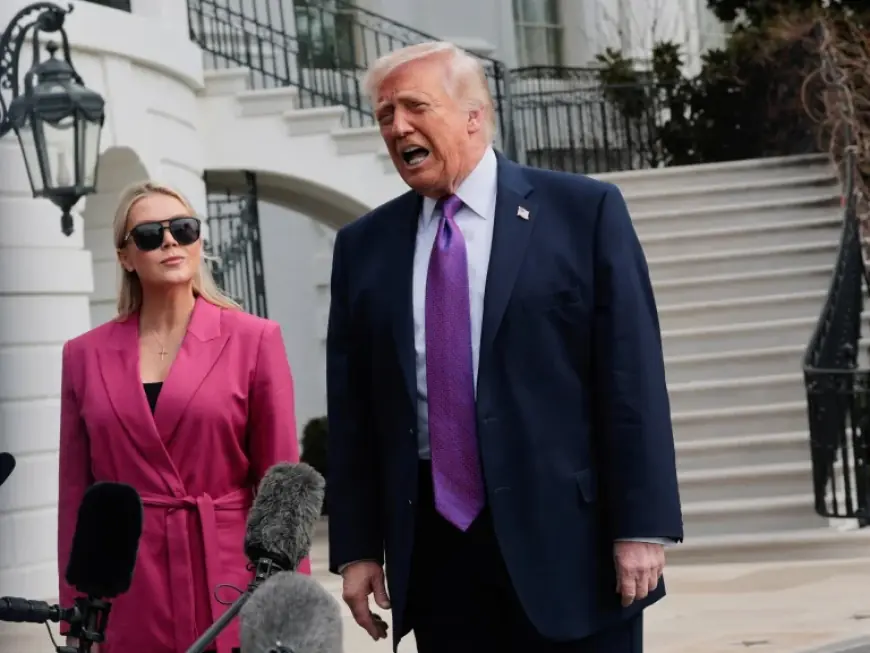
President Trump has offered a sweeping excursion through the conflict’s outcome, telling reporters the U. S. has destroyed Iran’s navy, anti-aircraft systems, radars and leadership, and saying what remains “could be taken out in an hour. ” Set against that, official statements from the United Arab Emirates and Qatar describe fresh missile and drone launches toward their countries. The comparison answers a practical question: what changes when victory claims meet ongoing attack tallies and diplomatic action?
President Trump’s “hour” framing and the “practically nothing left” message
Trump’s description of the U. S. campaign is built around speed and near-completeness. In one set of remarks, he said the U. S. has destroyed Iran’s navy, anti-aircraft systems, radars and leadership, adding, “And we could do a lot worse, ” before asserting that what is left standing “could be taken out in an hour. ”
He reinforced a similar theme in a speech to supporters in Kentucky, describing the war as functionally decided almost immediately. He said the U. S. has “won” in Iran and that the war was “over” in the first hour. In that same appearance, he asked the crowd if “Operation Epic Fury” was a great name, then underscored that a name only works “if you win, ” repeating that the U. S. had won and adding, “In the first hour, it was over. ”
In a separate interview segment included in the same live update, Trump was also asked about a threshold for tapping the Strategic Petroleum Reserve, maintained by the Department of Energy. He responded, “Well we’ll do that, and then we’ll fill it up, ” adding that “right now, we’ll reduce it a little bit, ” and arguing that doing so brings prices down.
UAE and Qatar missile intercepts, plus a U. N. Security Council vote
While Trump described an endpoint, Gulf states described ongoing incoming fire. The United Arab Emirates Defense Ministry said Wednesday that Iran fired six ballistic missiles and seven cruise missiles, along with 39 drones, toward the country that day. The ministry did not provide specifics on how many penetrated air defenses or whether damage occurred.
Qatar’s Defense Ministry said Wednesday that Iran fired nine ballistic missiles and several drones toward the country. Qatar said all of the drones and eight of the missiles were intercepted, and that the one missile that got through landed in an uninhabited area.
Diplomatically, the United Arab Emirates mission to the United Nations said Wednesday that the UAE “strongly welcomes” the adoption of a U. N. Security Council resolution calling for Iran to halt its attacks on Gulf states. The mission framed the vote as “a clear message from the international community to Iran. ” The resolution was adopted earlier Wednesday in a 13-0 vote, with China and Russia abstaining. Separately in the same update, the Security Council resolution was described as passing by 13 votes with two abstentions and as demanding the immediate cessation of attacks against Gulf states, calling the attacks a breach of international law and a “serious threat to international peace and security. ”
Excursion into outcomes: speed claims vs. measurable activity in markets and missiles
Placed side by side, Trump’s framing and the Gulf states’ reported launches point to two different ways of measuring “where things stand. ” Trump’s metric is operational finality: he listed systems and leadership he said the U. S. destroyed, then argued that what remains could be eliminated “in an hour, ” and that the war was “over” in the first hour. The UAE and Qatar accounts, by contrast, are event-driven and countable, itemizing ballistic missiles, cruise missiles, and drones launched “today, ” plus interception results.
| Measure | Trump’s framing | UAE/Qatar and U. N. Security Council actions |
|---|---|---|
| Time horizon | “In the first hour” and “in an hour” | “Wednesday” and “today” missile and drone launches |
| Claimed results | Destroyed Iran’s navy, anti-aircraft systems, radars and leadership | Interceptions described by Qatar; UAE lists launches without damage details |
| Operational signal | “Won” and “practically nothing left” to target | Resolution “demands” attacks stop; launches suggest continued capability |
| Numbers offered | None in the remarks excerpted | UAE: 6 ballistic, 7 cruise, 39 drones; Qatar: 9 ballistic, several drones |
| Economic read-through | Strategic Petroleum Reserve reduction discussed to bring prices down | Brent settled at $91. 98; U. S. crude at $87. 25; major indexes moved modestly |
Markets offered a third scoreboard that neither wholly validates nor fully contradicts either narrative. On Wednesday, the S& P 500 edged down 0. 1% for a second day of modest moves, the Dow Jones Industrial Average dropped 289 points, or 0. 6%, and the Nasdaq composite rose 0. 1%. At the same time, oil moved higher: Brent crude rose 4. 8% to settle at $91. 98 and benchmark U. S. crude gained 4. 6% to $87. 25. The update also noted oil prices briefly spiked to their highest levels since 2022 this week due to worries that Middle East production could be blocked for a long time, with knock-on inflation concerns.
Finding (analysis): Comparing Trump’s fast-finish excursion in messaging to the UAE and Qatar’s same-day launch counts suggests the conflict’s “end” is being defined in two incompatible ways: declared degradation of Iranian targets versus continued attacks that still require interception and U. N. action. The next confirmed test of that finding is the Security Council resolution’s demand for Iran to immediately cease attacks on Gulf states; if missile and drone launches continue at the scale described by the UAE and Qatar even after that vote, the comparison suggests that “first hour” victory language will struggle to match the measurable activity Gulf states are reporting.