Kvaratskhelia’s quiet life off the pitch meets Champions League nights in Paris

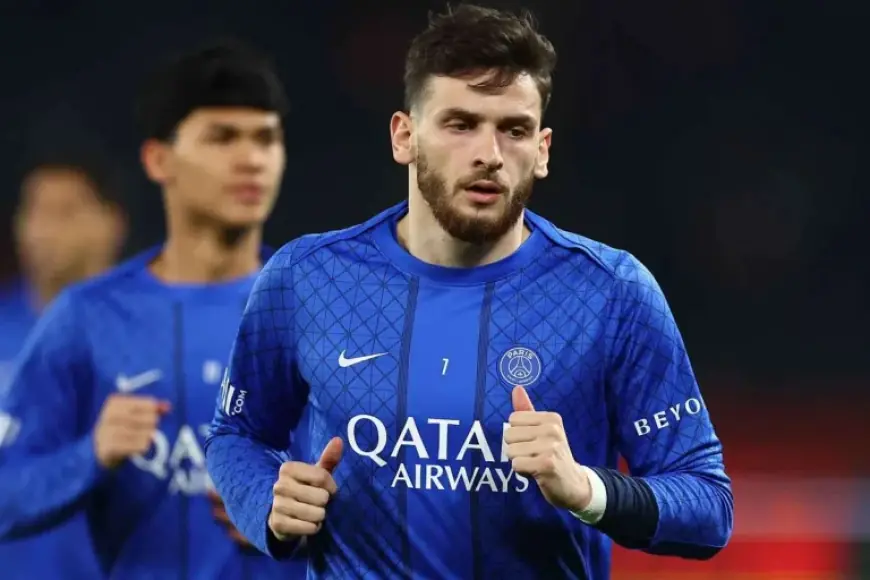
In Tbilisi, Khvicha Kvaratskhelia still has a small bedroom waiting for him, tucked inside the kind of Soviet-era apartment block that does not announce a global football star. When he comes back, the space is familiar: a computer table, a keyboard, large headphones, and a chair used by gamers. On the pitch in Paris, the story is louder, with Paris St-Germain heading into a Champions League last-16 first leg against Chelsea.
Tbilisi and Badri: the early stakes behind kvaratskhelia’s rise
The family home in Tbilisi is described as anonymous and functional, one of many concrete blocks in a working-class district. Yet inside, the details of Kvaratskhelia’s path sit in plain view: photographs, trophies, shirts, and one item his mother, Maka, singled out for what it represents. The first shirt he ever wore for Dinamo Tbilisi is kept because, as she put it, that is where his professional career started.
That starting point mattered for more than symbolism. As a graduate of the Dinamo Tbilisi academy, Kvaratskhelia made his professional debut at 16 in 2017, then moved to Rustavi and later went on loan to Lokomotiv Moscow. It was in Moscow that he received his first significant salary, money that allowed him to pay for life-saving heart surgery for his father, Badri, a former Dinamo Tbilisi player and Azerbaijan international. Badri’s reaction, recalled in the same account, was simple: “It wasn’t even a question to him. ”
On 22 May 2019, Kvaratskhelia won his first major honour when Lokomotiv Moscow won the Russian Cup. The timeline sketches a career already moving quickly, but it also shows the personal weight attached to those early steps: wages were not just a marker of progress, they became immediate support for family survival.
Paris St-Germain, Luis Enrique, and the Champions League version of Kvaratskhelia
By this season, the numbers put his European impact into sharp focus. The 25-year-old winger has been directly involved in seven goals in nine Champions League matches, with four goals and three assists. Those contributions make him Paris St-Germain’s top scorer in the competition and the player with the highest overall goal contributions for the club in that tournament.
Descriptions of his performances underline how much of his value comes from work without the ball. In PSG’s Champions League triumph last season, he not only scored in the final against Inter, he also “tirelessly patrolled the left flank, ” making runs to press, cut off passing lanes, and cover Nuno Mendes’ advances. Another account frames his move as transformative: his arrival in January 2025 from Napoli “changed everything for PSG, ” with Luis Enrique finding in him “the missing piece of the puzzle. ”
Kvaratskhelia himself has put the change in blunt, personal terms. He said that when PSG contacted him, he realised he had become a world-class player, and he described an evolution in his game in Paris: he has improved and become “a warrior on the pitch, ” trying to give “100%” even in defence. He contrasted that with his time in Naples, saying he did not defend there like he does now, and credited the manager with helping him improve in that respect.
Still, the same reporting suggests a split between his Champions League output and his domestic rhythm. While less prominent in the league, he steps up in Europe. In the league, he has the same statistics as last season—four goals and three assists—despite playing seven more matches. In 2026, he has scored just once, coming off the bench against OM, and that goal was noted as coming over a month ago. Across the campaign he has 13 starts in 22 appearances and has been substituted eight times, a pattern that sits alongside his continued influence on Champions League nights.
Chelsea in Paris: the next test for PSG’s defending champions
The immediate stage is set by Chelsea’s visit to Paris on Wednesday for the last-16 first leg. PSG enter the tie as defending European champions, and the meeting carries its own history: Chelsea have tried to sign “Kvaradona” in the past. Another preview described the round-of-16 clash as a chance for revenge after last summer’s Club World Cup final, and as the first major test of the season for the reigning champions.
Kvaratskhelia has addressed the nickname and the comparisons it came from, calling a link to Maradona “a heavy burden” and saying no one can be compared to him. Yet he also admitted he liked those kinds of comparisons, explaining that when fans called him “Kvaradona, ” he felt happy because it showed how much they loved him.
Off the pitch, he has described a different kind of attention in the French capital. He said he loves the city and appreciates that people are respectful: when he goes out, they do not bother him too much, and in restaurants they ask before taking a photo. He called it the best city to walk around with his wife. In a separate conversation, he framed his identity in plain language: “I consider myself a simple person, ” he said, adding that he tries to stay grounded, listen to his family, and remember who he is and where he comes from.
That pull between the private and the public is where his story now sits. The same player who still uses a small bedroom in Tbilisi when he returns is also PSG’s most productive Champions League attacker by goals and assists this season. For now, the next chapter is fixed: Chelsea travel to Paris for the first leg, and the nights that have come to define Kvaratskhelia’s European season are about to get louder again.