Hazard Warns Vinícius Júnior Could Quit Early, Signaling Career Crossroads

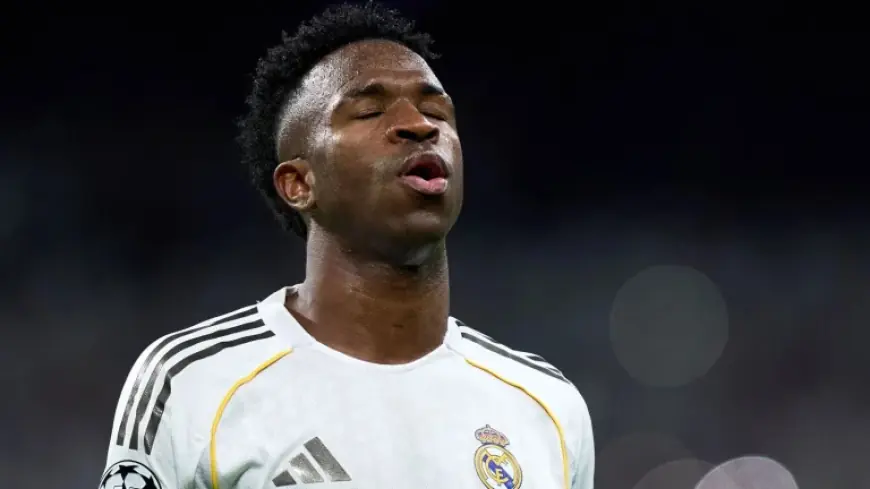
Eden Hazard has publicly warned that vinícius júnior faces mounting pressure that could push him toward an early exit from football. Hazard, who shared Real Madrid’s dressing room with the Brazilian for four seasons and spoke about the player’s love for the game, framed those pressures—racist insults, fan tensions and slow-moving sanctions—as forces that could alter a career trajectory.
Eden Hazard on Vinícius Júnior’s mental burden after four seasons together
Hazard said he and Vinícius Júnior lived in the same environment at Real Madrid for four seasons and played together in only 27 matches, a contrast he used to explain a close perspective on the forward’s mindset. Hazard, who retired at 32, told RTBF that Vinícius is “just someone who loves football, who enjoys playing and only wants to have fun, ” and added that public focus on incidents rather than on the player’s quality must weigh heavily on him.
Real Madrid, Benfica incident and the pattern of public controversies
Recent episodes cited in the context include a UEFA playoff tie against Benfica at the Estádio da Luz, when Vinícius Júnior scored and celebrated by dancing near the corner flag. The match saw a confrontation with Gianluca Prestianni, who covered Vinícius’s mouth and used a racial slur; Benfica and José Mourinho publicly defended Prestianni while other figures sided with the Real Madrid attacker. Those events, coupled with repeated insults from rival fans, are the controversies Hazard says now overshadow on-field achievements like deciding matches in the Champions League and La Liga.
If current pressures continue: two scenarios for Vinícius Júnior’s career
Scenario A — If sustained abuse and a lack of meaningful sanctions remain the dominant environment, Hazard warned that vinícius júnior could consider stepping away early. Hazard explicitly said he “would not be surprised if, at 30, he said he was leaving, ” framing retirement as a conceivable response when a player’s joy for the game is replaced by a constant fight against animosity.
Scenario B — Should club dynamics or public perception shift, Hazard suggested different outcomes. He offered fraternal advice that small changes in how Vinícius presents himself on the pitch might reduce hostile reactions; Hazard invoked Ronaldinho’s celebrations as an example that did not provoke the same level of controversy. The context also notes that Vinícius has a contract through June 2027 and that renewal talks have dragged on for months, implying that clearer support or a successful renewal might alter the player’s calculus about staying in Madrid.
Still, comparisons in the context sharpen the stakes: Hazard retired at 32, and he used that endpoint to underscore how quickly a career can end when the love for the routine fades. The concrete contrast of Hazard’s 32 and his suggestion of a possible age-30 retirement for Vinícius anchors how proximate this risk appears in the narrative provided.
Next confirmed milestone: Real Madrid and Vinícius will return to action when they host Manchester City in the first leg of the Champions League round of 16 on Wednesday night. That match will be the next clear signal of how Vinícius performs under high-stakes conditions and how the public discourse around him evolves.
One limit of this forecast is explicit in the context: it does not resolve whether Vinícius Júnior will announce retirement, agree a contract renewal, or receive different institutional responses to racist incidents. The specific events that would clarify those outcomes are a public retirement statement from the player or the conclusion of his contract-renewal talks, neither of which appear in the available material. For now, Hazard’s warning frames two visible directions—early exit if pressures persist, or continued prominence if club support and public perception change—and the Manchester City tie is the next concrete moment to watch.