Vikings vs. the release route: Aaron Jones’ reworked 2026 outcome

The vikings faced a clear fork in the road with multiple veteran contracts: cut costs by moving on, or cut costs by rewriting terms. On Wednesday, Minnesota took both paths at once, keeping running back Aaron Jones Sr. on a revised one-year deal while also releasing defensive tackles Javon Hargrave and Jonathan Allen. The comparison answers a precise question: what does the team’s mixed approach reveal about who stayed, who went, and why?
Vikings and Aaron Jones Sr.: a pay-cut compromise instead of a release
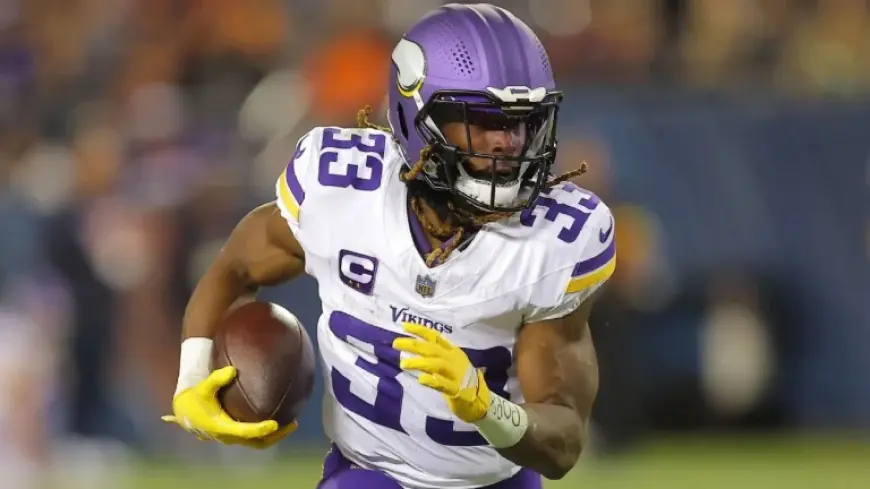
Aaron Jones Sr. avoided the outcome that had been telegraphed earlier in the month, when Jones had been informed he would be released barring a trade. Instead, the vikings and Jones reshaped the contract into a one-year arrangement that kept him in Minnesota for the 2026 season.
The new deal was described as $5. 6 million with $5 million guaranteed. Another detail in the coverage framed the revision as lowering his base salary from $9 million to $5. 5 million. Either way, the result was a cheaper 2026 commitment than what Jones had been scheduled to earn; he had been set to earn $10 million in 2026 with a cap number of $14. 8 million.
On the field, the decision to keep Jones comes with clear recent performance context. Injuries limited him in 2025, when he played 12 games and produced 548 rushing yards and 747 total yards from scrimmage, his lowest totals since his 2017 rookie season. Another set of 2025 efficiency details put his average at 4. 2 yards per carry, with 28 catches for 199 yards. Still, within Minnesota’s backfield usage, Jones was essentially the team’s No. 2 running back behind Jordan Mason, and he remained described as a beloved and respected member of the locker room.
Jonathan Allen and Javon Hargrave: the Vikings choose separation and savings
While Jones stayed through a revised number, Minnesota went the opposite direction at defensive tackle. On Wednesday, the Vikings released Javon Hargrave and Jonathan Allen, turning them into clear examples of the team choosing separation rather than renegotiation.
Hargrave’s 2026 contract snapshot made the stakes straightforward: he was set to earn $15 million with a cap number of $21. 7 million. The on-field detail included that he started 15 games last season at age 33 and recorded 3. 5 sacks.
Allen’s situation carried a different cap mechanic. He had $8 million in full guarantees for 2026, which will be partially offset if he signs with another team, and the move will save the Vikings $6. 5 million against their 2026 cap. Allen also carried a post-June 1 designation, underscoring that Minnesota’s cost-cutting choices were not one-size-fits-all even among the players it let go.
A side-by-side look at Vikings cap decisions: restructure, release, and procedural moves
Placed side by side, the Jones decision and the Hargrave-Allen releases show Minnesota applying a consistent criterion—2026 cost versus roster utility—while reaching different outcomes. Jones delivered a lower-cost compromise that kept a veteran ball-carrier in-house; Hargrave and Allen became cap casualties even as their contract numbers were laid out plainly enough to show why the team might have chosen the clean break.
| Subject | Team action Wednesday | 2026 money/cap details stated | On-field context stated |
|---|---|---|---|
| Aaron Jones Sr. | Reworked contract; stays for 2026 | One-year: $5. 6M with $5M guaranteed; also described as base salary lowered from $9M to $5. 5M; previously set for $10M with $14. 8M cap number | 12 games in 2025; 548 rushing yards; 747 scrimmage yards; described as No. 2 RB behind Jordan Mason |
| Javon Hargrave | Released | Set to earn $15M; $21. 7M cap number | Started 15 games last season; 3. 5 sacks; age 33 noted |
| Jonathan Allen | Released (post-June 1 designation) | $8M in full guarantees for 2026; save $6. 5M against 2026 cap; guarantees partially offset if he signs elsewhere | Cap mechanics emphasized more than production |
| Harrison Smith | Processed as post-June 1 release (procedural) | Tied to the 2025 renegotiation of his contract; move “should not be interpreted” as retirement decision | Age 37; 14 seasons with Vikings; has considered retirement in each of past three offseasons |
The procedural handling of safety Harrison Smith helps clarify the Vikings’ broader playbook. Smith was designated a post-June 1 release tied to a 2025 contract renegotiation, but the move was framed as not indicating he has decided to retire. Instead, it gives him more time to decide, and the team would welcome him back for the 2026 season if that is what he chooses. That stands in contrast to Hargrave and Allen, where the club’s decision created immediate separation.
Analysis: The comparison points to one verdict: Minnesota is not simply shedding veterans; it is sorting them into categories based on whether a workable price reset exists. Jones fit the “pay-cut compromise” bucket, while Hargrave and Allen landed in the “cap casualty” bucket. Smith, meanwhile, sits in a third category—procedural flexibility—where the paperwork creates time rather than a final outcome.
The next confirmed test of that verdict is not a game result but an administrative one: the Vikings’ own next roster step regarding Harrison Smith’s decision on whether to play in 2026. If the team maintains the same cost-and-utility sorting it applied to Jones, Hargrave, and Allen, the comparison suggests Minnesota will keep choosing flexible, lower-cost paths where a player and contract structure make that possible—and choose clean exits where they do not.