Azeez Ojulari vs. the Eagles: what his Falcons deal reveals

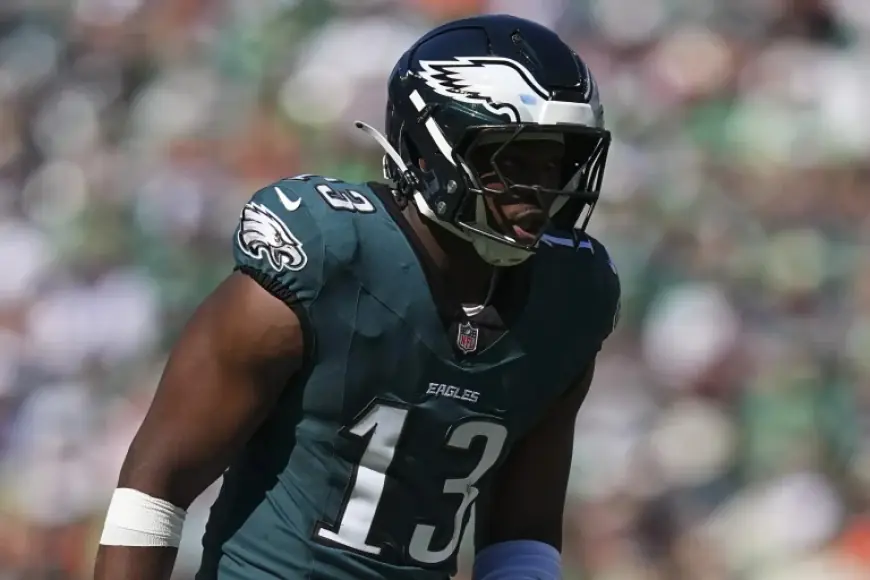
azeez ojulari is signing a one-year contract with the Atlanta Falcons, ending his brief stint with the Philadelphia Eagles. The contrast is sharp: a move framed as a homecoming and fresh opportunity versus a season in Philadelphia defined by limited snaps and a late injury. The comparison answers one question: what changed between an Eagles experiment that fizzled and a Falcons bet that still sees upside?
Azeez Ojulari’s Atlanta Falcons agreement and the “homecoming” angle
azeez ojulari’s next stop is Atlanta on a one-year deal, a move characterized in the context as a return home. He grew up near Atlanta, attended college at Georgia, and now joins the Falcons after playing for both the New York Giants and the Eagles. In this framing, geography and familiarity sit alongside the football fit: the Falcons are adding a linebacker who, if healthy, “will likely have a chance to compete for some playing time. ”
The Falcons’ approach, as described, reads like a calculated flyer rather than a guaranteed role. The context points to a potential reserve path tied to performance in training camp and the reality that opportunity can open when other players miss time. Still, the deal positions Ojulari as someone the team believes can contend for snaps rather than someone merely filling out a roster.
That optimism is not untethered from production. Over his five-year NFL career, Ojulari is credited in the context with 22 sacks and 113 total tackles. His rookie season is presented as the high-water mark: in 2021 he started 13 of a possible 17 games and recorded eight sacks, eight tackles for loss, and 13 quarterback hits. The Falcons’ bet, in other words, draws on a track record that exists even if it has not been consistently replicated in recent seasons.
Philadelphia Eagles: a bargain signing that never found traction
In Philadelphia, the same player profile produced a far more muted outcome. The Eagles signed Ojulari in free agency last year for what was perceived to be a bargain deal. The context also supplies the counterweight: he “was available for cheap for a reason, ” and his Eagles tenure did not deliver the hoped-for impact.
Ojulari’s path with the Eagles started quietly. He had a mostly quiet offseason and began the 2025 season as a healthy scratch. Only after multiple edge rusher injuries did he get forced into playing time. Even then, his workload remained limited: the context states he logged 67 defensive snaps and one special teams snap before a hamstring injury ended his season on injured reserve.
A second set of numbers in the context underscores how little the Eagles ultimately got. Ojulari appeared in just three games with the Eagles, started two, and recorded six tackles. Whether viewed through snap counts, games played, or basic tackle production, his Philadelphia stint stands out as an example of a low-cost signing that did not translate into a reliable rotation piece.
Falcons vs. Eagles: opportunity, usage, and health in side-by-side numbers
Put side by side, Ojulari’s Falcons move and his Eagles season expose the same hinge point: availability and opportunity determine whether a team is buying potential or merely renting depth. With the Eagles, injuries to others created an opening, but Ojulari’s own hamstring injury closed it quickly. With the Falcons, the context explicitly ties his chance at playing time to staying healthy, and it also suggests his pathway could expand if other contributors miss time.
| Comparable point | Philadelphia Eagles outcome | Atlanta Falcons setup |
|---|---|---|
| Contract status | Signed last offseason on a perceived bargain deal | Agreed to a one-year contract |
| Path to playing time | Entered after multiple edge rusher injuries | Likely chance to compete for time if he stays healthy |
| Usage indicators | 67 defensive snaps; one special teams snap | Opportunity described as competition-based, not guaranteed |
| Games/tackles with Eagles | Three games; two starts; six tackles | No Falcons stats in context yet |
| Health factor | Hamstring injury; finished season on injured reserve | Role framed around staying healthy |
| Longer resume (context) | Five-year career: 22 sacks, 113 tackles | Falcons bet appears to lean on that broader production |
Analysis: The Eagles evaluated Ojulari as a low-cost add to an edge rusher rotation and ended up with minimal return, a result that the context links to both limited standing early (healthy scratch) and a season-ending injury after a small snap sample. The Falcons are also taking a risk, but they are doing it with a clearer “compete for time” framing and with the added logic of a homecoming, which may align expectations around role and motivation even if it does not guarantee performance.
One additional comparison sharpens the contrast inside Philadelphia itself. The same day Ojulari’s departure became known, the Eagles also learned Josh Uche would not be returning in 2026. Both were signed as flyers from the same free agent class, and the context states neither proved to be much of an answer. That parallel reinforces that Philadelphia’s strategy of bargain additions did not stabilize its pass-rush rotation, pushing the team back into the market for more help ahead of the 2026 season.
The comparison establishes a clear finding: the Falcons are buying the possibility that a healthier version of azeez ojulari can compete for snaps, while the Eagles’ version of that bet already resolved into limited usage and an injured-reserve finish. The next confirmed data point that will test this is the Eagles’ continued search for an edge rusher ahead of the 2026 season. If Ojulari maintains his health enough to stay in the playing-time competition, the comparison suggests Atlanta could extract more value from the same one-year-risk profile that Philadelphia struggled to convert into production.