Cuba Vs Canada pool finale puts Canada’s advance plan under pressure

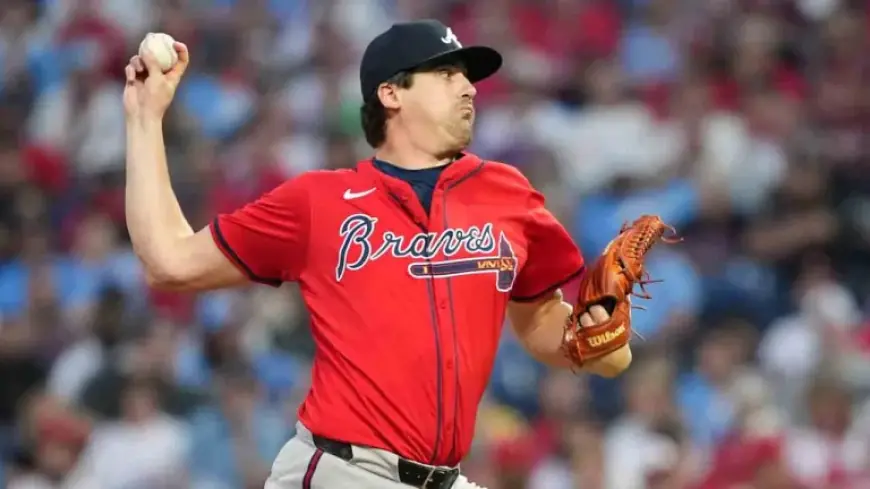
Canada enters cuba vs canada in a win-and-advance, lose-and-go-home Pool A finale at 3: 00 p. m. ET in San Juan, Puerto Rico, with Cal Quantrill set to start. The stakes sharpened because Canada projected earlier that this would be the game it needed, and the bracket now matches that prediction after a 4-3 loss to Panama eliminated any secondary routes to the quarterfinals.
Cal Quantrill and Canada’s planned alignment meets the Pool A reality
Confirmed facts in the context show Canada deliberately lined Quantrill up for this matchup. Quantrill had committed to pitch for Canada before signing a minor-league deal with the Texas Rangers on Feb. 1, and he arrived at spring training determined to make a team. Yet he did not treat that professional priority as a reason to step away from the tournament, saying the chance to represent Canada outweighed the risks and that the Rangers were understanding when they signed him.
Canada’s decision to point Quantrill toward the Cuba game was tied to an internal projection made earlier in the tournament: the Canadians expected this would be the contest they would need to win to advance. The context confirms that forecast became the controlling reality once Canada lost 4-3 to Panama on Sunday, removing what the context describes as “secondary pathways” to the quarterfinals.
That alignment creates a clear investigative tension grounded in the record: Canada planned for a decisive finish, and now has no alternative but to execute it. The context does not confirm what the earlier projection was based on, or whether Canada anticipated the loss to Panama, but it does show the strategy and the consequences converging in a single game.
Cuba vs canada hinges on preparation limits, data reliance, and pitching rules
Quantrill described pitching in the World Baseball Classic as “a little like the playoffs, ” emphasizing that a team cannot take a game off. At the same time, he pointed to constraints that complicate that intensity: rules that limit how much a pitcher can throw. That blend of high stakes and enforced limits becomes a central feature of cuba vs canada, because it frames how much Canada can lean on its starter even in a game where the context describes the outcome as win-and-advance or lose-and-go-home.
Another documented pressure point is information. Quantrill said he is not familiar with many Cuban hitters, and he expects to rely on “data” made available to him. The context lays out how Canada is organizing that support: Toronto Blue Jays evaluator Walt Burrows is doing advance work, while Christian Conforti, the advance information co-ordinator, handles pre-game work and video reviews.
On the other side, Cuba’s pitching plan is also specified. Cuba is starting left-hander Livan Moinelo, described as an NPB star, and he is making his second start of the round with four days of rest between outings. Blue Jays reliever Yariel Rodriguez, already at 4. 1 innings across two outings, is expected to follow. The context does not confirm how deep Moinelo is expected to go, or what role Rodriguez would play beyond following him, but it does document that Cuba has a defined sequence in place.
Puerto Rico’s clinch and Canada’s upset leave an open question about momentum
The standings and timing produce another gap between surface narrative and the tournament math. Both Cuba and Canada enter the finale at 2-1, behind 3-1 Puerto Rico, which has already clinched. Canada arrives off a 3-2 win over Puerto Rico on Tuesday, a result also framed in the provided headlines as a major upset. Yet that win did not remove the decisive nature of the finale; it only set the stage for it.
That combination reveals a documented pattern: Canada can beat a team that has already clinched the pool, but still must treat the final game as an elimination contest because earlier results removed any buffer. The context does not confirm how Canada weighed the emotional lift of upsetting Puerto Rico against the physical cost of doing so one day before the finale, but the schedule described by Quantrill suggests time compression. He planned to do some game-planning for Cuba before the Puerto Rico game, then add more Wednesday morning, indicating a preparation window split across a high-intensity matchup and the morning of the elimination game.
Player comments underscore the tone inside the group without resolving the underlying question of whether confidence can substitute for flexibility in a do-or-die scenario. Outfielder Tyler O’Neill described the game as a “dogfight” and said the team would play as hard as it can collectively. Separately, the context notes Josh Naylor was hit on the back of the right elbow Tuesday and remained in the game, while manager Ernie Whitt said the impact radiated through the ulnar nerve area. The context does not confirm Naylor’s availability or effectiveness for Wednesday, leaving an open question about how Canada’s lineup and in-game options might be affected.
The next concrete evidence point is the game itself at 3: 00 p. m. ET. If Canada wins cuba vs canada, it would establish that the team’s early decision to line up Quantrill for the projected must-win game matched the tournament’s final pressure test; if Canada loses, it would establish that the projected pathway offered no margin once the Panama defeat removed alternative routes.