Bamburi Cement vs Last Year: How Mombasa Aid Expanded to 30,000

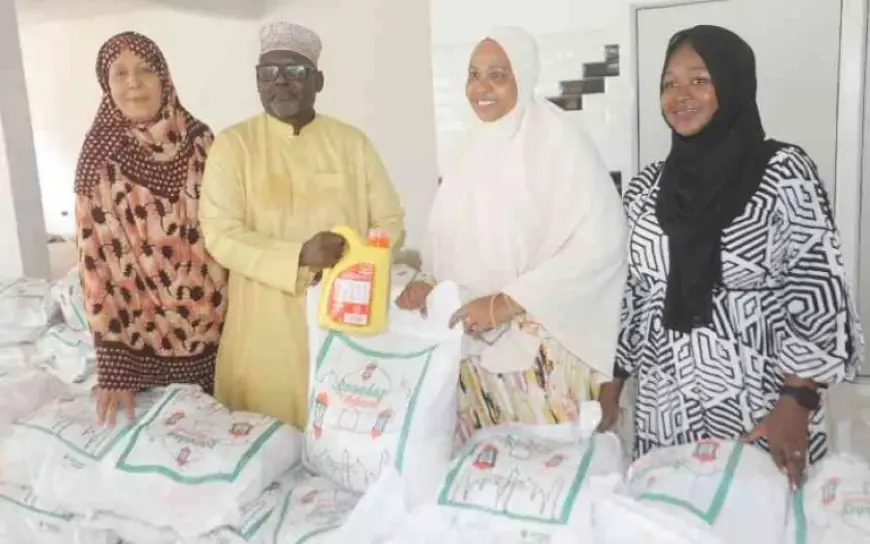
Bamburi Cement Plc has expanded its Ramadhan Food Drive into a second-year programme that now targets 30, 000 vulnerable Kenyans, including residents in mombasa. The comparison below asks whether this scale-up represents a one-off enlargement of relief or a deliberate shift toward sustained, structured community support.
Bamburi Cement Plc and Amsons Group: the expanded second-year drive
Bamburi Cement Plc launched the enlarged Ramadhan Food Drive in its second year with Amsons Group Country Representative Tawakal Rajab Sumba speaking at the event. The programme now aims to support approximately 4, 000 families across five counties, a reach the company frames as nearly 30, 000 individuals. The launch at Afra Hall signalled the start of coordinated food distribution across targeted counties.
Relief packages for the expanded drive contain essential food items intended to sustain households through the fasting period. Sumba described the initiative as rooted in compassion and inclusivity and framed the expansion as deepening partnership with communities in areas where the company operates.
2025 Ramadhan drive after the Amsons Group acquisition: a narrower first year
The Ramadhan Food Drive was first introduced in 2025 following the acquisition of Bamburi Cement Plc by Amsons Group. That initial programme is presented in company statements as smaller in scale than the current effort, prompting the current description of this round as a scale-up from last year’s programme.
Last year’s drive served as the foundation for the new approach. Now in its second year, the initiative extends beyond household packages to include institutions such as facilities under the Kenya Prisons Service, as well as orphanages and children’s homes where food insecurity persists. The broader scope marks a departure from the prior, more limited seasonal delivery model.
Mombasa, Matuga and five counties: where the expansion diverges from the original model
Both years kept a focus on local presence, but the expanded programme lists specific geographic reach: Mombasa, Kilifi, Kwale, Machakos and Nairobi counties. The current drive specifies support for about 4, 000 families across those counties and cites expansion into areas such as Matuga. Those named places contrast with the earlier programme’s narrower footprint.
Distribution targets also diverge. The first-year effort established a seasonal donation pattern; the second-year plan cites a concrete numerical target of 30, 000 individuals and an institutional component that includes Kenya Prisons Service facilities and children’s homes. That change aligns with Bamburi’s stated aim to move beyond simple seasonal donations toward a structured support system for vulnerable households.
Operational signals differ as well. The coordinated launch at Afra Hall frames the programme as an organised, county-spanning operation rather than a series of isolated donations. The company describes the increased reach as designed to help low-income households manage economic pressures during the fasting period.
Analysis: The factual comparison shows a clear shift in scale and scope. The second-year programme lists concrete targets—approximately 4, 000 families and nearly 30, 000 individuals across five counties—and explicitly adds institutional beneficiaries, while the inaugural 2025 drive functioned as a smaller, seasonal effort initiated after the Amsons Group acquisition.
Finding: The comparison establishes that Bamburi Cement’s expanded Ramadhan Food Drive is not merely larger in numbers but also structurally broader, moving from a seasonal donation model to an organised programme that includes institutional support. The next confirmed event that will test this finding is the coordinated food distribution across the targeted counties launched from Afra Hall. If Bamburi maintains distribution to the five named counties and the institutional beneficiaries as planned, the comparison suggests the company is embedding a longer-term community support mechanism rather than executing a one-time scale-up.