Sec Tournament 2026 bracket sets 16 teams in Nashville, while Florida momentum drives the storyline

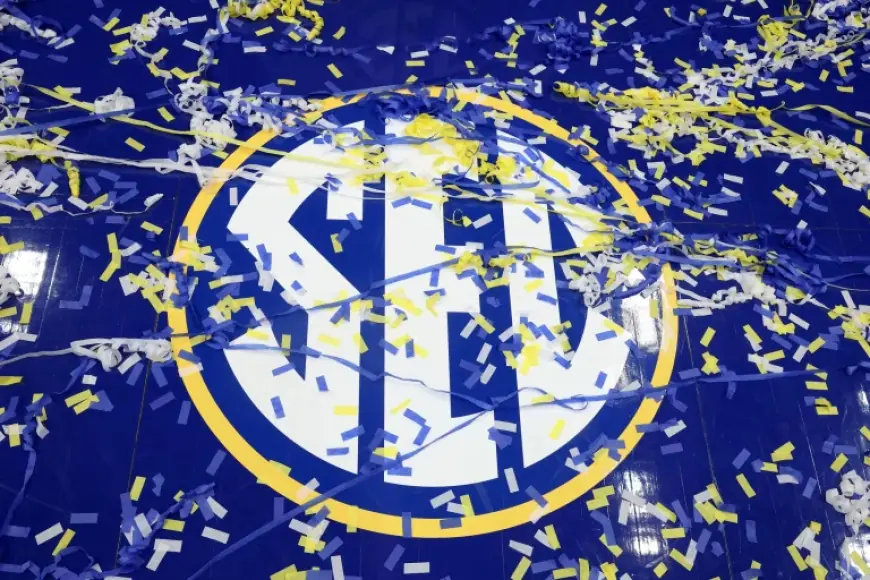
The sec tournament 2026 begins Wednesday, March 11 and ends with the title game Sunday, March 15, with all 15 games scheduled at Bridgestone Arena in Nashville, Tennessee. On paper, it is a full 16-team bracket with set seeds, game times, and broadcast windows. Yet the context also documents a different pull: Florida’s late-season reversal has become the tournament’s dominant frame, even as the bracket structure spreads advantage through byes and matchups.
Sec Tournament 2026 schedule in Nashville: 15 games, seeded paths, and broadcast windows
Confirmed details in the context place the entire tournament in Nashville across March 11-15, with the first game scheduled for 12: 30 p. m. ET on Wednesday and a single championship game listed for Sunday. The bracket is explicitly described as 16 teams, and the game list lays out how early-round winners feed into matchups with higher seeds.
The opening day schedule begins with No. 16 LSU vs. No. 9 Kentucky at 12: 30 p. m. ET, followed by No. 13 Mississippi State vs. No. 12 Auburn at 3 p. m. ET, No. 15 Ole Miss vs. No. 10 Texas at 7 p. m. ET, and No. 14 South Carolina vs. No. 11 Oklahoma at 9: 30 p. m. ET. The next set of games keeps the same time slots as winners advance to meet No. 8 Missouri, No. 5 Tennessee, No. 7 Georgia, and No. 6 Texas A& M.
Quarterfinal matchups, as listed, place the G5 winner against No. 1 Florida at 1 p. m. ET, the G6 winner against No. 4 Vanderbilt at 3: 30 p. m. ET, the G7 winner against No. 2 Alabama at 7 p. m. ET, and the G8 winner against No. 3 Arkansas at 9: 30 p. m. ET. The remaining rounds culminate in Game 15, scheduled for 1 p. m. ET. The context also states the tournament’s listed television homes as and SEC Network, without detailing distribution beyond the game list.
Florida, Kentucky, and Tennessee: defending title credentials meet a new regular-season picture
Florida enters the event with two separate credentials documented in the context, and that combination creates the central tension shaping coverage. One set of facts establishes Florida as the defending SEC tournament champion after beating Tennessee 86-77 in the 2025 championship game. The context also states Florida went on to win the NCAA tournament title after that SEC run.
A second set of facts, from the lead-up to Nashville, describes Florida’s 2026 season as uneven early and then dramatically strong late. The context states Florida “struggled to start the season, ” lost early, and “fell out of the national rankings completely by early January. ” It then documents a turnaround: an 11-game win streak to end the season, capped by an 84-77 win over Kentucky on Saturday; just two losses since the turn of the new year; and a final 25-6 record.
Those facts are paired with a specific conference outcome: the context states Florida finished with its first regular-season SEC title since 2014, winning it “by three full games. ” In bracket terms, Florida holds the No. 1 seed and is positioned to face the G5 winner in Game 9 at 1 p. m. ET, reflecting the advantage implied by the top line of the bracket.
Another confirmed marker of historical weight sits alongside Florida’s current run: Kentucky is identified as the program with the most SEC tournament titles, at 32. That record exists in the same context that places Kentucky in the tournament’s first tip, No. 9 vs. No. 16 LSU at 12: 30 p. m. ET, an early start that contrasts with Florida’s later entry point in the quarterfinal slot.
Alabama, Arkansas, Vanderbilt, and the byes: what the bracket confirms and what it cannot
Documented seeding and bye language show that the tournament’s structure distributes advantage, but the context also shows how quickly the storyline compresses back toward Florida. The final-standings summary in the context states Florida, Alabama, Arkansas, and Vanderbilt clinched double-byes. It also states Tennessee, Texas A& M, Georgia, and Missouri secured single byes, while “everybody else will be battling on Wednesday. ”
Within that structure, the context documents reasons other teams remain part of the competitive frame. Alabama is described as winning nine of its last 10 games to climb the standings and earn a double bye, despite also taking a 23-point loss at Florida. Arkansas is described as having looked solid at times, though Florida beat it by more than 30 points last month. Vanderbilt is described as starting 16-0 and then leveling out, but still holding its own in the conference.
Still, the gap is not in the bracket itself but in how much certainty the surrounding narrative implies versus what the listed facts can actually prove. The context states “all eyes this week in Nashville will be on the Gators, ” and it floats conditional possibilities, including that Florida “may actually end up with a No. 1 seed in the NCAA tournament” if it does not “slip early. ” What remains unclear is how that forward-looking expectation translates into the single-elimination reality of a 15-game event, because the context offers no probabilities, injuries, or matchup-specific scouting beyond the cited results and streaks.
The context also includes references to individual player situations around Kentucky, including a statement that Kam Williams is set to return in the SEC Tournament and that forward Braydon Hawthorne told a local newspaper he plans to return to Kentucky. Yet the context does not confirm what roles those players will have in specific games, or how those notes intersect with Kentucky’s opening matchup with LSU and a potential path deeper into Nashville.
The resolution point is on the court and already scheduled. The bracket establishes the specific gates Florida must pass: first a quarterfinal in Game 9 at 1 p. m. ET, then a semifinal in Game 13 at 1 p. m. ET if it advances, and the championship in Game 15 at 1 p. m. ET. If Florida wins the tournament again, it would confirm that the late-season surge documented in the context carried through the bracket’s bye advantage and into the title game; if it falls earlier, it would establish that the tournament’s structure did not prevent an upset within the set path.