Martin Brundle vs Drivers: Melbourne showdown reveals split over new-era F1

martin brundle offered a technical reading of the new 2026 cars as a wild, unpredictable but improvable package, while drivers such as Lando Norris and Max Verstappen voiced urgent safety and enjoyment concerns after the Australian Grand Prix. The central question: does the balance of improved on-track entertainment justify the operational and safety risks the drivers highlight?
Martin Brundle: praise for spectacle, warnings about systems and crashes
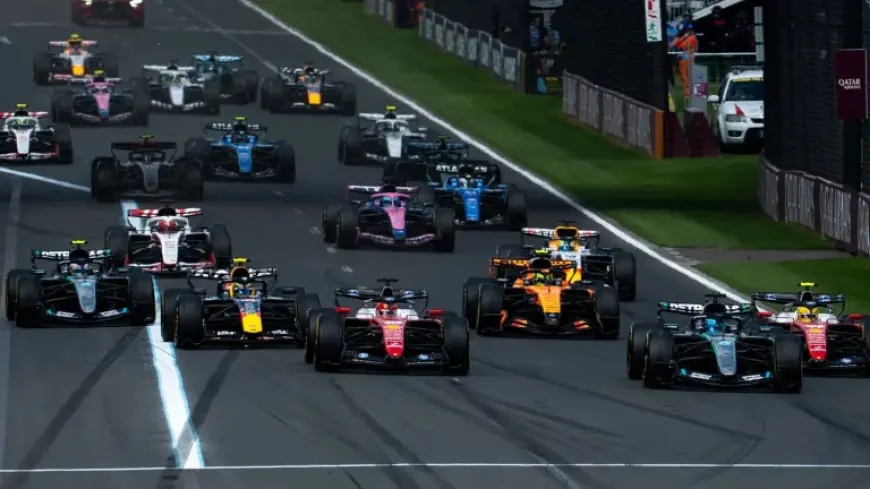
Martin Brundle described the opening weekend in Melbourne as a “wild, unpredictable, and occasionally scary adventure, ” and said he enjoyed the spectacle even as teams face a steep learning curve on lap speed and consistency. He highlighted technical causes: the challenge of recharging a relatively small battery on the fly and the removal of the MGU-H while tripling the MGU-K output, which he said makes harvesting enough battery energy difficult on high-speed circuits. Brundle also pointed to three large crashes for Kimi Antonelli, Max Verstappen and Oscar Piastri during the dry event as evidence the cars remain raw and in need of refinement, but he assessed that power delivery and braking systems will improve quickly with proactive work by teams.
Lando Norris and Max Verstappen: drivers’ safety alarms after Russell’s win
Drivers expressed markedly different conclusions from the same race facts. George Russell won the Australian Grand Prix after a ten-lap duel with Charles Leclerc, yet Lando Norris warned of a possible “big accident” and cited closing-speed differentials that he said could send a car over barriers. Norris finished fifth, and Max Verstappen, who recovered to sixth from 20th on the grid, said he loved racing but not in the current format. Lewis Hamilton called the race “really fun to drive, ” while Charles Leclerc noted the requirement to constantly charge and deploy electrical power will change overtaking. Those divided reactions sit alongside a raw statistic: this race produced 125 overtaking manoeuvres compared with 45 in the same event last year, indicating a dramatic change in on-track dynamics.
Comparison: where Brundle’s technical optimism meets drivers’ safety and authenticity concerns
Applying three parallel criteria—entertainment, safety, and technical feasibility—reveals where views converge and diverge. On entertainment, both Brundle and several drivers acknowledged strong on-track action: Russell and Leclerc repeatedly swapped the lead in the opening ten laps, and the race saw 125 overtakes versus 45 the previous year. On safety, Brundle noted three big crashes and called the cars challenging to master, yet Norris issued a blunt warning that the new energy-management differentials could cause severe incidents. On technical feasibility, Brundle emphasized that teams can and will refine power delivery and braking systems, while other drivers criticized the “artificial” nature of repeated push-to-pass style overtakes and said the new balance of electrical and combustion power creates unpredictable braking-zone speeds.
| Criterion | Martin Brundle’s position | Drivers’ dominant position |
|---|---|---|
| Entertainment | Enjoyed the spectacle; praised the challenge for drivers | Mixed: Hamilton enjoyed it; others questioned authenticity despite 125 overtakes |
| Safety | Noted three big crashes and unpredictability | Raised urgent alarm: Norris warned of a “big accident” and closing-speed risks |
| Technical feasibility | Believes power delivery and systems will improve quickly | Highlighted current problems: battery depletion on straights, unpredictable braking zones |
Brundle framed the issues as solvable engineering problems rooted in known changes—tripled MGU-K output and the loss of the MGU-H—while many drivers framed them as immediate safety and sporting-quality concerns that affect on-track risk and enjoyment.
Finding: the comparison establishes that Brundle’s constructive technical optimism and the drivers’ urgent safety warnings are both grounded in the same race evidence, but they imply different priorities for regulators and teams. The next confirmed milestone to test which view carries the day is the agreed pause for reflection after three races. If the teams and governing bodies maintain the current technical direction and implement refinements without radical rule change, the comparison suggests on-track spectacle will likely persist while safety and drivability will be addressed incrementally; if the pause after three races results in regulatory tweaks focused on safety or energy deployment, then the drivers’ concerns will have driven more immediate change.