Goeasy vs. LendCare: Go Easy disclosure fails to restore investor trust

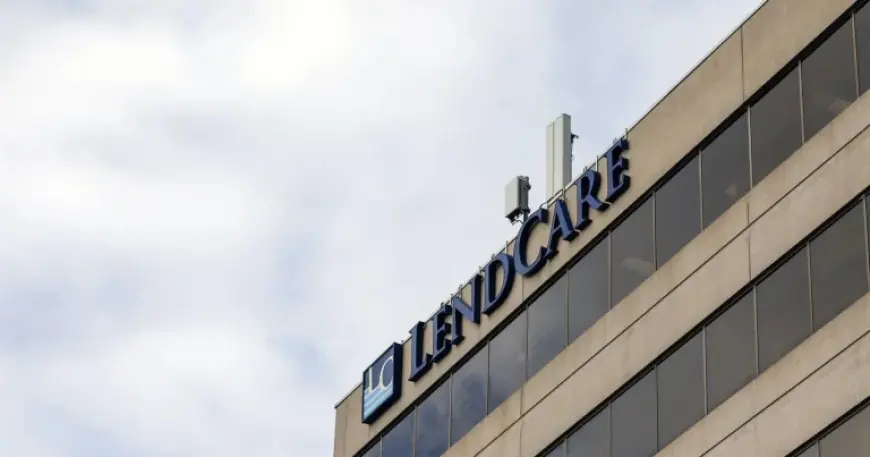
Goeasy and its Pickering-based subsidiary LendCare are at the center of a finance and governance story that asks a clear question: does Goeasy’s public corrective package — a $178 million bad-loan charge, a corrected delinquency record and other measures — address the problems exposed inside LendCare? This piece asks whether the steps announced are sufficient to stop further erosion of confidence in go easy’s balance sheet and reporting.
Goeasy: the announced corrections, charges and immediate actions
Goeasy disclosed a $178 million incremental charge for bad loans tied to LendCare, and a related writedown of about $55 million for loan interest and fees. The firm also expects a net increase in allowance for credit losses of $86 million compared with the amount reported at Sept. 30, and said the rate of charge-offs hit 12. 9 percent in 2025, up from 9. 2 percent the prior year with management warning the rate could reach the mid teens. Management pulled its prior guidance, suspended the dividend and halted buybacks. The company also named Felix Wu as chief financial officer, effective immediately, and said it would release fourth-quarter results on March 25.
LendCare: the alleged delinquency suppression and denials
A recent investigation found that staff at LendCare had taken steps to suppress its delinquency rate, including pulling unexpected payments from past-due accounts and repeatedly restructuring loans in efforts to keep accounts appearing current. Internal records, court filings and witness accounts were cited in that finding. LendCare has denied wrongdoing and said it is committed to openness, accountability and strong governance. Still, the reported practices were cited by Goeasy as the reason for correcting historical delinquency reporting.
Go Easy vs. LendCare: where disclosures meet alleged practices
Applying the same evaluative criteria to both sides—transparency of reporting, quantified financial impact, and corrective governance measures—sharpens what each reveals. On transparency: Goeasy acknowledged a historical reporting issue that recorded some payments as received while they were being settled at month end, and said some were ultimately not collected; LendCare’s alleged operational tactics were the proximate cause of that error. On quantified impact: the company flagged a $178 million charge, a $55 million interest-and-fee writedown and an $86 million allowance increase, while also revising charge-off expectations to the mid teens; the investigation provided the qualitative explanation for why those numbers shifted. On governance and corrective actions: Goeasy announced leadership changes and an action plan aimed at strengthening LendCare’s leadership; LendCare’s stated denial of wrongdoing contrasts with the firmwide correction that Goeasy is making public.
| Metric | Goeasy disclosure | Connection to LendCare issue |
|---|---|---|
| Incremental bad-loan charge | $178 million | Attributed to deterioration concentrated at LendCare |
| Writedown of loan interest and fees | About $55 million | Part of the same fourth-quarter impact tied to LendCare portfolios |
| Increase in allowance for credit losses | $86 million | Reflects corrected historical reporting and expected charge-offs |
| Charge-off rate | 12. 9% (prior year 9. 2%); management warns mid teens possible | Management links deterioration to LendCare-originated loans |
Market reaction applied the same judgment in a different register: shares plunged, analysts cut forecasts and at least one analyst described the update as a clearing event that reset expectations and increased uncertainty about future earnings power. That market response underscores that the disclosed numbers and governance steps did not immediately restore clarity.
Finding: the comparison shows that Goeasy’s public financial corrections quantify the damage but do not by themselves resolve the governance and collection-practice questions tied to LendCare. The corrective items provide a clearer loss estimate — $178 million in bad loans, $55 million writedown and an $86 million allowance increase — yet the underlying allegation of delinquency suppression means investors and analysts still face impaired visibility on forward earnings.
What will test this finding is a confirmed event: Goeasy’s scheduled fourth-quarter results on March 25. If Goeasy maintains its revised allowances and charge-off estimates and offers detailed, verifiable fixes to LendCare’s reporting and collections controls, the comparison suggests investor confidence could stabilize. If those numbers or governance steps prove insufficient, the comparison suggests further downgrades to earnings visibility and more pressure on the company’s equity value.